21st June 2021
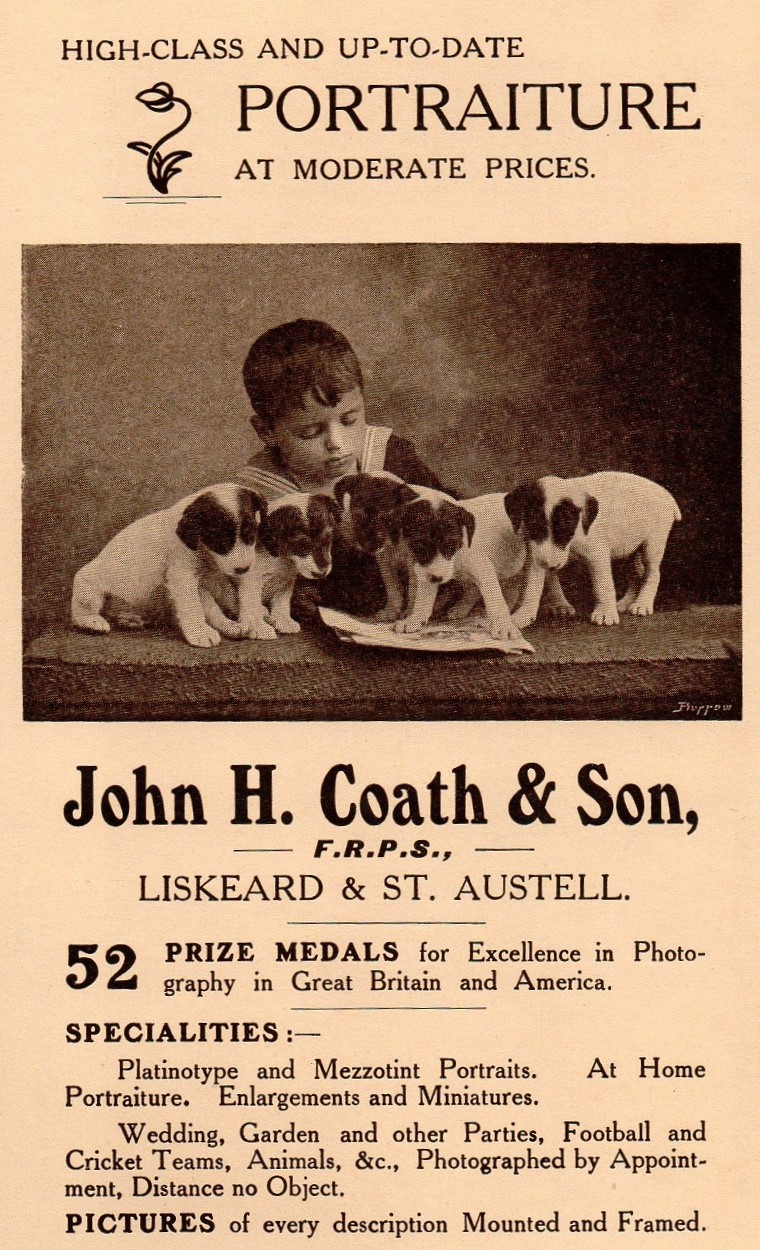
John Henry Coath (1856-1935)
John Henry Coath was born in 1856 and grew up in no.21 Lower Lux Street where he was the eldest of 10 siblings. Unusually, the first 6 siblings to be born were boys and the following 4 were girls. One of the girls, Beatrice, was educated by the Misses Jago at their school in Tregantle, Russell Street.
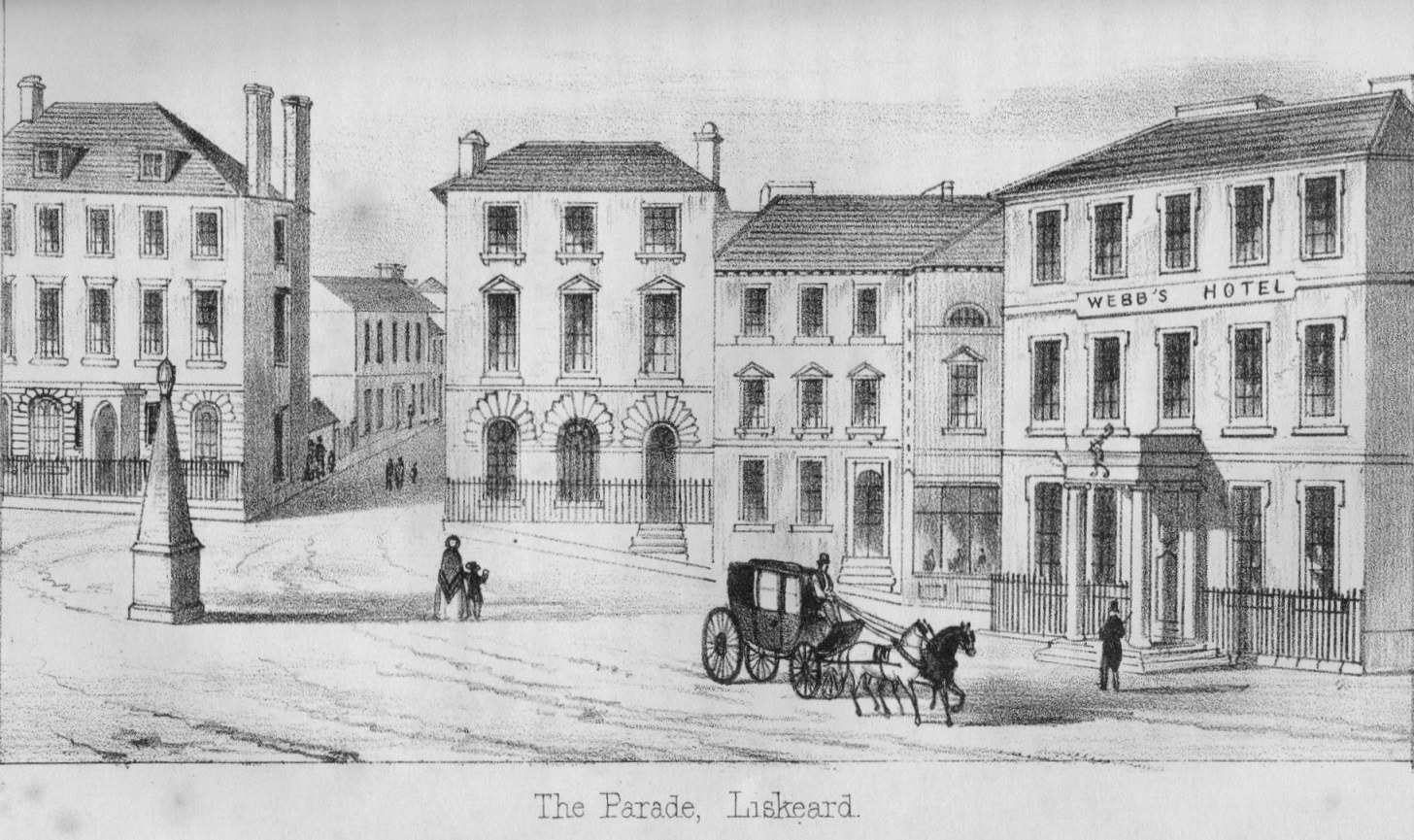
John Henry’s father Charles was successful tradesman and employer having re-decorated many Liskeard grand buildings including Webb’s Hotel. Charles’ name and occupation of Painter & Gilder can still be seen faintly lettered on the Pound Street side of no.21, which was no.11 before the Post Office re-numbered Lower Lux and Fore Streets in the 1930s.
Born in 1856, John Henry’s first job was House Painter in his father’s firm, but by the 1891 census his award-winning Photographic business was firmly established at what is now no.20, previously no.17, Fore Street. Living above the shop was John Henry (34), wife Annie, nee Hender, (28), son Charles Hender (3) and daughter Hilda Annie (2).
The Fore Street premises had a waiting room, studio and dark room at the back reached by 30 steps. Behind the shop on the ground floor Miss Moon would finish and retouch the negatives. John Henry gave his occupation as Photographic Artist at his initiation into St. Martin’s Masonic Lodge in 1894.
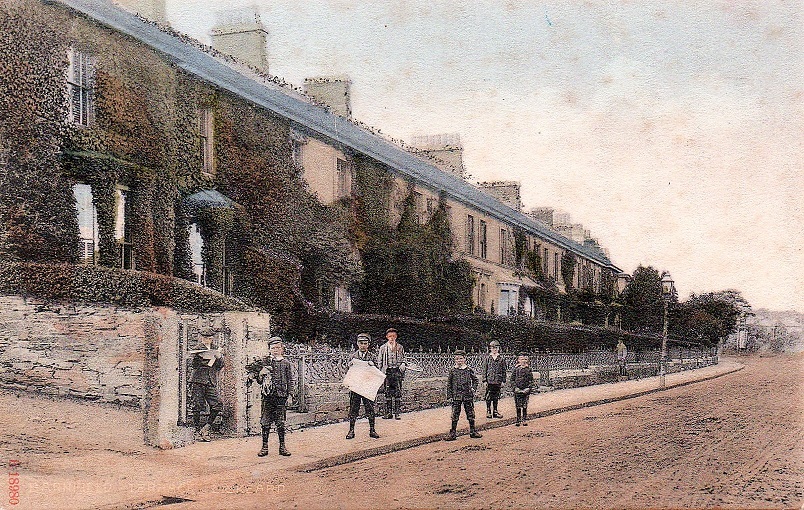
It wasn’t until 1911 that we find them all living in the double-fronted house, no.6 Castle Street, with an additional son George Hender (9). By this time Charles Hender (now 23) was employed as a Photographer in the family’s additional shop in St. Austell. Also, in 1911 one of John Henry’s younger brothers, 43-year-old Ernest, was married with 3 children, living above his own Photography shop in Fore Street, East Looe.
John H. Coath & Son were still appearing in Liskeard Trade Directories until 1930, which is about the time of John Henry’s retirement and his son Charles Hender taking over the reins until his own retirement in the early 1950s.
At the age of 79 John Henry Coath F.R.P.S. (Medalist) died in 1935 after an illustrious career as Liskeard’s foremost photographer of his era. Some of his equipment, props and work are on display in Liskeard & District Museum, as well as the sign from his Fore Street shop. Two large columns used as props in some of his portraits can be found in the Masonic Hall on the Parade.


![No'20 previously No'17 Fore Street [undated]](https://kernowgoth.org/wp-content/uploads/2021/07/No20-previously-No17-Fore-Street-undated.jpg "No'20 previously No'17 Fore Street [undated]")

![No' 6 Castle Street is on the right [undated]](https://kernowgoth.org/wp-content/uploads/2021/07/No-6-Castle-Street-is-on-the-right-undated.jpg "No' 6 Castle Street is on the right [undated]")

10th June 2021
The Newton Cross, St. Neot
In August 1937 this badly mutilated Cornish Cross was rescued from its use as a gatepost at Higher Newton Farm on the outskirts of St. Neot village and set on top of a Cornish hedge.
By 1994 the cross had slipped down the hedge and was leaning perilously close to the lane. Farmer Les Higgins, who is on the far left of the July 1994 photo with his grandchildren, was visited by Liskeard Old Cornwall Society President at the time Yvonne Gilbert, who can be seen in the September 1994 photo, and Liskeard OCS member Brian Bawden, on the far right of the July 1994 photo.
Between them an agreement was reached to remove the Cross from its precarious position 200 yards east of Higher Newton Farm to a much safer position on a grass bank close to the farm entrance. The work took place in July 1994 and a re-dedication service was held in the September, officiated by Miss Gilbert and the Rev. T. Olivey, Vicar of St. Anietus Church, St. Neot.
The Cornish Times report on the ceremony bore the headline “Wondrous Cross finds the perfect resting place”, a reference to “When I Survey the Wondrous Cross” being sung on these occasions. After the ceremony Farmer and Mrs Higgins invited the large number of onlookers, mainly Liskeard OCS members, into their farmhouse for a splendid afternoon tea.
On a recent walk along the lanes of St. Neot the current President of Liskeard OCS, Brian Oldham, had trouble locating the Newton Cross, as his June 2021 photo shows. On a return visit a few days later Brian met Les Higgins, still in residence in the farm but leaving most of the heavy work to his son, who gave the okay to the “Wondrous Cross” having a much needed clean up.
More information on Cornish Crosses, including the Newton Cross, can be found in “Stone Crosses in East Cornwall” by Andrew Langdon, 2nd from the right in the July 1994 photo. His books are available from the OCS Federation’s online bookshop at www.kernowgoth.org.


6th June 2021
Barnfield House, 10 Barnfield Terrace, Station Road, Liskeard
John Charles Lang was living with his father Thomas in Grove Park Terrace in 1881. In the census Thomas gave his occupation as Contractor and Civil Engineer employing 53 men and 4 boys. There is plaque attached to a gate pier at Lanchard Cemetery, Station Road thanking him for his gift of the Footpath from the Town to the Station.
In 1890 John Charles Lang engaged the architect John Sansom to prepare plans for a substantial family home, to be built on the end of Barnfield Terrace, and for a yard between the new house and the Stag Hotel. John Charles and Edith, with their young family, were settled in the new Barnfield House the following year and a crane in the yard is marked on a map of that time.
The family in 1901 consisted of John Charles (45) Railway Contractor & employer, his wife Edith Ellen (43), daughters Daisy (12), Violet (11), Gertrude (10) and Freda (5), plus son Thomas (14). Also, living-in were Cook Selina Harris (28) and Nurse Minnie Truscott (24).
By 1911 John Charles Lang had retired to Hannafore, Looe and an Irishman named William Philpotts Williams had moved into Barnfield House with his wife Edith and their 6-year-old daughter Elizabeth Georgiana. William was Master of Foxhounds and an Employer, and despite the small size of his family, employed a Nurse, a Housemaid and a Cook to look after them. The house was convenient for William as the Hunt often met outside the Old Stag Hotel next door.
During WWII Retired Yeoman Farmer and ARP Warden Albert Clogg lived in Barnfield House with his resident Housekeeper and Cook, Beatrice Rundle. Albert served on the Town Council and in 1938 issued a pamphlet canvassing for his re-election, promising fairness to ratepayers appealing against unacceptable increases in rate demands.
Barnfield House is currently an Assisted Living Facility.




20th May 2021
Jack Hubert Pitts M.B.E., J.P. (1899-1967)
The election of Simon Cassidy, Labour Party candidate in the recent Cornwall Council elections and employee of Great Western Railways, to become Mayor of Liskeard, is reminiscent of Jack Hubert Pitts M.B.E., J.P. (1899-1967). Jack was Liskeard’s first Labour Mayor, from 1937 to 1940, and an employee of British Rail. Congratulations and best wishes to Simon for his term of office.
Jack joined the railway company at the age of 14 and the National Union of Railwaymen at 15. In 1917, with the 48th Division Signals (R.E.), he was wounded and gassed in the 3rd Battle of Ypres and discharged as unfit for further War service.
In September 1931 Jack was transferred from his native Wales to Liskeard and promptly joined the local Labour Party, the Royal British Legion and attended St. Martin’s Church. With his wife Edith he lived in railway accommodation at no.3 Grove Park Cottages. They share a headstone in St. Martin’s Churchyard.
The Cornish Times reported that “on 7th April 1938 Liskeard’s railwayman Mayor presided over a gathering of his workmates in the Stag Hotel when a presentation was made to foreman James Moon, whose has retired after 44 years’ service”.
Later that year the Western Morning News reported that “Mayor Mr. J.H. Pitts, a railway signalman, was the recipient of a gold medal for 15 years’ efficiency as an ambulance worker.
1940 saw the 700th anniversary of the granting of the first Charter to the Borough of Liskeard. Jack led the celebrations with a Church service, a Civic Luncheon at Webb’s Hotel and the issue of a commemorative medal.
On June 2nd 1995, on their front page, the Cornish Times reported that one evening during 1945 Herbert Wilson, Chemist and General Manager of Burrowite Explosives at Trago Mills and Herodsfoot, and his visiting son Harold walked to Liskeard Station to meet Herbert’s friend Jack Pitts. After holding a senior post in the Civil Service during WWII Harold intended to enter politics, but Clement Attlee told him he must first join the Labour Party. Being domicile in Liskeard through his parents, the future Prime Minister was enrolled into the Party by Jack Pitts, inside the signal-box at the end of the station platform.
There are 2 plaques in Station Road to the memory of Jack Pitts, one in appreciation of his public service and the other on a bench donated by the British Rail Staff Association.



8th May 2021
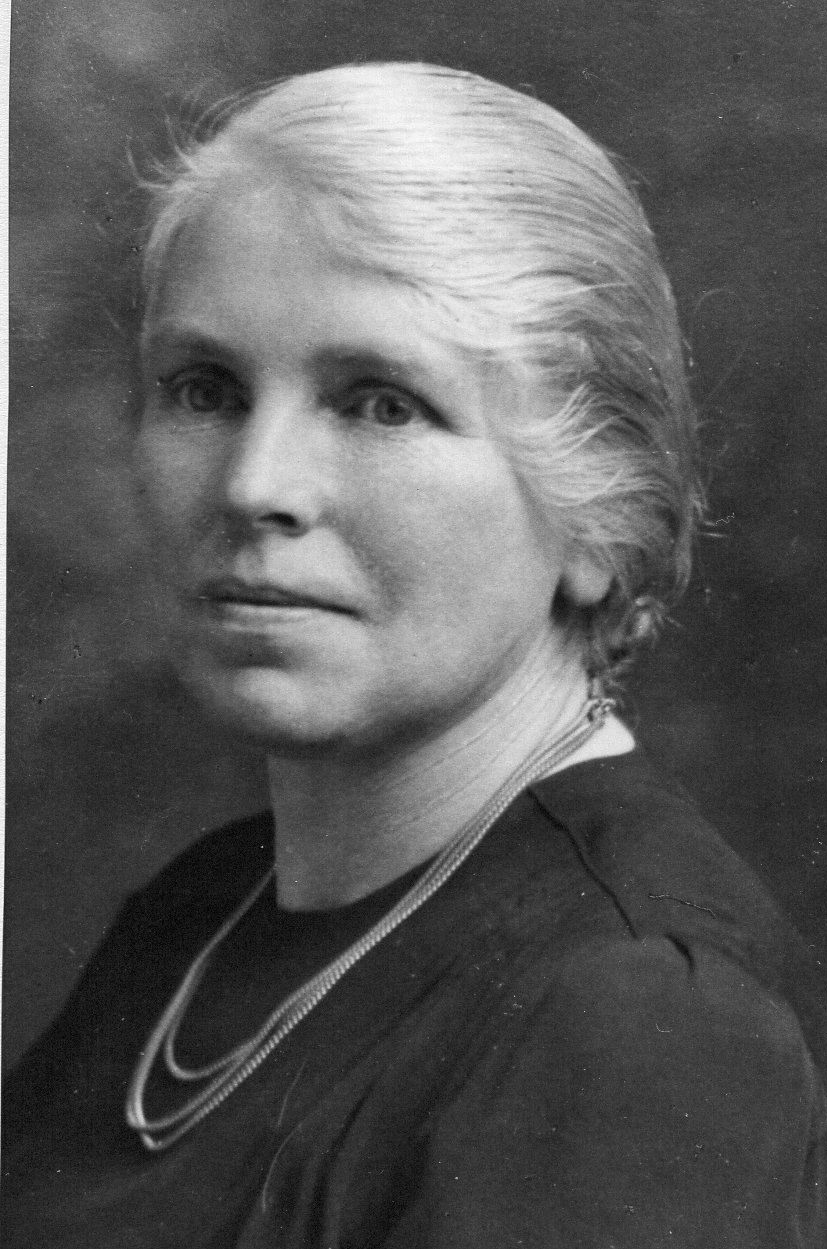
Moon’s Tailor Shop at No.1 Fore Street
Metal-detectorist Mike Burke recently uncovered a T.E. Moon of Liskeard button in the St. Just area and requested more information on Moon. The link with St. Just is that tailor Thomas Edward Moon’s mother Elizabeth was born in St. Just in Penwith in 1800, perhaps she lost the button on a visit to her family? Thomas Edward Moon’s father, also Thomas, was baptized in Liskeard by Minister John Davies on 16th September 1810.
In 1838 Thomas Moon was instrumental, as a Trustee, in raising funds by public subscription to build the chapel in Greenbank Road for the Wesleyan Methodist Association. The 1840 Trade Directory and the 1841 census confirm that Thomas Moon’s first shop in Liskeard was on Tavern Hill, now Pike Street, but the 1851 census for no.1 Fore Street lists the full Moon family: Thomas (40) Tailor & Mercer, Elizabeth (51), John M. (18), Mary (16), Elizabeth (14), Thomas E. (10) and Samuel H. (7).
It was in 1843 that Thomas engaged his first apprentice, John May, son of an Agricultural Labourer. John, at the age of 14, agreed that for the next 14 years “he shall not commit fornication nor contract matrimony, nor play at cards or dice tables, nor haunt Taverns or Playhouses”. In return he would be “instructed in the Art of a Tailor” receiving 1s 6d per week initially and rising in stages to 5s per week in year 7. In 1851 there were 102 apprentices in Liskeard, 14 of them to Tailors. By 1871 John May was himself a Tailor with his own business in Church Street.
At an auction in Webb’s Hotel on 23rd August 1855, Thomas Moon, Mercer, was able to buy for £740 the 2 dwelling houses, shops, barn, workshop, garden and stable he had been renting in Fore Street. Business was good! When Thomas died in1880 the property was left to his son, Thomas Edward Moon, who had the business name painted on the side of no.1 Fore Street, as we can see in the background of an 1887 photo of a revival by children of the Mayor Mocking tradition for Queen Victoria’s Golden Jubilee.
The full extent of the Moon’s services in 1888 were Linen & Woollen Draper, Tailor & General Outfitter, Hosier & Haberdasher, Funerals Furnished and Liveries Provided. A complete set of best clothes cost £3 14s and a pair of gloves 3s 6d.
Thomas E. Moon’s last entry in a Trade Directory was in 1893 when he was employing 7 men and 2 boys. He was unmarried and living above the shop, together with his siblings Mary and Samuel, who were also unmarried. All 3, as well as their mother Elizabeth are buried in Lanchard cemetery.
F.W. Woolworth occupied a new building on the site in Fore Street for many years which is now home to Superdrug.


6th May 2021
During the Town Council election of 1869
"...the evening passed off quiet enough, better then had been expected, considering the large numbers that had congregated outside the Town Hall during the afternoon, when there was a pretty free interchange of rotten eggs and such like missiles of war fare. The missiles were later identified as turnips, flour, lime etc. and a respectable inhabitant was struck in the forehead with a turnip and rotten eggs defiled the clothes of several persons."

2nd May 2021
The Wardropers at Ladye Park
In 1871, aged 29 and unmarried, Henry Timins Wardroper was lodging at Blackwellsend Green, Gloucester, he was Curate of Hartpury with a note that he had an MA from Oxford. At 39 his occupation was Clerk in Orders, Roman Catholic Priest at St. Edmunds R. C. College, Ware, Herts.
A complete change of direction occurred in the 4th quarter of 1884 when Henry at 42 married Alice Andrews, who was 10 years his junior. They were settled in Ladye Park near Liskeard by 1891 with 2 sons and 2 daughters. Henry was no longer a part of the Roman Catholic establishment, presumably due to his decision to marry. However, the family did attend Our Lady and St. Neot Church in West Street, Liskeard. Henry and Alice appear in the Church records several times as sponsors for Confirmations and they held Catechism classes at Ladye Park for local children.
The 4 Wardroper children who grew up in Ladye Park were Mary Clarice, John Baptist Francis Mary, Mary Angela and Antony Mary.
Mary Clarice was born in Plymouth in the 3rd quarter of 1885, she died on August 27th 1911 aged 26 and is buried in St. Martin’s Churchyard, Liskeard.
John Baptist Francis Mary was born on 1st Dec. 1886 in Saltash and in 1901 was a Student at Downside Abbey, Monastery and College in Midsomer Norton, Somerset. In 1939 John was living at 25 Tudor Close, Sutton, Surrey with his wife Rose Marie and his unmarried sister Mary Angela, he was Assistant District Auditor. He died when living in Walberton, Arundel, Sussex on 27th Sep. 1951 leaving in his will £169,552 in present day values.
Mary Angela was born at Ladye Park on 5th October 1888 and never married. While living with her brother John in Sutton she was Manageress of a Private Hotel. She died on 4th August 1963 aged 74 when living in Pinfarthing Strand, Gloucestershire.
Antony Mary was born at Ladye Park in the 4th quarter of 1890 and died in the 1st quarter of 1913 aged 22.
Henry Timins Wardroper of Ladye Park died on May 4th 1912 at The Hydro Hotel, Sansome Walk, Worcester. Probate was granted on August 2nd to John Baptist Francis Mary Wardroper, Auditor’s Clerk.
Following the deaths of her daughter Mary Clarice in 1911, her husband Henry in 1912 and her son Antony in 1913, Alice Wardroper left Ladye Park; she was living at 3 Dean Place, Liskeard in 1919. Alice died in April 1933 aged 81 in Oxford.


24th April 2021
Charles Alfred Millman (1865 to 1927)
On May 8th 1899 William Nicholas Connock Marshall, Gentleman of Treworgey, leased a close of land in Station Road known as Tollgate Meadow to Joseph Sweet, Stonemason, Richard Hawkey Runnals, Carpenter and John Sparks Elliott, Carpenter, all of Liskeard. The term was 99 years with rent of £6 per year, but within 12 months at least £1500 had to be spent on building 7 good and substantial dwelling houses. They were named Victoria Terrace.
Joseph Sweet, who in 1901 gave his occupation as Stonemason and Fruiterer, occupied No.7 until October 16th 1907 when he transferred the remaining 91 years of his lease to Charles Alfred Millman, Political Agent of Liskeard. A deposit of £500 was paid plus a yearly rent of 12s 6d. Millman’s widow Elizabeth Priscilla bought the freehold from the Squire of Treworgey 27 years later for £25.
Charles (46) and Elizabeth (36) are listed in the 1911 census at No.7 with their son Alfred Garfield (13) and their Domestic Servant, 18 year old Bessie Riddle from Quethiock. Charles’ occupation was given as Liberal Registration Agent.
On March 27th 1905 three leading Liskeard Methodists were sentenced to seven days imprisonment, for non-payment of the Education Rate, by Liskeard Magistrates. Mr. R.M. Botterell, Rev. R. Squire and Mr. C.A. Millman were dubbed “Liskeard’s Passive Resisters”. Their argument was that their children attended private schools and they did not intend to pay twice for their education.
Millman was the Liberal Agent for “Tommy” Agar-Robartes when the latter was elected MP for South East Cornwall on January 22nd 1906. Unfortunately, in the following June, Tommy appeared in Bodmin Assize Court accused of “the corrupt practices of bribery, treating and undue influence”. Judge Grantham decided that “it was clear the seat could not be held and that Mr. Robartes should be unseated”. The blame however, was not his nor his parents, but his agent Mr. Millman, who had “manipulated everything” to gain an election victory.
The large crowd outside the Court disagreed with the verdict; Mr. Snell, the Tory agent who brought the petition, needed a police bodyguard, while Tommy Robartes and Millman were given an enthusiastic reception. On December 11th 1914 the Cornish Times reported that Mr. Millman had received a letter from the Secretary of State for War, Lord Kitchener giving cordial thanks for his services in the Recruiting Drive.
Charles Alfred Millman died December 23rd 1927 aged 62 years. The inscription by Sweet & Son, whose founder 20 years earlier sold No.7 Victoria Terrace to Millman, is on a granite kerb rather than a headstone in Lanchard Cemetery, Station Road.


17th April 2021
John Honey (1805-1880)
In 1851 John Honey (46) was the tenant of a Butcher shop in Barrel Street opposite Stuart House, which he managed to buy at an auction in Webb’s Hotel on August 23rd 1855 for £350. His immediate neighbours were Blacksmith William Wallis (52) to the North and Actuary to a Savings Bank Richard Clogg (40) to the South. Miss Susan Carthew (58) lived in Stuart House with her 2 Domestic Servants, she gave her occupation as Fund Holder and Proprietor of Houses and Land. The meat for sale in John’s shop came from his own 30-acre farm and slaughterhouse where he employed a Labourer and his son, also John Honey (17).
On January 3rd 1857 the Cornish Times, under the headline of Extraordinary Bullock, reported that “a bullock fed by the Rev. J. Glencross (of Luxstowe House) and killed last week by Mr. Honey of Liskeard, weighing about 6cwt, turned out 140 lbs of fat”.
In that 1851 census were two “daughters-in-law” of John Honey (senior), Jane (9) and Elizabeth Clymo (5) Webb. Obviously, these two girls were not the wives of John’s son so the term we use today for the relationship is step-daughters. That meant that they were the daughters of John’s second wife Mary by a previous marriage.
Mary Clymo married Thomas Webb, a Schoolmaster, in 1840 in St. Austell, their daughter Jane was born in 1842 in Liskeard and another daughter was baptised Elizabeth Clymo Webb at Liskeard Wesleyan Methodist Church on May 9th 1845. Sadly, Thomas Webb died in the 1st quarter of 1847 aged only 30. Mary Webb was soon to re-marry, to the Liskeard Butcher and Farmer John Honey in the 4th quarter of 1849.
John Honey had had a similar experience having buried his first wife Anna in St. Cleer churchyard on September 11th 1848, aged only 39. John was also left with two children Mary (born 1831) and John (born 1834). I wonder if the widower John and the widow Mary both attended and met in the Wesleyan Church, considering that one of Mary’s daughters was baptised there and father and son John, and Mary herself are all buried in the Lanchard non-conformist cemetery.
Part of land owned by the Honeys in Barn Street, probably the location of their farm and slaughterhouse, was used by Henry Rice to create Windsor Place in 1863. Rice also designed a new home for the Honeys to retire to which still stands today adjoining the BUPA dental surgery. John Honey died in 1880, but Mary still had the company of Ann Penney, who had been her live-in “Domestic” for over 20 years. Mary died on December 8th 1894 in her 86th year.


11th April 2021
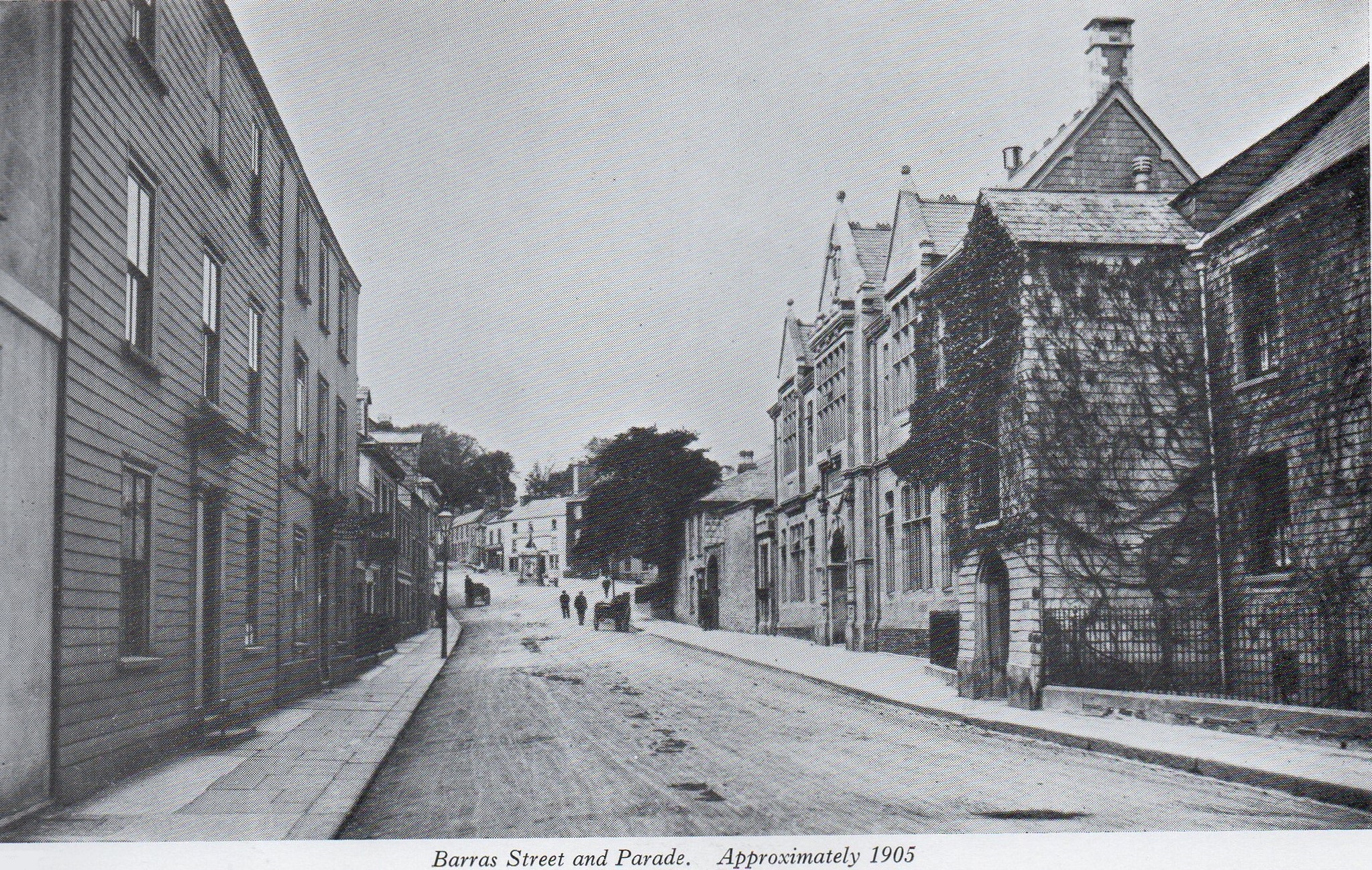
Westbourne House
- 1816 - Built by solicitor N.W. Penrose, architect was John Foulston, gardens spanned Westbourne Car Park with 2 connecting foot bridges.
- 1822 - Penrose died, new owner is solicitor Peter Glubb (1788-1858). Mayor in 1850 and Clerk for many other local public bodies.
- 1849 - Glubb employs architect Henry Rice to build Pendean House in his grounds for his son Albert Charles Lyne Glubb (1830-1920), also a solicitor and future Mayor.
- 1858 - Richard Hawke (1823-1887), then the wealthiest man in Liskeard who had been apprenticed to a Helston barber at age 14, buys Westbourne on Peter Glubb’s death.
- 1864 - Henry Rice is employed to redesign the rear elevation of Westbourne and build Westbourne Lodge in 1872.
- 1887 - Hawke’s death is widely reported in the press, headline “Cremation & Funeral of a Cornishman”. The cremation, one of the first in modern times, took place at Woking Crematorium and the ashes, in a grand non-religious ceremony, were placed beneath the Grade II monument in the gardens of Westbourne House.
- 1904 - Hawke’s wife Sarah dies and Westbourne is left to William Sargent (1851-1943), the grandson of a Liskeard cordwainer. Sargent, a Bank Manager, had become the informally adopted son of the childless Richard and Sarah.
- The Hawkes had originally intended to leave their wealth to Peter Conyngham Glubb, a son of their neighbours in Pendean, but in the words of a descendant “he was a wastrel”, refused to work and sponged off relatives; because of this the Hawkes disinherited him.
- 1943 - William Sargent died and Westbourne went to his daughter Geraldine and her husband Frank Temple Roberts (1871-1946), also a Bank Manager.
- 1948 - Purchased by Cornwall County Council.
- 2021 - new leaseholder Wildanet Ltd will refurbish Westbourne House over the coming months while retaining all remaining original features.


4th April 2021
Wedding of Maud Hobhouse
On August 31st 1889 the Cornish Times reported on “the occasion of the wedding of Miss Maud Hobhouse”, Maud was born and grew up in The Rectory, St. Ive, she was 30 when she married the Rev. E. Presgrave Hebblethwaite, vicar of Poundstock, near Bude.
Maud was the “the second surviving daughter of the Ven. Archdeacon Reginald Hobhouse, rector of St. Ive”, the census of 1871 lists the Hobhouse family as the Reginald (53), wife Caroline (50), daughters Blanche (13), Maud (12), Emily (10) and son Leonard (6). To look after them was a Governess and 5, yes five, Domestic Servants.
Among “the bridesmaids were Miss Emily Hobhouse, sister of the bride”. On July 7th 1900 the Cornish Times reported that “a public meeting was held at the Public Hall, Liskeard, on Thursday evening, under the auspices of the South Africa Conciliation Committee, in order to advocate an early close to the conflict with the Boers. Mr. A.T. Quiller Couch, of Fowey, the well-known novelist, presided, and the speakers were announced to be Miss Ellen Robinson, of Liverpool; Miss Emily Hobhouse, secretary of the Conciliation Committee; and Mr. Lloyd George, the Radical member for Carnarvon. The headlines were “Uproarious Proceedings, Speakers Refused a Hearing, Platform Stormed, Meeting Broke up in Disorder”. Not Liskeard’s finest hour in history!
“The bride’s dresses, as well as those of the bridesmaids, were made by the Misses B. and E. Thomas of Fore Street, Liskeard”. In 1891 sisters Bessie (46) and Ellen (23) were in business as Dressmakers; also in the census were another sister, Mary Andrews, their widowed housekeeper, Mary’s son Harry, who at 16 was employed in the business, as was Maud Richards, a Dressmaker at 14.
“After breakfast at The Rectory, Mr. & Mrs. Hepplethwaite drove to Liskeard, taking the 1.30pm train to Plymouth”, en route to honeymoon at Spye Park, Wiltshire. Now known as The Chantry, the former rectory in St. Ive is owned by Emily Estate UK and is being restored to become a museum dedicated to the life and work of the civil rights campaigner Emily Hobhouse, who is still revered in South Africa.
Maud having been a member for 17 years, “the choir presented her with a beautiful silver mounted china biscuitiere”, which was supplied by Messrs. Botterell & Son of Liskeard.
Maud had been an Associate of the Girls Friendly Society for 10 years and they “united in presenting a very handsome bronze duplex lamp”.


28th March 2021
Addington Place North
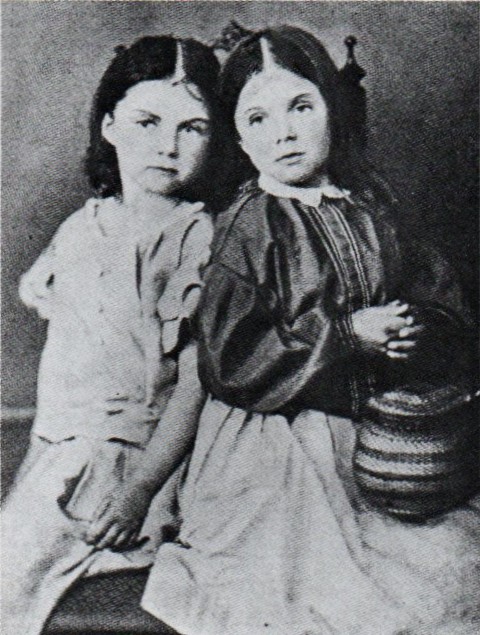
In Addington Place North in 1871 two ladies living just a few houses apart were wives of miners working abroad, but both had to find work themselves to supplement the little, if any, money sent home by their husbands. They are both mentioned in Lesley Trotter’s book “The Married Widows of Cornwall”.
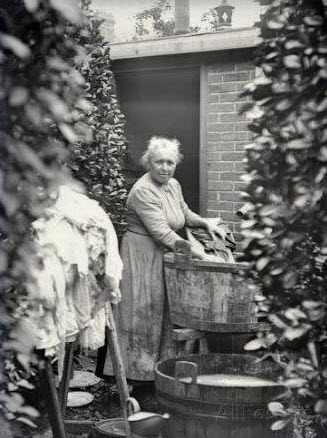
In the census of that year Sarah Parkyn at age 43 gave her occupation as “Laundress, husband working abroad”. Laundress was, according to Trotter’s research, “low status or last resort so associated with poverty or distress”. The previous census tells us that her husband was John Parkyn, 6 years younger than Sarah, a Lead Miner, walking to work in one of the Menheniot mines 2 miles away. The pending closure of these mines in the late 1860s and early 1870s would have prompted John to join the Cornish Diaspora.
Sarah never joined her husband as she appears in subsequent censuses in Addington Place North until 1891 when she was aged 65, widowed and still taking in other people’s washing. She did however have the company of Alfred Baker, her 14 year old grandson. There’s no further record of John Parkyn.
Her neighbour in 1871, Jane Ann Congdon aged 32, gave her occupation as “Nurse, husband a miner in Australia”. Quoting Trotter again, a Nurse was “not the qualified professional we know today, the only skills they had were what they had been taught within the family”. Also in the census are her sons William (10) and John (8), also shown is Jane’s mother Jane Batten (63).
The husband in Australia was George Congdon. Both George, a Mine Labourer at 15 years of age and Jane Ann, a House Servant at 13, had tough childhoods both in Menheniot.
We know Jane Batten died in 1878, but there is no further record of her daughter or grandsons. We can assume that George Congdon sent enough money home to pay for his wife and sons to join him in Australia and, hopefully enjoyed a more comfortable future than her less fortunate neighbour in Addington, Sarah Parkyn, a washer woman until she died.




21st March 2021
Bolventor
In 1851 John Olver (36) was farming 100 acres at Trengrove, Merrymeet employing 3 Agricultural Labourers. With him in the farmhouse lived his family; Elizabeth (27), Rebecca (5) and William (4).
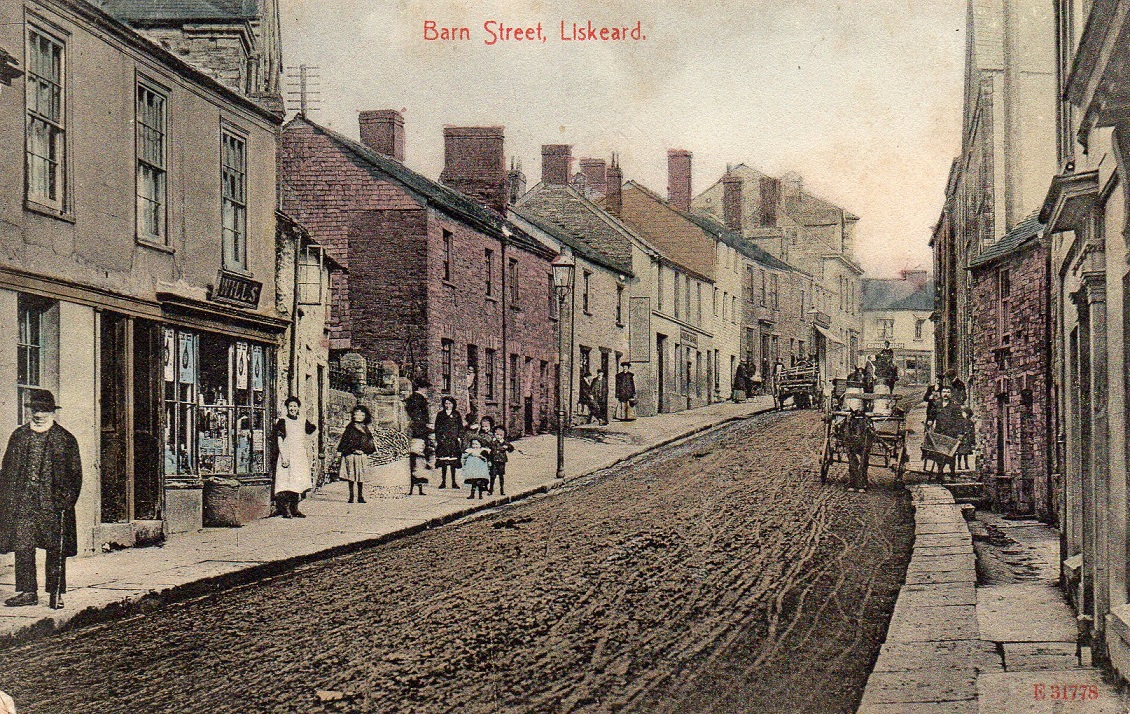
Within 10 years, for reasons unknown, the Olvers had moved to Hockens Court, off Barn Street, Liskeard. The many courts in Liskeard were rows of tiny cottages with no inside water or closet, built quickly and cheaply to rent to miners arriving from West Cornwall looking for work.
In 1871 John (56) was a Cowkeeper, Elizabeth (46) was a Laundress, William (24) was a Carpenter and Rebecca (25) was living in Fore Street, Saltash with her husband Thomas Elliott (32) a Greenwich Pensioner, which is the Navy equivalent of a Chelsea Pensioner.
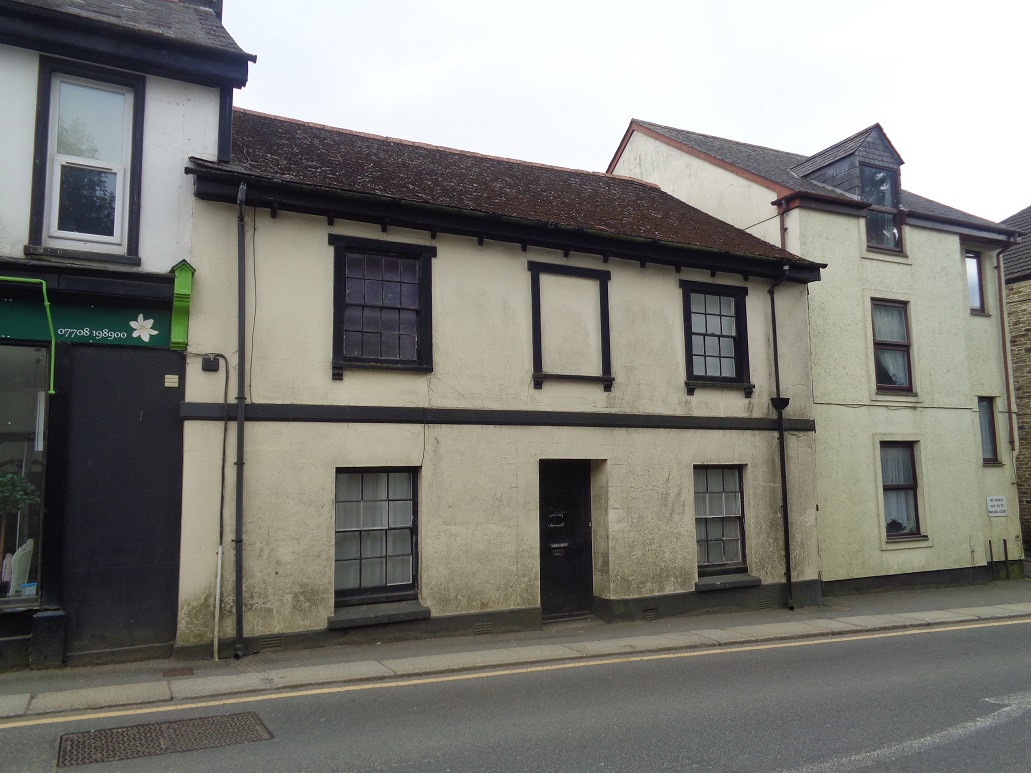
Thomas Elliott died a year later, after only 9 years of marriage, aged 33. Elizabeth Olver died in 1876 aged 51. The widowed Rebecca and her widowed father John set up in business as The Dairy in a double fronted property in Barn Street, now known as Bolventor. When John died in 1888 aged 73, his unmarried son William replaced him as partner in The Dairy. The entry in Kelly’s Directory was “Olver & Elliott, dairy, Barn Street”.
In the 1911 census is William Olver (Head, 66, Single, Dairyman), Rebecca Elliott (Sister, 67, Widow, Partner), Annie Penny (Servant, 49, Single, Domestic) and Charlotte Roberts (Servant, 18, Single, Day Girl). Annie must have been quite happy in her work as she had been with the family for at least 30 years.
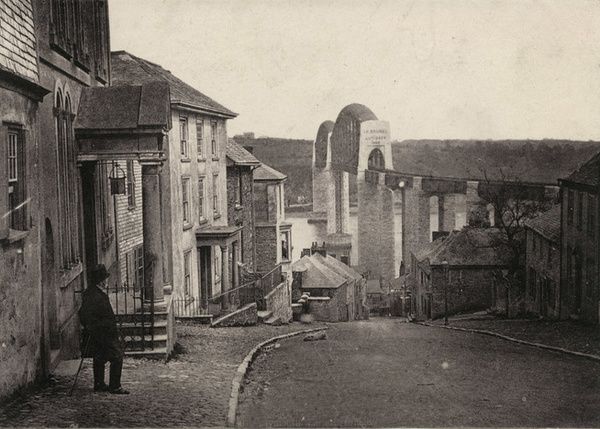
Woolcomber Ernest Hodge, an employee of the nearby Blamey & Morcom Ltd., was living in Bolventor with his wife, a Midwife, and 2 widowed lodgers. The 1965 Register of Electors lists John and Annetta Lock at Bolventor. The building was listed as Grade II in 1993 as an example of an early 19th century townhouse, its original use.




14th March 2021
Thomas Prideaux Peters
Having previously owned a private school in Lostwithiel, Thomas Prideaux Peters first appears in the Liskeard Trade Directory in 1844 with a Boarding School in Barn Street. There were no pupils in the 1851 census just the family: Schoolmaster and Wesley Association Preacher Thomas P. (49), Mary (64), Elizabeth (21), a nephew Thomas H. (8) and a Visitor from Ireland Michael Crawford (54), a Temperance Agent.
The dwelling house, offices and gardens in Barn Street were rented for 12s per year from leaseholder E. Geach Esq. until 1855 when Geach purchased the freehold for £150 at an auction in Webb’s Hotel. This prompted a move to Dean Street for the Peters family; in the first copy of the Cornish Times on 3rd January 1857 a reminder was printed that the Commercial & Mathematical School in Dean Street would resume after the Christmas Vacation on 12th January, signed T P Peters, Principal.
Thomas died on 17th September 1864; the family grave is in Lanchard Cemetery. The family returned to Barn Street and the entry in the Trade Directory changed to Miss Elizabeth Peters’ Ladies School. The 1871 census confirms that Mother Mary at 81 is Housekeeper in the School assisted by 20-year-old Domestic Servant Elizabeth Goldworthy. Elizabeth (58) is the School Mistress and there are 4 Boarding Scholars aged between 6 and 15.
Living a few doors away in Barn Street lived 2 School Teachers, Mary (27) and Emily (23) Parkyn. The sisters opened their own Day School in later years, but I wonder if they were employed by their neighbour Elizabeth Peters before that.
In that same census of 1871 the nephew, Thomas H Peters (now 29) has progressed from Clerk to become Accountant at the mighty South Caradon Mine; he was living in Waterland Cottage, Tremar with his wife, 2 daughters and 2 sons, one of whom appears in the census as “unnamed infant Peters”, as he was just 1 day old on census day.


7th March 2021
This unusual inscription is carved on a granite headstone in Lanchard Cemetery “underneath repose the remains of Francis Hicks of this town who was killed by the falling of a block of granite while he superintended the erection of the Town Hall August the 20th 1858 aged 46 years”.
In Liskeard in 1837 Francis, a Mason, married Sally Perry, a Straw Bonnet Maker, both originally from Polperro. By 1851 they were living in Pound Street with their sons Thomas (12), John (9) and William (4).
3 years after the unexpected death of the breadwinner, the Hicks family seem to be managing reasonably well; Sally (50) is still making bonnets, William (14) is apprenticed to a Printer’s Compositor, John (19) is a Tailor’s apprentice and Thomas (22) is a Certified Schoolmaster living away from home.
At the age of 60, Sally was able to retire and move to Poole to live with her eldest son, now a British Schoolmaster, her daughter-in-law and 4 grandchildren. Hopefully, a happy ending after an earlier tragedy.
A less than happy story comes from this headstone in St. Martin’s Churchyard “To the memory of Richard Hugo of this Borough who was accidently killed by the falling of a wall when passing the Post Office corner on the 9th day of June 1864 aged 39 years”. At age 15 Richard was employed as a live in Servant by a Farmer in St. Keyne. At 25 he married Elizabeth, sadly their first born, Mary, died at only 9 years old.
Richard left a widow aged only 33 with 7 children living at home with very little, if any, means of support as Richard’s occupation in the census before his death was Railway Labourer.
In 1867 Elizabeth remarried, to Daniel Gumb, a Miner who also farmed 5 acres near Trewidland. Her childbearing continued so that by the time of her own early death at only 37 years of age she had given birth to 9 children.
Considering the family’s circumstances, where did the money come from for Richard Hugo’s headstone, expensive as priced according to how many letters were inscribed? Although John Bone, the Post Office demolition contractor, escaped official blame for the falling of the wall, in an attempt to restore his failing reputation in the town, he paid for the funeral expenses, and those of the other 3 people that died in the accident.


28th February 2021
Catherine Treloar (54) was a Copper Miner’s wife living in Trevelmond in 1851 with her husband Thomas (45) and son William (20), also a Miner. In her book “The Married Widows of Cornwall”, Lesley Trotter wrote that “Catherine could confidently be identified as a recipient of a money letter registered at Bruce Mines Post Office in Northern Ontario, Canada between 11th December 1857 and 29th July 1861.
It would be safe to presume that Thomas was part of the Cornish Diaspora, possibly taking William with him as there is no further record of either of them in England after 1851. Catherine (64) however, is boarding in Market Street, Liskeard in 1861 with Lead Miner William Hollow (44) and his wonderfully named wife Temperance Hollow (45). The census places them in a multi-occupied house that was built for Merchant Joseph Upcott in 1673 which then become the town house of the Wrey family of Trebeigh in St. Ive. The house was demolished and replaced in 1910 by the Constitutional Club.
After that 1861 census there’s no further record of Catherine Treloar, perhaps she joined her husband and son in Canada? Also, after 1861, there’s no record of William Hollow, maybe he emigrated as well? But Temperance Hollow stayed in Liskeard; in 1881 at age 65 and a Widow, she’s “in service” at Westbourne House, home to the wealthiest man in Liskeard, whose own mother was “in service” before he made his fortune as Mine Share Broker.
An entry in the Liskeard Union Register tells us that, now unable to work due to infirmity at the age of 73, Temperance was elected to receive Poor Relief on 29th March 1888. It was “out relief” that she received and was housed in rooms above Peake’s tannery at the end of Church Street South, Liskeard. In 1901 Temperance (86) shared the accommodation with 2 other ladies named on the same page of the Register; Harriet McLauchlan (Widow 69) and Sarah May (Unmarried 70).
The last entry in the Register, preserved in Liskeard & District Museum, for Temperance Hollow is “death from of old age on 3rd April 1903” and, like most others receiving Poor Relief, she’ll be in an unmarked pauper’s grave somewhere in Liskeard.


21st February 2021
1844 is the first year that Joseph Broad appeared in the Liskeard Trade Directory as a Grocer in Church Street, at the age of 50. 3 years previously he had been a Tanner at Maudlin on the Plymouth Road. Business must have been good, as in 1855 Joseph purchased, for £210, from the Kekewich Estate, the “dwelling house, shop, curtilage and garden” that he had been leasing for 10s per year.
Joseph died in 1865 aged 75 and his son John Broad, and wife Sarah, took over the Grocery business. Later they became agents for Goundry’s Patent Consolidated Tea and devoted one half of the window display to a large selection of China and Pottery. Much later Broads were early stockists of the now very sought-after Clarice Cliff Pottery.
After John died in 1896 aged 70, Sarah (54) ran the business assisted by daughter Caroline (16) and sons Arthur (20), Edwin (23) and John K (27). In the 1911 census Caroline’s occupation is given as “Housekeeper, Etc.”, Edwin is “Feeble Minded” with Arthur and John K as “Assistants in the Business”.
It was Arthur who took over the running of the shop from his mother, who died at the grand age of 89 in 1931. His older brother John Kerkin Broad had other things on his mind. He had trained with Stanhope and Elizabeth Forbes in Newlyn and become a member of the British Watercolour Society. In the 1920s and 1930s his paintings were popular in Liskeard as wedding presents. Still living and helping out at No.27 Church Street, JKB also created a collection granite drinking troughs in the back garden and found time to write a column of historical reminiscences for the Cornish Times.
Another brother was Richard Kerkin Broad who was a successful tailor in Fore Street. He supplied the Polperro fishwives with yarn to knit the traditional Polperro Knit Frocks, or gansey, for their husbands. Any surplus items he would bring back to sell in his shop or in other fishing villages.
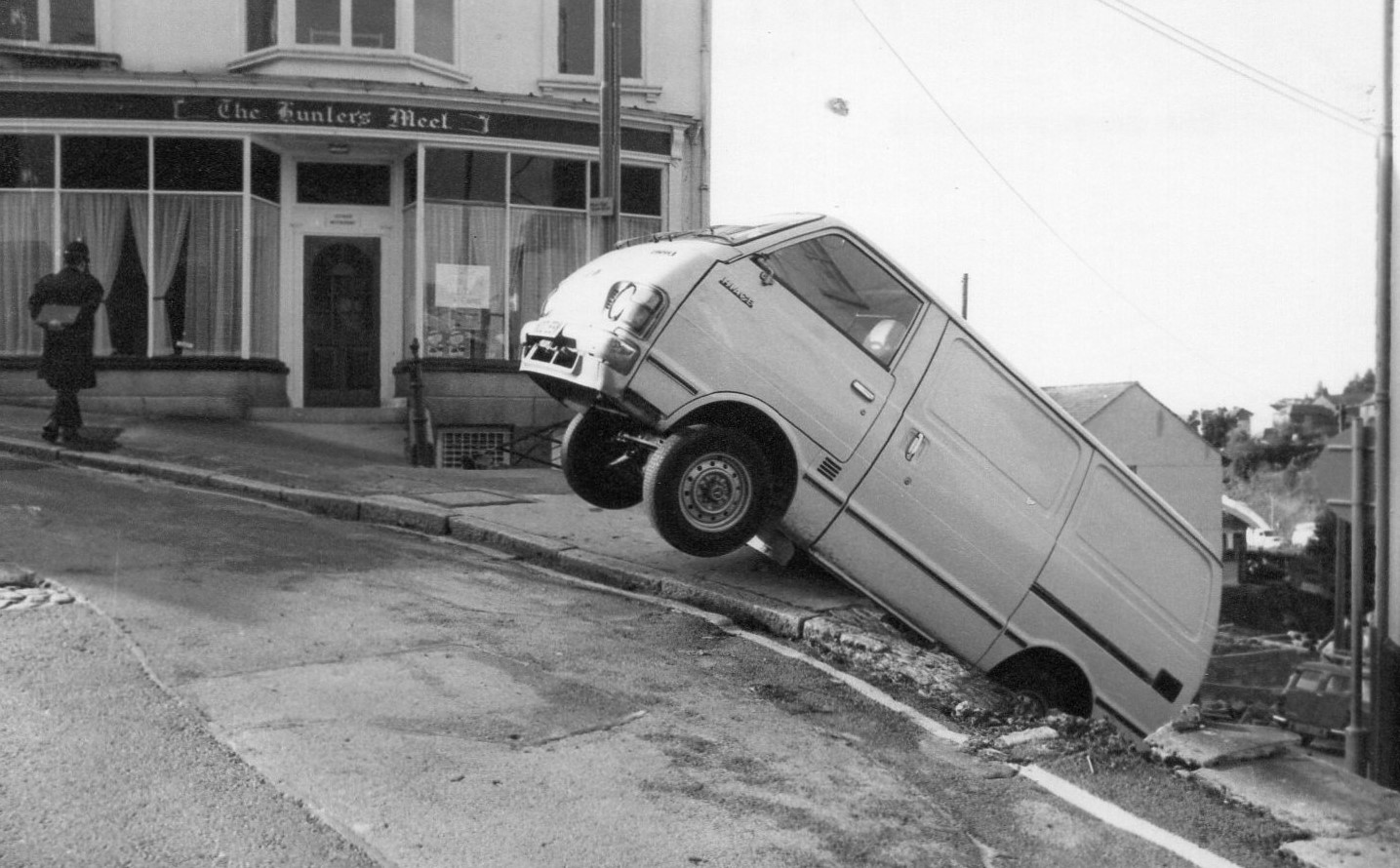
When the Broad brothers retired the grocery and china outlet was run by their nephew, who later became the Rev. Willie Cox in Callington. Before the building was converted to today’s apartments it was The Hunters Meet restaurant for some time.


14th February 2021
Sarah Brown was 8 years old in 1841 when she was living in a tiny cottage near the old Globe Inn in Lower Lux Street with her 3 brothers and 4 sisters. Their father Thomas was a Labourer and Mother Ann, a Dressmaker. 10 years earlier one of the Browns’ neighbours would have been William O’Bryan, a founder of the Bible Christian movement, before he left to spread the Gospel in America in 1831.
At age 18 Sarah had left home and was lodging in nearby Higher Lux Street with the Faull family. Sarah gave her occupation as Mine Girl Copper, as did her fellow Boarder Caroline Oliver. Head of the household, William Faull was a Miner Copper. They undoubtedly worked in one of the mines surrounding Caradon Hill.
2 years later, aged 20, Sarah married Samuel Hicks, a 22-year-old Lead Miner from Crowan, near Camborne. In 1861 they were living in one of the Courts off Higher Lux Street, rows of cramped cottages with outside toilets and water taps. The Courts were hastily erected to house the droves of miners arriving from West Cornwall seeking employment during the Caradon copper boom. Additions to the family were Lucy (8), Mary (6) and John (1). After this 1861 census there is no further record of Samuel Hicks in England.
From the 1871 census it appears that Sarah at 38 has been abandoned in Darite Terrace, Crow’s Nest with her 3 children, 2 of whom are contributing to the family income; Lucy (18) is a Tailor and Mary (16) a Dressmaker. But we’d be wrong to judge Samuel Hicks harshly.
From records held at the Royal Institute of Cornwall it is shown that in October 1876, Sarah Hicks of St. Cleer Parish received a remittance from the Central Mine in Michigan, U.S.A. via the Manchester and County Bank (my thanks to Lesley Trotter in her book “The Married Widows of Cornwall” for this information).
Samuel had become part of the great Cornish Diaspora, but to his credit, unlike thousands of others, had emigrated with a contract of employment with the Central Mine, which included part of his wage being sent home to Cornwall to support his family left behind. After that 1871 census there is no further record of Samuel’s wife and children in England, so the assumption has to made that they too left for Michigan, hopefully to enjoy a better life than Liskeard was able to provide.


7th February 2021
In 1841, close to Helman Tor, lived 60-year-old Tinner Henry Hawken and his wife Jane, in Trevilmick Cottage. Being a Tinner as opposed to a Miner, Henry probably worked in the nearby Wheal Prosper Streamworks. Possibly relatives, Henry Phillips, a Labourer at age 13, and his 11-year-old sister Catherine were lodgers.
Ten years later Henry, now registered Blind, and Jane are Paupers, lodging in Sweets House, Lanlivery. Henry however, in 1851, is renting a small cottage in Doctor's Lane, Liskeard with his wife Ann and 1 year daughter Annie. They bought the cottage for £55 at an auction held in Webb's Hotel on August 22nd 1855. Henry's occupation was Lead Miner, most likely in one of the Menheniot mines.
In their 1863 report on Caradon Mines, Messrs Webb and Geach confirm that the Mine Agent at Craddock Moor Mine is Captain Henry Phillips, and the 1861 census tells us that 2 sons, William (6) and John (2) have arrived, and the family are living in Chapel Row, Tremar.
It appears that Ann died in childbirth in 1866, but the baby, Susannah survived. It was only a year later that Henry remarried, to Mary, 13 years his junior, and 2 more sons soon followed. By this time, 1871, the family are in Darite Cottage, Crow's Nest and both Henry and William are employed at nearby South Caradon Mine.
Henry died in 1887, aged 60, after one more move; this time to Tavistock, where Devon Great Consols were the World's largest producer of arsenic employing over 700 people. What a career for a young lad who had been labouring on the slopes of Helman Tor at only 13 years old!




31st January 2021
Jessie Carkeet was born and raised in Rilla Mill, the second youngest of the 10 children of Copper Miner John Carkeet and his wife Julia. At least 3 of her brothers were also Copper Miners. Jessie married Tin Miner William John Davey in 1877 when they were both 18 years old. They settled in the Liverscombe area of Rilla Mill and in 1881 had 2 daughters, Charlotte (3) and Harriet (10 months). Big changes had occurred by 1891. Charlotte Davey (13) was a scholar in the Deaf and Dumb Institution in Topsham Road, Exeter along with 43 others aged between 7 and 15. There were 9 staff and Charlotte was registered as Deaf and Dumb. In the same year in Liskeard Union Workhouse is Jessie Davey (32), Harriet (11), James (9), Lilly (6) and Charles (5). Jessie's situation is given as Wife of Copper Miner (deserted). In her book, Lesley Trotter names Jessie as "the only explicit reference in any Cornish census returns to a miner's wife in extreme poverty". As there in no trace of her husband William in the English censuses since 1881, it is highly likely that he was part the great Cornish Diaspora, but left no provision for the family he left behind. In the Workhouse on the 24th April 1891 there were 102 inmates and 4 staff (Master, Matron, Porter and Nurse). Jessie at 42, in 1901, is widowed and employed as Cook for the 83 inmates in the Clarence Place Workhouse, Plymouth. Harriet (20) is also a Cook, for the Trood family in Spriddlestone House, Brixton St Mary, Lilly (15) is in Service with the family of the Tamar Manure Works Manager John Abbott, and Charles (16) is apprenticed to Timber Merchant Samuel Snowden in Yealmbridge, Plympton St Mary. No further record of James unfortunately, perhaps emigrated like his father?



24th January 2021
In 1782 Joseph Fitze died during his term of office as Mayor of Liskeard. The £19.10s he had paid out for the entertainment of soldiers passing through the Borough was reimbursed to his son Thomas in the following year's Mayoral Accounts. Another son, James was Mayor in 1787,1793 and 1796. Yet another son, Joseph, is resting in a Grade II Listed chest tomb in St. Martin's Churchyard with his wife Susanna. Joseph's Will of 1809 is held at Kresen Kernow, it tells us that the family business was the Tannery on Pondbridge Hill (Tanners Hill back then). Susanna outlived her husband by 37 years and retired to a cottage alongside Venning's London Hotel in West Street with her twin daughters, Anne and Jane, who were both unmarried into their 30s. Susanna died in 1846 aged 79 and her cottage was demolished in 1889 to make way for the Public Hall. Her son, another Joseph, carried on the family Tannery until he died in his 40s, like his father who had died aged 41. The 1851 census lists Joseph junior's widow Mary (50) and the youngest 4 of her 8 children in Barn Street, as an Annuitant she would not have been destitute. Their rented dwelling house, curtilage and garden was sold at an auction held in Webb's Hotel on August 22nd 1855 and Mary, with her unmarried daughters Elizabeth (40), an Instructress of Children, and Susanna (32), named after her grandmother, moved to 21 West Street.


17th January 2021
In 1871 Elizabeth Chudleigh owned a Bakery in Bay Tree Hill which attracted high praise from local artist and writer J. K. Broad while he was reviewing a Bakery elsewhere; "A fine business, but somehow he can't touch those cakes and buns which dear old Miss Chudleigh sends out". In the same year her younger brother Joseph owned a butcher shop next door, he also farmed 28 acres and had its own thatched slaughterhouse off Barn Street. The sibling’s mother, Betsy Chudleigh, was owner of the Bakery in August 1855 when she purchased the "commodious dwelling house" next door for £300, which became her son's butchery. Betsy died in 1867 aged 68 having provided very well for her children. The previous tenant of the commodious property was another Farmer and butcher, Richard "Teapot" Haine. Mayor and Historian Jack Howarth wrote that Mr. Haine, at an auction in the Guildhall, successfully bid for the teapot that the Auctioneer kept his money in. When the Auctioneer began to empty his takings from the teapot, Haine insisted that he had purchased the contents as well, hence the nickname. Haworth also wrote of Teapot's daughter Mary Anne Haine, "she kept a few cows and was reputed to be well to do". Mary Anne fulfilled a long held ambition to travel to Jerusalem, where she remained for about 35 years until her death in 1915 aged 87. In her later years she existed on 5 shillings per week sent by the Liskeard Patriotic Fund and contributions from her friends in Cornwall.


10th January 2021
William George Nettle (1818-1891)
William George Nettle ran a Draper shop with his brother Samuel in Fore Street, St. Austell employing, in 1841, 3 assistants and 2 apprentices. By 1851 Nettle was leasing a dwelling house, Linen and Woollen Draper shop, office and garden in another Fore Street, this time in Liskeard. He took the opportunity to buy the premises, as well as the Jeweller shop next door, for £700 the pair at an Auction held in Webb's Hotel on Aug. 22nd 1855. Business was so good that Nettle was able to retire at the age of 43 even though his children William (13) and Emily (11) were still at school. A new career started for Nettle when he took over as Purser at Wheal Mary Ann lead/silver, Menheniot on the death his uncle, the highly respected and successful Peter Clymo, in 1870. Clymo was Manager & Purser at the mine up to his death. In 1884 Nettle retired for a second time to the large house next door to the Fountain Hotel on Parade North, directly opposite his son and grandchildren who were living in Parade House. William Nettle Junior was a Medical Practitioner who was active in many charitable causes and was Mayor of Liskeard on 4 occasions.


3rd January 2021
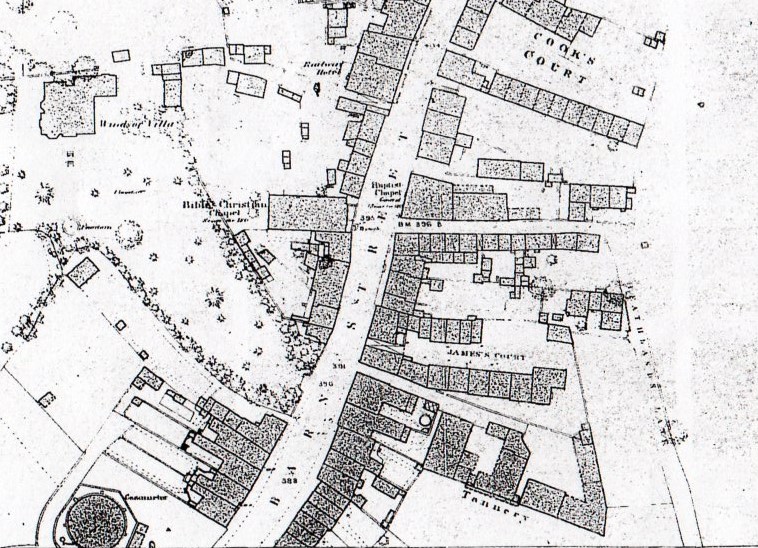
Hocken’s Court, Barn Street - At a Sale by Auction in Webb's Hotel on Aug. 23rd 1855 Richard Hocken, a Maltster in Liskeard for at least 25 years, purchased for £65 the freehold of the Dwelling House and Garden he occupied in Barn St. Hocken also obtained, for £220, the freehold of his neighbour's Dwelling House, Courtlege, Barn & Stable. The neighbour was father of 12 John Quiller, a Mason who employed 5 of his sons in his successful business. It is thought that behind these 2 properties they built Hocken's Court to house some of the 1000s of Miners from West Cornwall arriving to work in the new Caradon and Menheniot mines. Further evidence of this is that soon after their construction John Quiller retired to Wadeland House and, although he remained in Barn St., Richard Hocken also gave his occupation as Retired, both appearing in the 1861 census. The 1882 OS map shows that Hocken's Court has been renamed James' Court, possibly because James Hocken has inherited and is living in his late father Richard's property. In the 1939 census the Court is now Hocking's and on a 1959 plan for the Town Council it's Windsor Cottages with James' Court in brackets. The 2 dwellings with the Court behind were where 25 to 27 Pavlova Court and the path to the rest of the estate is today. Some time ago Liskeard OCS received a request for photos of Hocken's Court as the enquirer's grandmother had been born there on Aug. 24th 1901. In return he sent us a copy of a school photo where his nan Violet Elizabeth Kate Langdon Penna is on the far right of the back row.