15th July 2021
Tug o' War champions
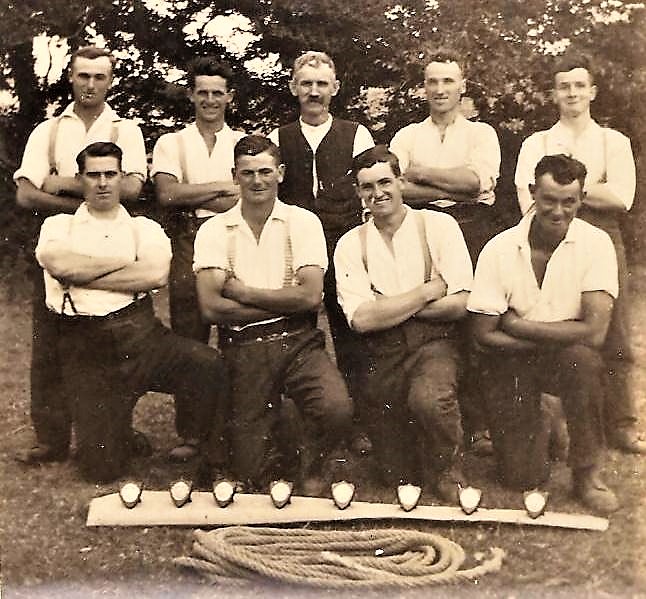
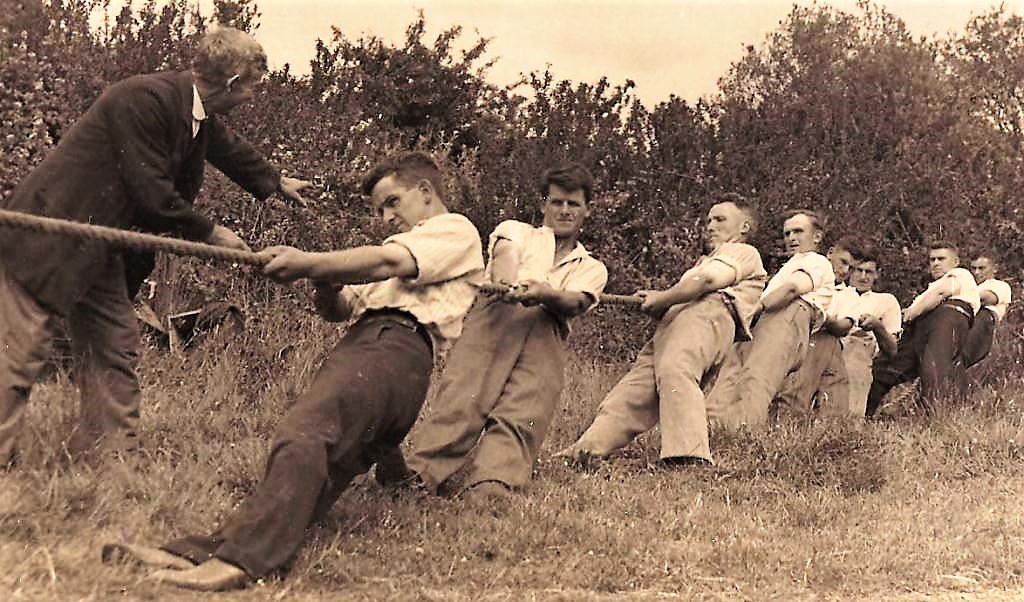
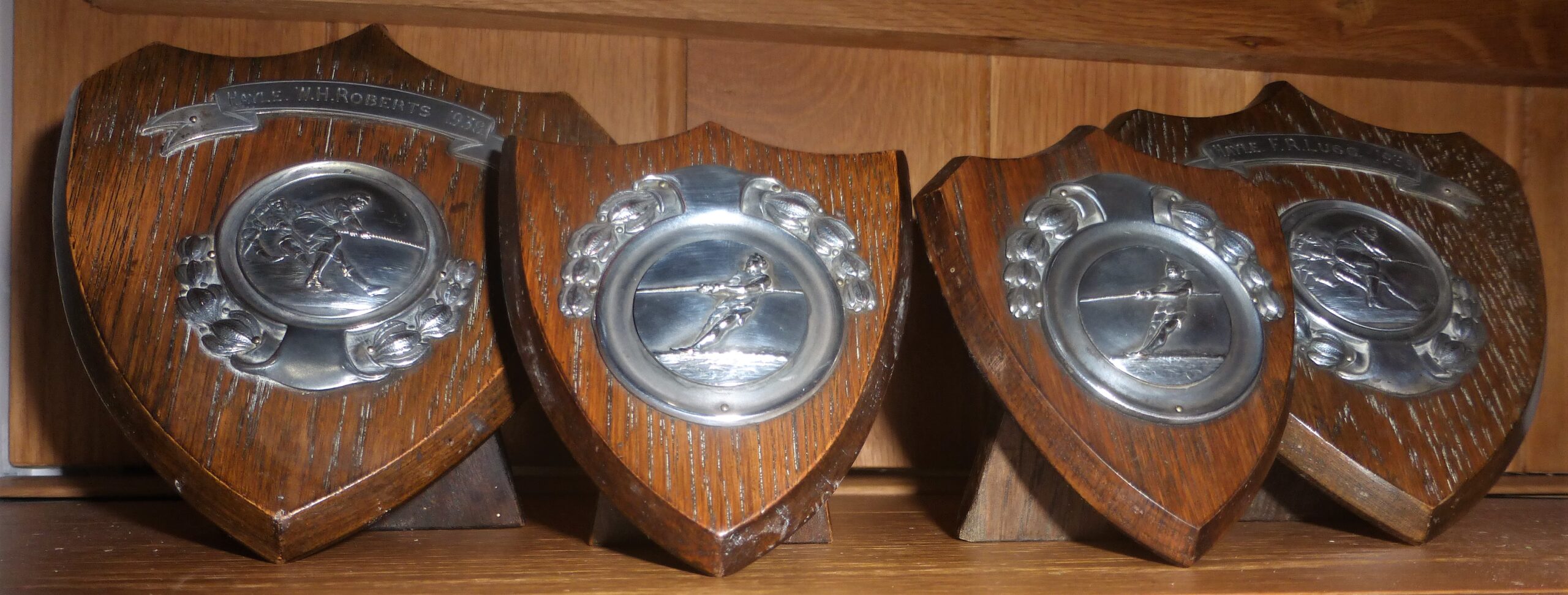
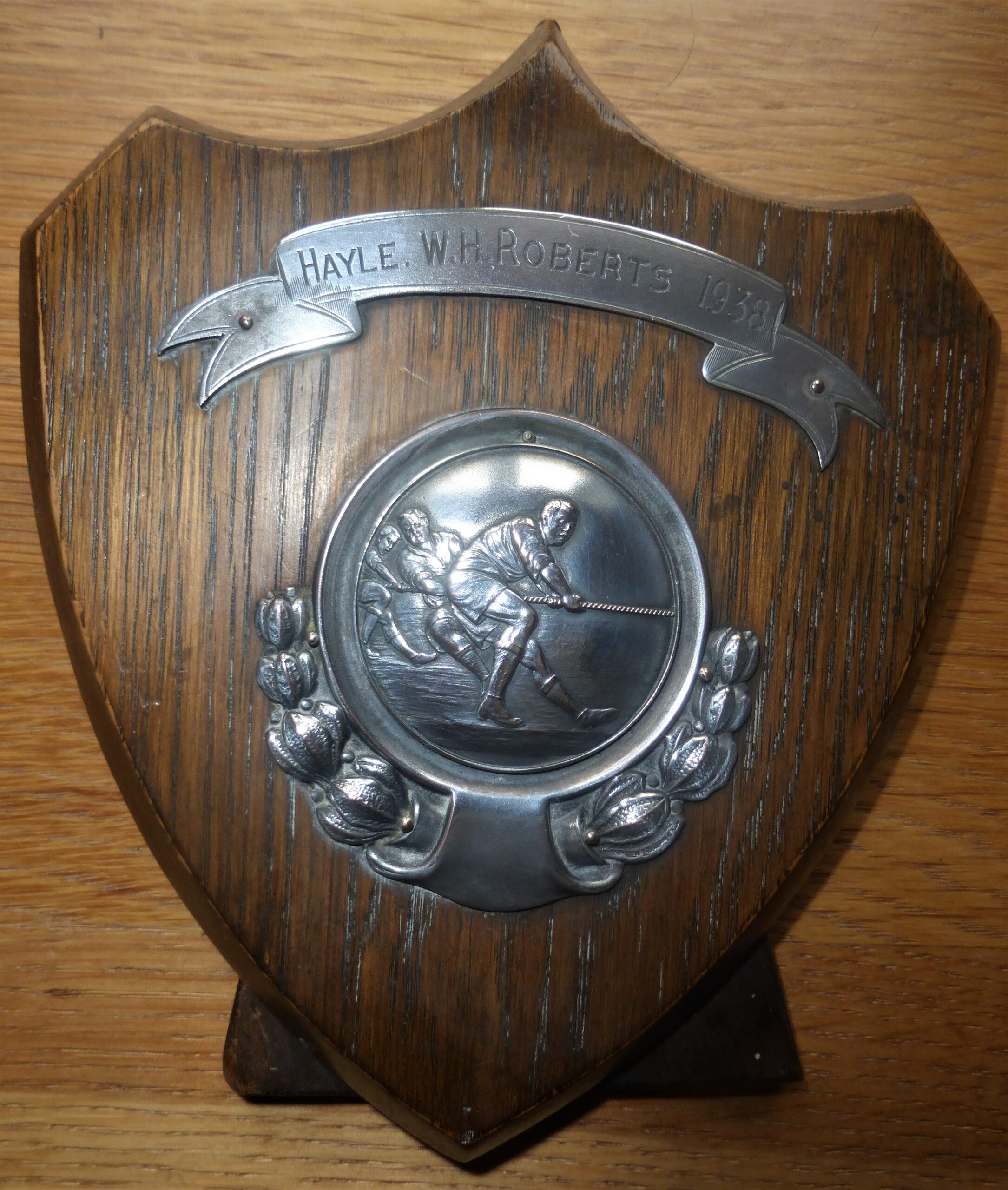
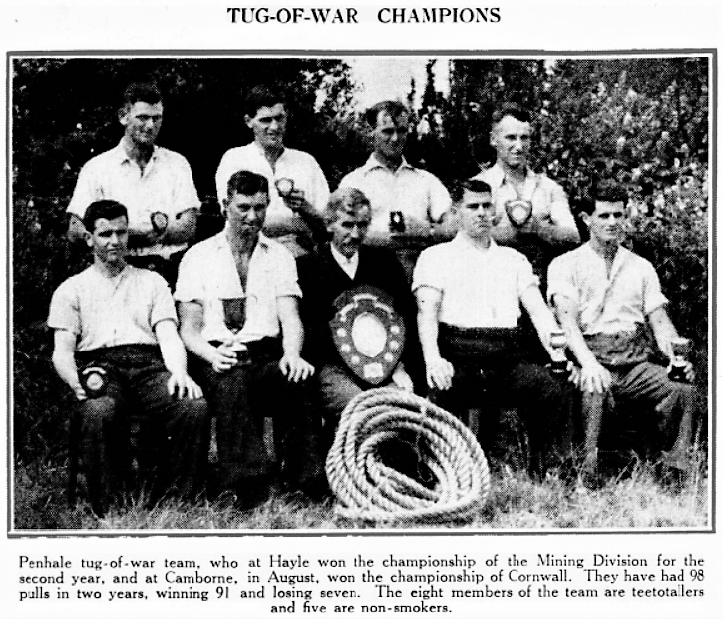
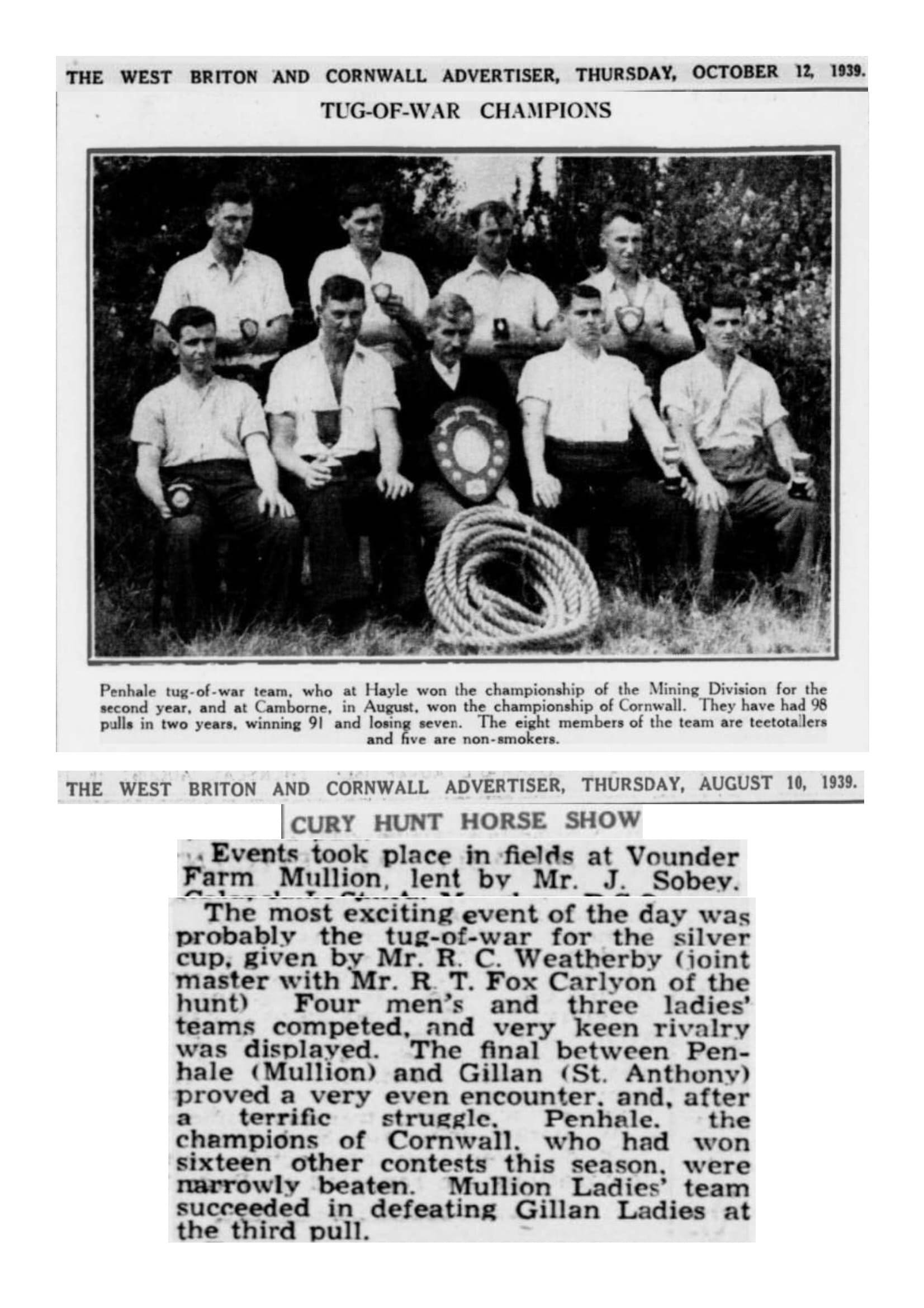
The Penhale tug o' war team was a formidable group in 1938 & 1939. In those two years, Penhale had 98 'pulls', winning 91, and became Champions of Cornwall. Seven of the team were farmers, and the eighth was a blacksmith. Five were first cousins. Training took place at Erisey, under the guidance of Richard(Dick) Gilbert, uncle to three of the team and father to two. After a hard day on the farm, the team met at Erisey in the evenings, to repeatedly haul a granite roller & weights, by pulley, up a tree, holding it halfway up for lengthy periods. The training rope was donated by visitors, who stayed at Penhale. The Penhale 'boys' came together because of the annual 'sports' at Vounder, on the first Monday in August, in those days, a Bank Holiday. The fishermen at Mullion Cove had challenged the village, and so the Penhale team was formed in 1937.
Unfortunately, WWII stopped this very successful team just months after they became Cornish Champions. Although training ceased, the team came together again in 1941, having been challenged by the RAF Predannack. The 'match' took place at Ebenezer Chapel Tea Treat, and needless to say, Penhale won! One more occasion led to a reunion, when Penhale competed at the Welcome Home Sports, at the end of WWII.
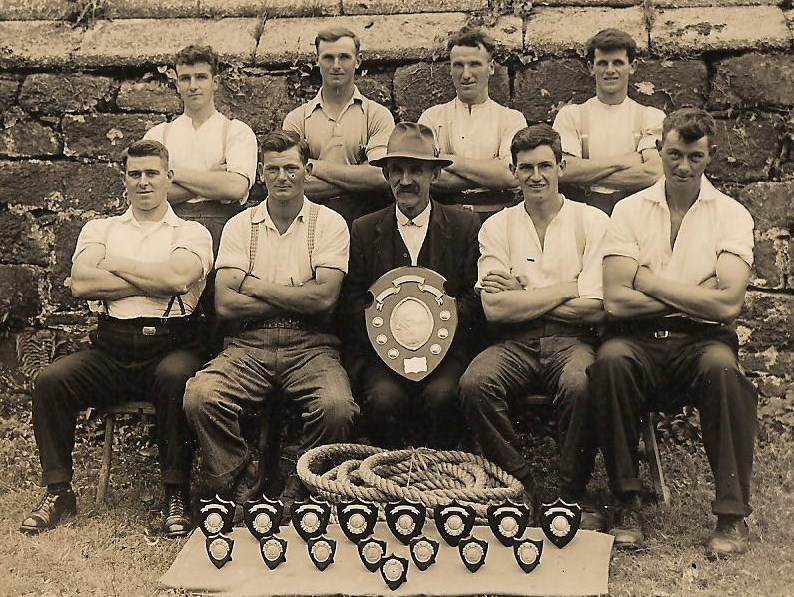
* The names of team in the order they appear in Picture 3 holding the Champions Cup: Back Row(left to right) - Edward Gilbert; Willie (Bill) Roberts; Richard (Dick) Roberts; John Bosustow - Front Row(left to right) - Frank Lugg; Percy Bennets; Richard (Dick) Gilbert - Coach; George Gilbert; Warren Bennetts
Attached Pictures:
Picture 1 - Champions of Cornwall 1939.
Picture 2 - Training session at Erisey 1938.
Picture 3 - Mining Division Champions 1938 *
Pictures 4 & 5 - Trophies.
Picture 6 - Newspaper picture October 1939
Picture 7 - Newspaper picture & account of Mullion Tug o' War event
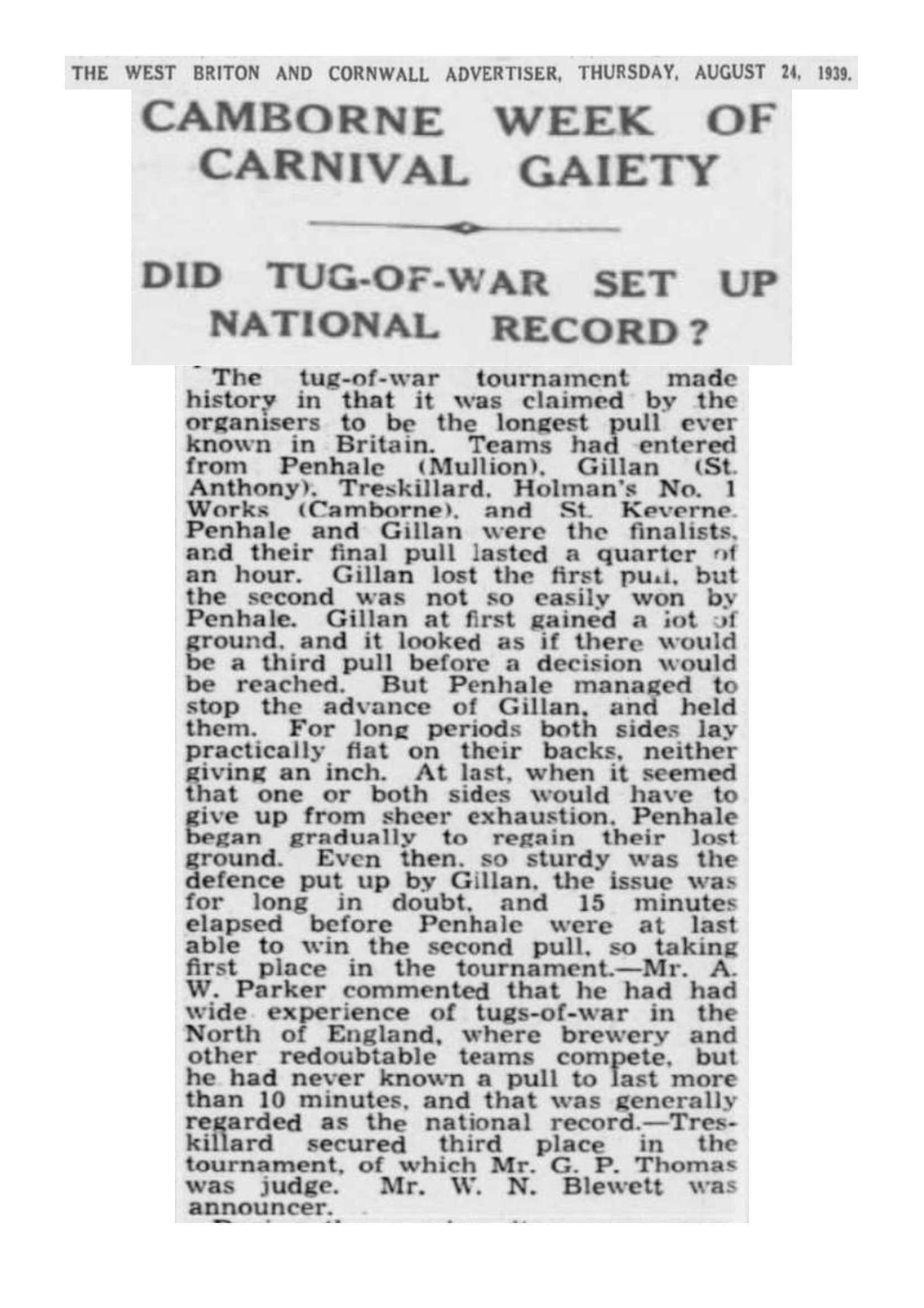
Picture 8 - Newspaper article on 'Britain's longest 'pull'
28th May 2021
Farming in Mullion
The main employer in Mullion (in modern history) has been farming. In the 1843 Tithe Map there are forty-two farms named, Newton Farm was the only one in the parish with an English name, indicative of its later development; the field names are also mainly in Cornish on the 1843 Tithe Map. A curious field name is St Malo's Moor, in Clahar - the only reference to this Breton saint in Cornwall! The patron saint of Mullion, another Breton, occurs in three field names - Crug Melan, near Penhale; Carn Melan, near Predannack Cross; and Park Melan, on the site of Mullion Cove Hotel.
Photo 1 - Lower Predannack Wollas, 1906. At that time, Predannack had its own Chapel, and supported a sizeable population, working on the many farms.
Photo 2 - Priske, 1910. Named using the Cornish word PRYSK, a copse. Listed building, C17. Nicholas Trengrouse, father of Henry, the inventor of the 'Rocket' life-saving apparatus, was born here in 1738. The memoirs of Elizabeth Thomas, 1817 - 1898, tell of an arson attack there in 1850. The culprit, William Bartle, a Cury shoemaker, was transported to a penal colony in Bermuda!
Photo 3 - Tremenhee, 1910. The English translation is 'sanctuary homestead'. Another farm dating back centuries. Records show that Edward Kempthorne acquired a lease of the Tremenhee estate in 1666. The 1843 Tithe Map shows Nafrego Farm, which soon became part of Tremenhee, with the Shephard family as occupants.
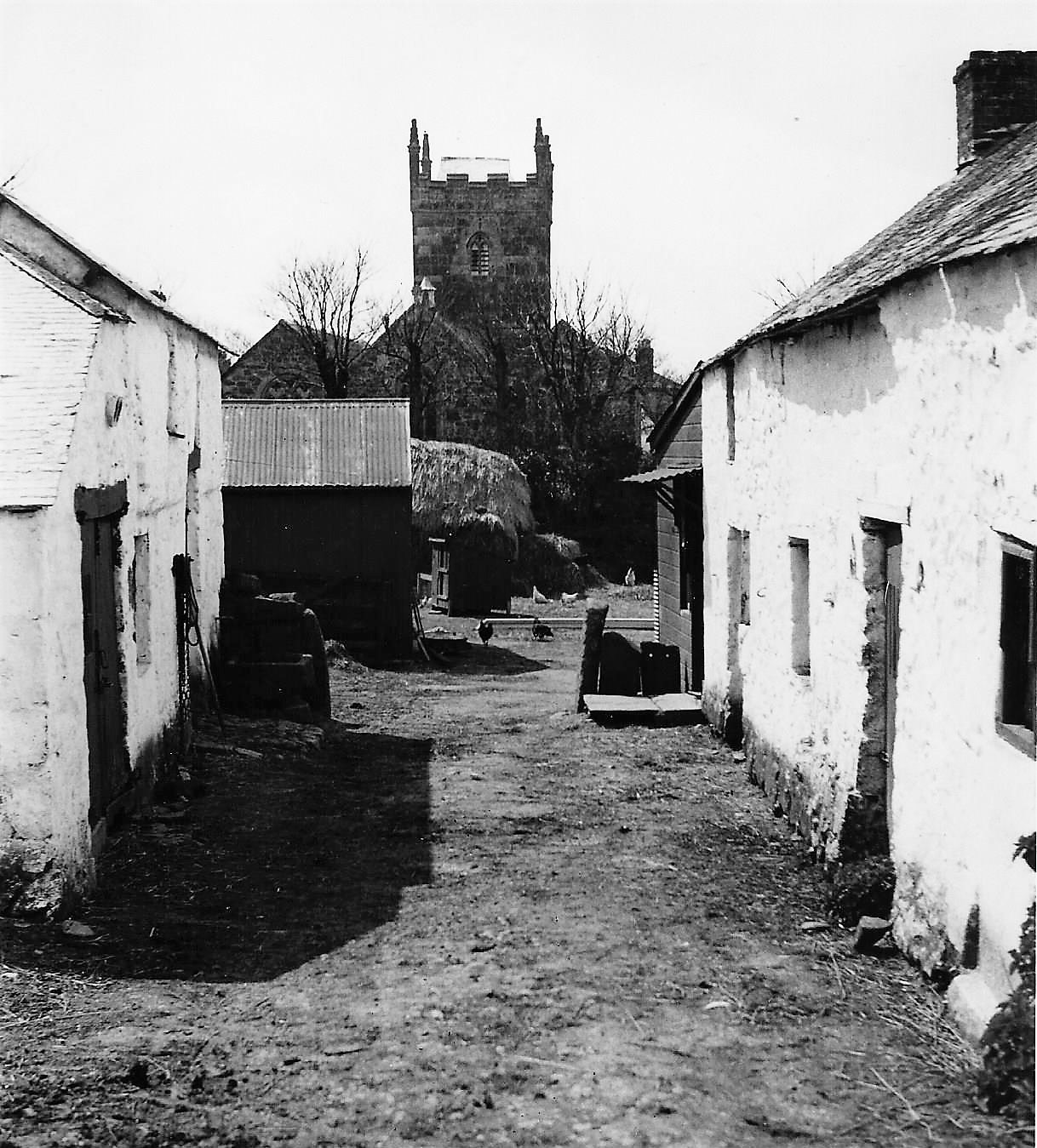
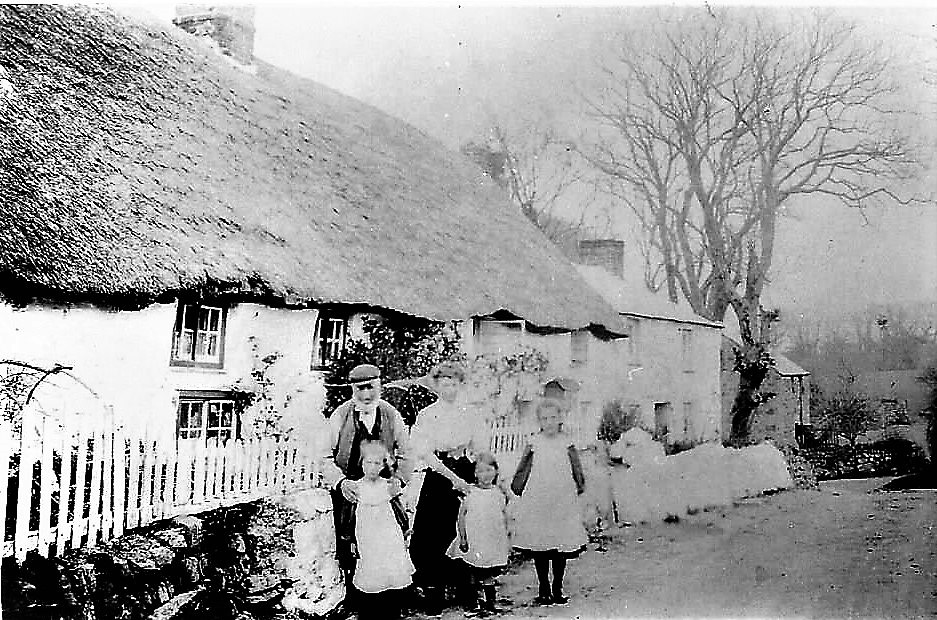
Photo 4 - Thatched cottages on the lane to Meres/Merris Farm, 1900. The Mullion Old Cornwall Society June Newsletter will have an account of this farm. The photo indicates rural family life - horses for transport & work, cottages thatched with wheat straw, supplied by local farmers. As we have seen from our recent posts on Trewoon and Churchtown, Mullion, it was from the early 1900s that the fashion for thatch gradually died out, with tiles or slates replacing straw when roofs were renovated.
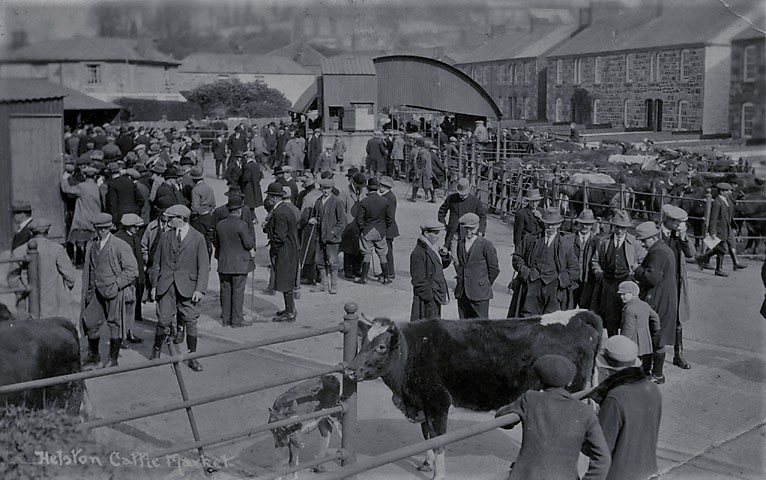
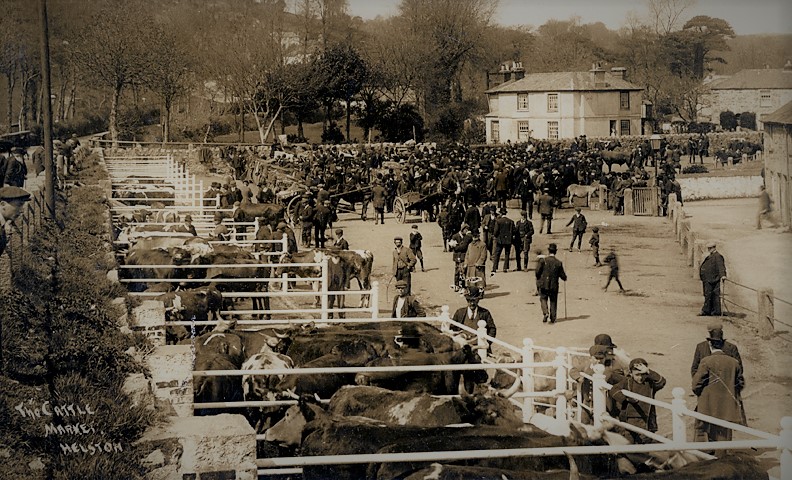
Photo 5 & 6 - Mullion farmers enjoyed Mondays at Helston market, doing business and socialising. For many, Sundays at chapel/church and Mondays at market were the only break from farm life. These two photos are pre-WW1.
Photos 7 & 8 (both enhanced and colorised) - In the1930's horses & wagons were still dominant on Mullion's farms. Croust , at harvest, was always a time for food and fun with friends - splits, heavy cake, saffron, dish o' tay.
Photos 9 & 10 - The above farms (& others) recorded on these photos of the 1939 Register.
Photo 11 - 1947 Map of Mullion showing some of the farms. Priske is at the end of the lane past Newton. Of course, Colroger, Tremenhee, Meres, & Laflowder were all built on in the period 1950 - 1990.
![[1] MULLION Predannack Wollas](https://kernowgoth.org/wp-content/uploads/2021/06/1-MULLION-Predannack-Wollas.jpg "[1] MULLION Predannack Wollas")
![[2] MULLION Tremenhee](https://kernowgoth.org/wp-content/uploads/2021/06/2-MULLION-Tremenhee.jpg "[2] MULLION Tremenhee")
![[3] MULLION Tremenhee](https://kernowgoth.org/wp-content/uploads/2021/06/3-MULLION-Tremenhee.jpg "[3] MULLION Tremenhee")
![[4] MULLION Laflouder](https://kernowgoth.org/wp-content/uploads/2021/06/4-MULLION-Laflouder.jpg "[4] MULLION Laflouder")
![[7] ROBERTS FAMILY farming](https://kernowgoth.org/wp-content/uploads/2021/06/7-ROBERTS-FAMILY-farming.jpg "[7] ROBERTS FAMILY farming")
![[8] ROBERTS FAMILY croust](https://kernowgoth.org/wp-content/uploads/2021/06/8-ROBERTS-FAMILY-croust.jpg "[8] ROBERTS FAMILY croust")
![[9] MULLION REGISTER 1939 Predannack](https://kernowgoth.org/wp-content/uploads/2021/06/9-MULLION-REGISTER-1939-Predannack.jpg "[9] MULLION REGISTER 1939 Predannack")
![[10] MULLION REGISTER 1939 Priske etc.,](https://kernowgoth.org/wp-content/uploads/2021/06/10-MULLION-REGISTER-1939-Priske-etc..jpg "[10] MULLION REGISTER 1939 Priske etc.,")
![[11] MULLION Ivor Thomas 1947](https://kernowgoth.org/wp-content/uploads/2021/06/11-MULLION-Ivor-Thomas-1947.jpg "[11] MULLION Ivor Thomas 1947")
14th May 2021
Mullion through the 20th Century
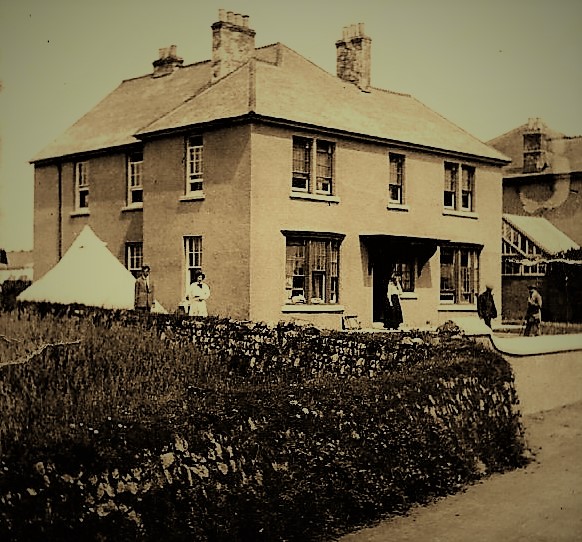
Images 1 & 2 - The building of Mullion School in 1900, where the Co-op is now, led to houses being built from the Old Vicarage down to the cricket field, over a twenty year period. These two photos are of interest, as Men-y Gwydn is shown, 1965, before the road was built for the Health Centre and new school. Melvin House, built in 1909, is shown in 1920, before further development towards Polurrian corner.
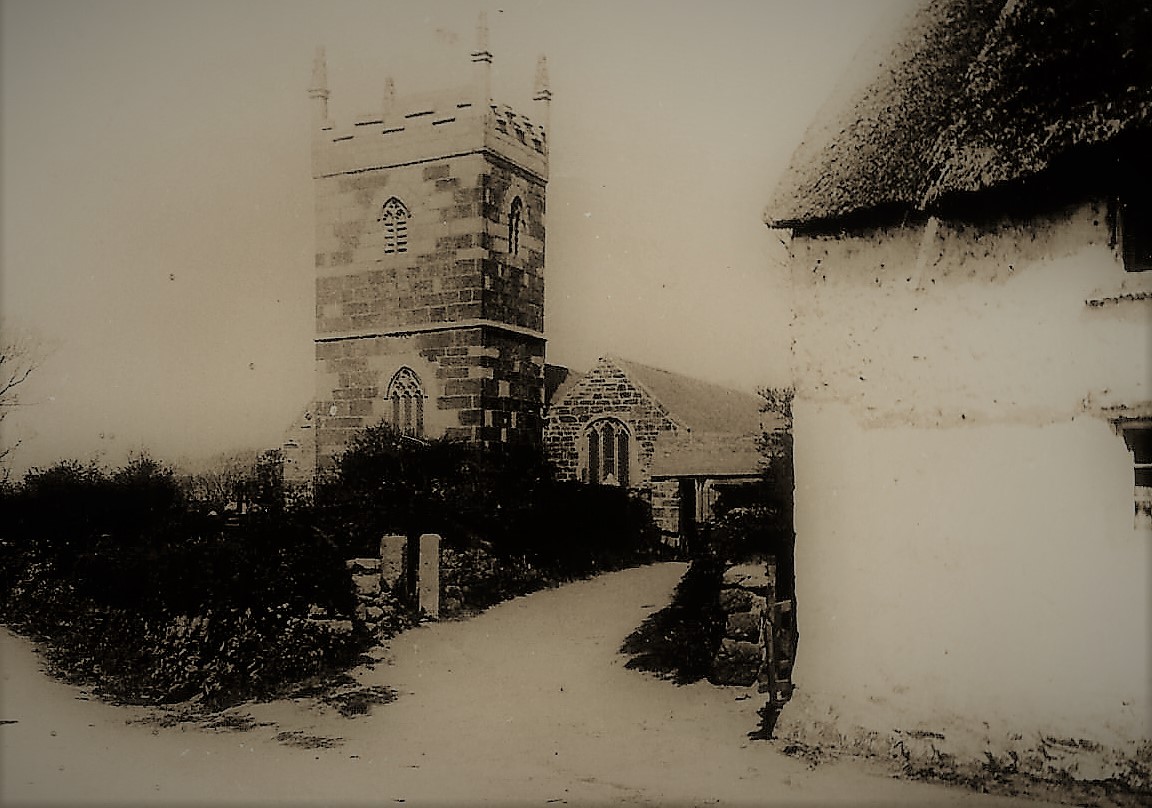
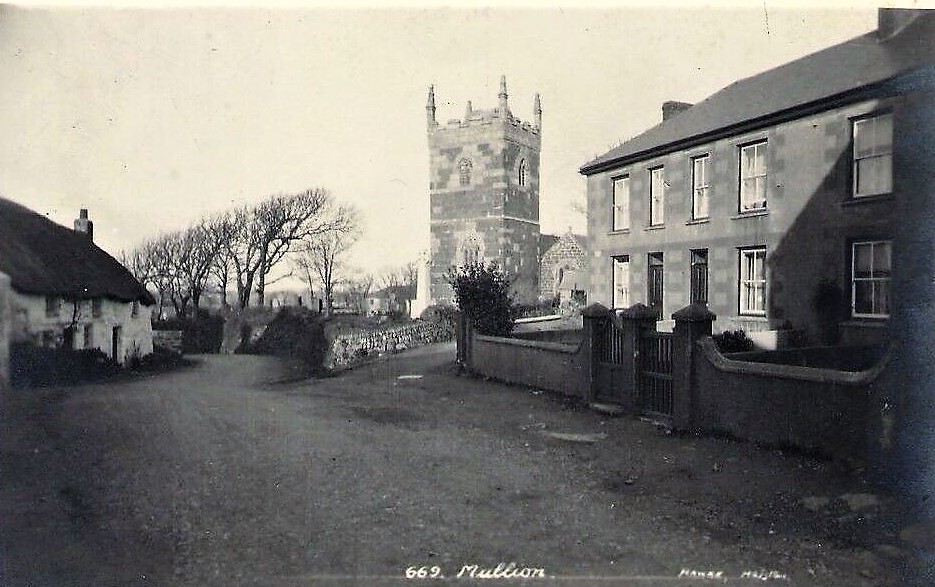
Images 3 & 4 - The Cornishman, 8th October 1903, reported:
"Old Mullion is now fast falling out of sight. The old houses with their thatched roofs are growing less every year. Mr J. H. Matthews, builder, has just pulled down one of the oldest houses in Mullion Churchtown, which has been inhabited by the Mundy family over two centuries, and has erected on the same site four beautiful workmen's dwellings."
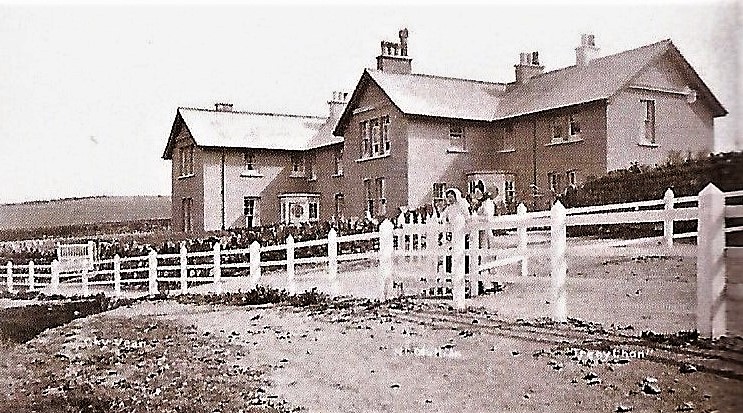
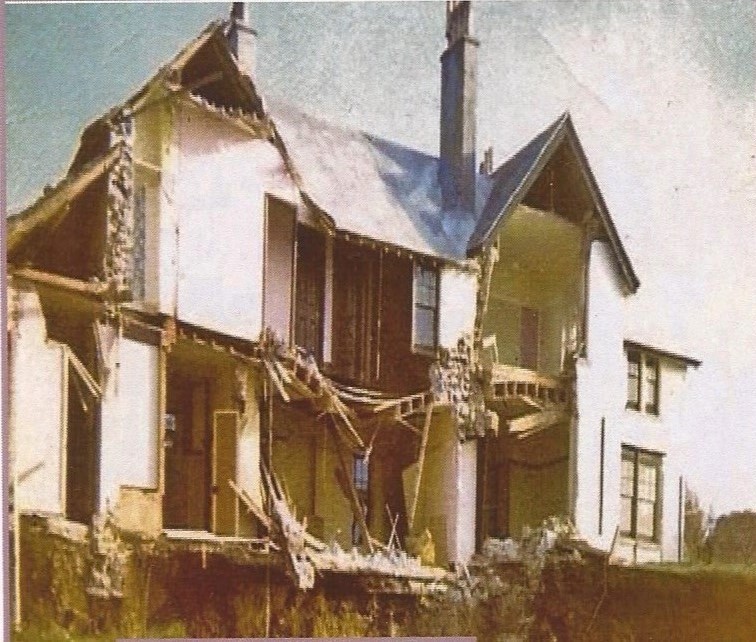
Images 5 & 6 - Early C20 view of Chyvear & Trenython....and fifty years later, having been eroded and fallen over the cliff, Polurrian.
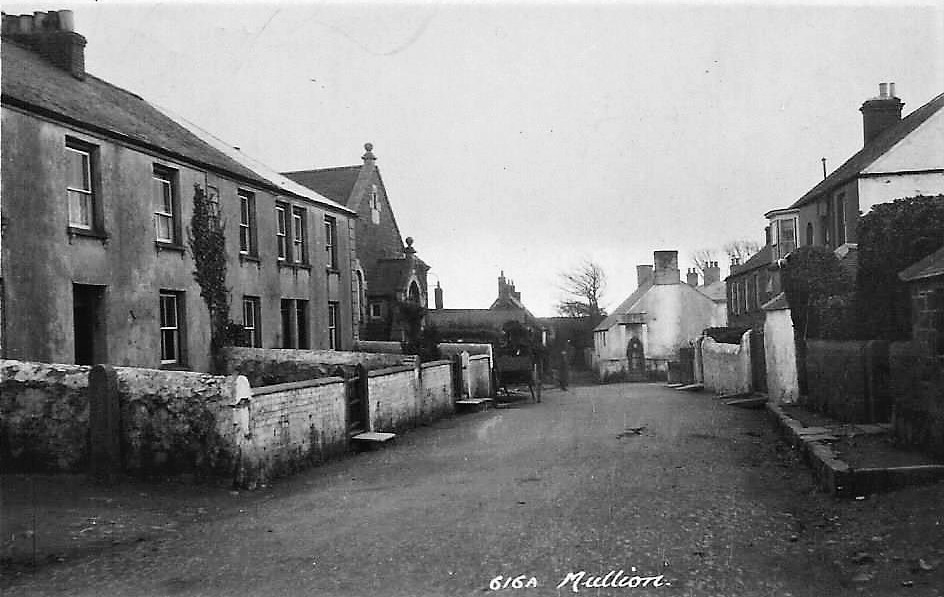
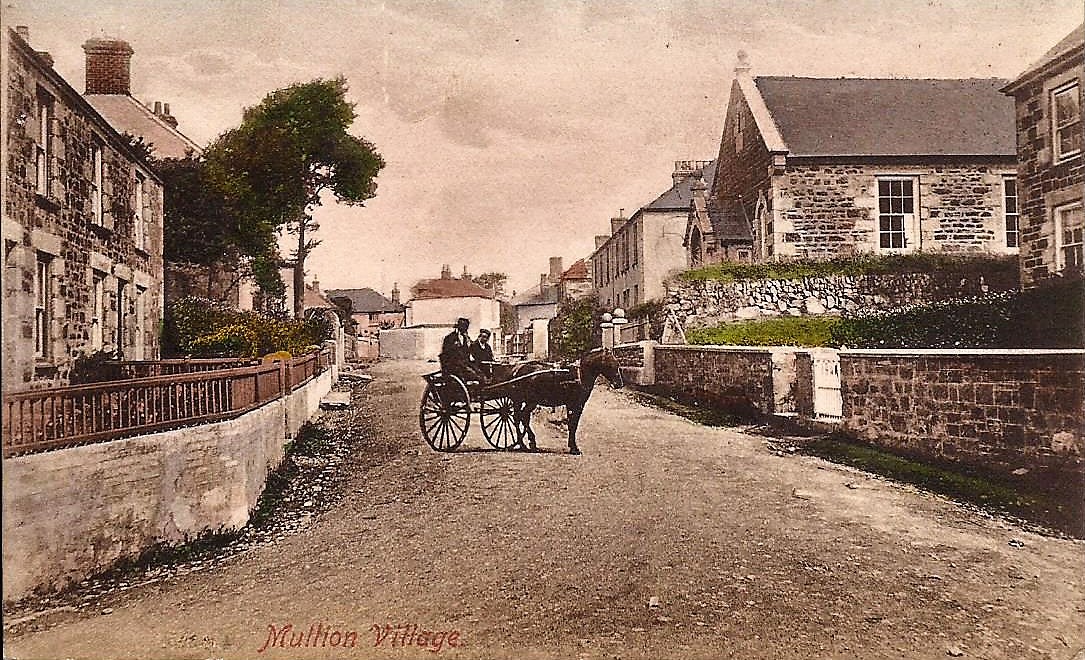
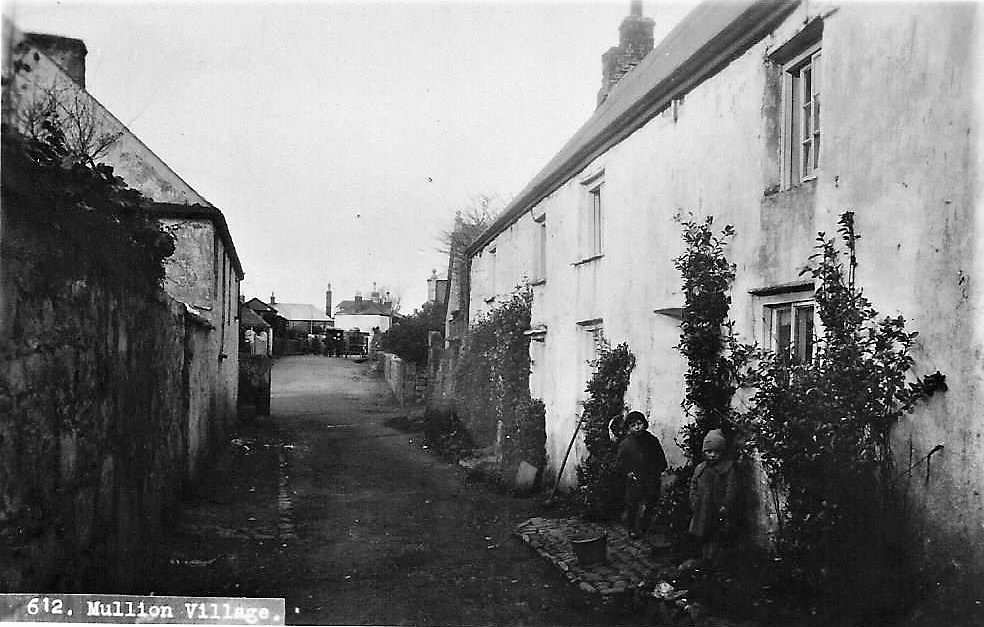
Images 7, 8 & 9 - Vicarage Lane, 1920. Later, Charlie Hodges lived in the first cottage, Buster Exelby in the next one. Also, the view towards the Clock & Vicarage Lane, and from the lane, with pony & trap.
Image 10 - Colroger Farm. Working horses crossed the road daily from the fields, accessed by the lane by Chapel, before and after a day of toil in the fields.
Image 11 - Woodbine Cottage, 1910.
Image 12 - Willow Cottage 1906
Image 13 - Ivy Cottage 1906.
Image 14 - Meaver 1900.
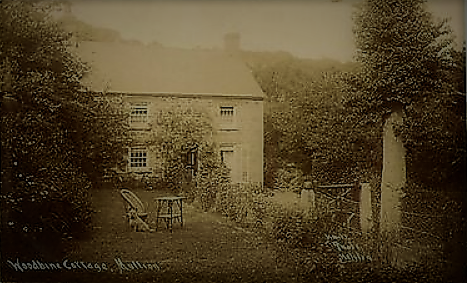
29th March 2021
Continuing our theme looking at the 'building boom' in Mullion, here are photos of the 'lots' associated with the 1913 sale of a number of well-known and historic buildings, farm area and land; also included are a number of photos of the buildings for sale, as well as photos of some of the Mullion men mentioned in the sale documents.
Much was happening in Mullion in 1913, including the possibility of the return of mining to the area (see newspaper article below), there is also a photo attached of the 1913 Mullion football team!
The 1907 map shows Mullion pretty much as it was in 1913, the year of the sale - note the triangle of land near the bottom, by 'Vic' (Vicarage). This was where the Church House (now YMCA), was built on in 1909 (see newspaper article below), this completed 20 years of significant building in Mullion, which we have been covering on Facebook these last few months i.e. the three Hotels, Reading Room, Harbour, School, Marconi Station, plus buildings along Nansmellyon Road and Polurrian Cliff.

14th March 2021
Continuing our focus on historically important Mullion buildings, today's post looks at the old Predannack Chapel.
Included below are a number of newspaper articles from the early 1900's, photos and 1840 maps relating to the old chapel.
The area of Predannack Wartha has a recorded history going back to the 11th century. This ancient chapel once stood in the farmyard of the manor. There is no record of its dimensions The only remains of the original chapel are the Benatura or Stoop (photo below), and a small windowsill (or mullion) and are insufficient to fix a date. Predannack Wartha was a sizeable ‘village’ at this time, with thirteen dwellings. Nearby, there were a number of tenements at Predannack Wollas.
The 1840 Tithe Map (below) records the chapel now belonging to the Wesleyan Methodist Association. A Methodist Chapel would have fulfilled the spiritual needs for many of the agricultural community of over 130 people.
This means that there would have been four Methodist associated chapels in Mullion parish at this time: Wesleyan Methodist Association at Chapel Place, Predannack chapel, Bible Christians at Trewoon and the newly built Wesleyan chapel at Tremenhee.
The chapel fell into disrepute at some point during the 19th century but was refurbished by Richard Thomas (also known as “Boss Dick), carpenter and later manager of the Polurrian Hotel, in 1906.
Included below is an interesting picture (with a number of familiar names) of the 1906 mens Methodist bible class, a number of the men would have preached at the Predannack chapel.
23rd February 2021
The Facebook focus at present for Mullion Old Cornwall Society is the 'building boom' which took place in 'untouched' Mullion between 1888 - 1908. During this time, three hotels; the Reading Room; the harbour and road access; the school; Marconi's works; the coastguard houses and the Church House were all built.
Today's post focuses on the new school of 1900, which served Mullion for 80 years. The extracts in this post plot some of the politics and appointments from 1872, when known as the Board School, to the move in 1900 to the new school. The Board School was built on what was the edge of Mullion on the site of the current Boots and corner buildings. Note that when the new school (present day Co-op) was built in 1900, there were no houses between the Vicarage (now 'Old') and the new harbour, except Spion Kop and Trenance
Included in this post is an extract from a talk given in 1975 by Melita George, which indicates something of the Dame School arrangements (pre 1872) and the Board School, also included are a number of newspaper 'cuttings' from the time in relation to the schools and a school report to HM Treasury (which shows a reminder that although it was Mullion Primary School, it was in fact all age still!.....only those who passed the dreaded 11+ exam left and went to Helston Grammar).
Our next Facebook post will be about the new school with photos and information from 1900's - 1950's.
15th February 2021
Mullion Reading Room
Our next post for this month's series is on the Reading Room in Nansmellyon Road.
In Victorian times, newspapers and books were beyond the means of ordinary working folk. So in many villages, a public reading room was built where one copy of the paper could be read by many people. The Reading Room was built in 1889. It was gifted to the Royal British Legion HQ in the 1950s.
The photos are of the Reading Room and Nansmellyon Road from the turn of the century and from when it was the British Legion Hall. There are also newspaper articles included, which cover areas, such as, founding/funding, building, activities and events.
It was a sad day for Mullion when this community facility was lost in 2014 - the Mullion Branch of the British Legion officially closed its doors in December 2013. It is now a private residence
28th January 2021
Mullion Hotels [4]
Poldhu Hotel (now Poldhu Care Home) - Continuing our series on Mullion hotels, here are photos, postcards, newspaper articles, hotel documents and guest information for the Poldhu Hotel mainly all from the late 1800's/early 1900's.
The site was well known as the location of Poldhu Wireless Station, Guglielmo Marconi's transmitter for the first transatlantic radio message on 12 December 1901. Mullion Old Cornwall Society ran a series of posts on Marconi in Mullion, take a look at earlier posts on this Facebook page for photos and information about the sites development during Marconi's visits.
[Image No' - ] December 1914 - WW1 - A number of 'locals' in this picture - Back Row(L to R): no.2. T. TRIGGS; no.3 E. EXELBY; no.4 ETSON WILLIAMS; no. 5 CHARLIE TONKIN; no 6 RICHARD MATTHEWS; no. 7 E. MARDEN; no. 8 F. THOMAS.
Middle Row(L to R): no.4 W. TONKIN; no 5 W. GILBERT.
18th January 2021
Mullion Hotels [3]
We will be running a series of posts on 'Mullion Hotels' over the coming weeks, this first post is on the Temperance Hotel.
The Temperance Hotel was in Mullion Square and operated throughout the latter part of the 1800's. The hotel was an important building in Mullion and was run by the Matthews family.
Included in this post are some extracts from the hotel guest book with some beautiful illustrations.
8th January 2021
Mullion Hotels [2]