2nd February 2022
Anne Blanche Ugalde
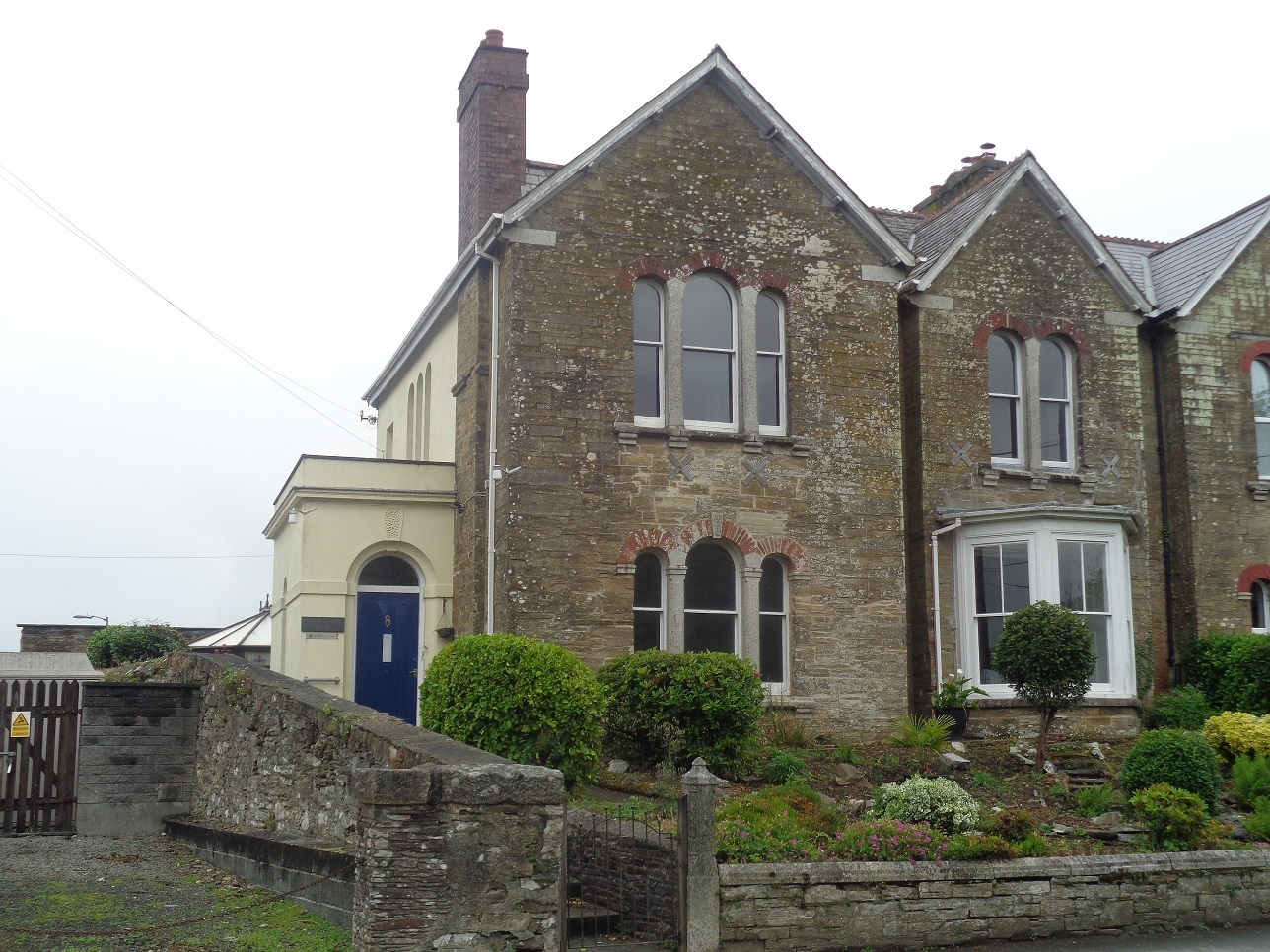
Although Anne Blanche Ugalde and her elder sister Louisa were born in Marylebone, London, when they were aged 1 and 5 respectively they were living in no.1 Castle Gardens, Liskeard, with their father, John, a 36 year old Joiner born in Liskeard, and their mother, 29 year old Grace from St. Neot.
Known as Blanche, her teaching career began at the age of about 14 as a Pupil Teacher at the Church of England Infants’ School in Church Place, earning around £8 a year. The School Mistress, Louisa Tait, entered the following reports in the school’s Logbook in 1888, ‘Blanche Ugalde refuses to assist in the singing, by a position of perfect silence, when requested to do so. This has occurred before’. Then again, ‘I had to complain of rude disobedience on the part of Blanche Ugalde. She refused to alter the position of the children who were having simultaneous reading in front of the first class. Both Fanny Moon and Blanche Ugalde have neglected their classes from 10.15 to 11.00 by talking the whole time together, although requested once by me to attend to their duties. Blanche Ugalde having a cane in her hand and using it!’ Miss Tait was asked to resign soon after this episode and Blanch seemed intent in taking her job.
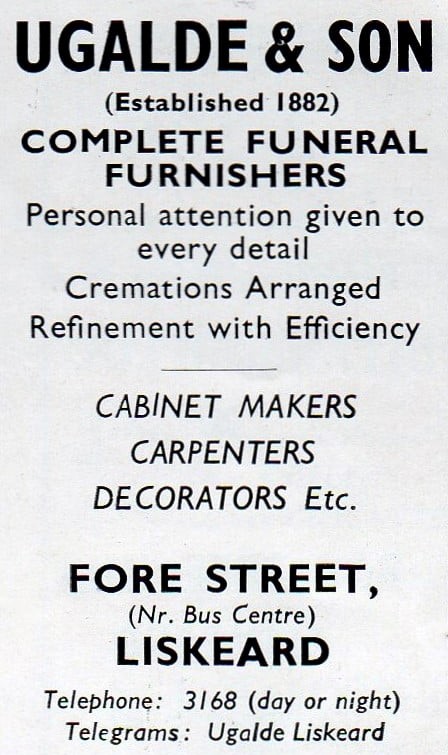
By the time of the 1891 census Blanche, now aged 21, was living in Castle Street and gave her occupation as ‘School Mistress Elementary’, having taken charge of the older pupils in the Church School. Her father’s business was now ‘Builder and Undertaker’ and Blanche’s younger brother Alfred was an apprentice in the family firm. Alfred continued the family business after his father’s death, in the 1939 Trade Directory Ugalde & Son are listed as Undertakers at no.3 Fore Street. They are still operating successfully from Heathlands Lane.


4th January 2022
The West Briton reported on the case of Sarah Grace Dunn
On March 20th 1876 the West Briton reported on the case of Sarah Grace Dunn, a Domestic Servant in the employ of Brewery owner Councillor Daniel Venning of Bay Tree Hill, Liskeard. Venning had accused Sarah of stealing from him bread and meat with a value of 3d, but the case was dismissed in court by the Magistrates. Due to the apparent wealth of Venning and the trivial amount involved, public interest was aroused and the verdict was met with cheers and applause from the gallery. After the trial Venning was followed home by ‘a motley assembly of men, women and children, who did all in their power to vent their spleen by shouting after him’. The unfortunate Sarah was sacked by Venning, but why did she put her liberty and job at risk for such a small reward?
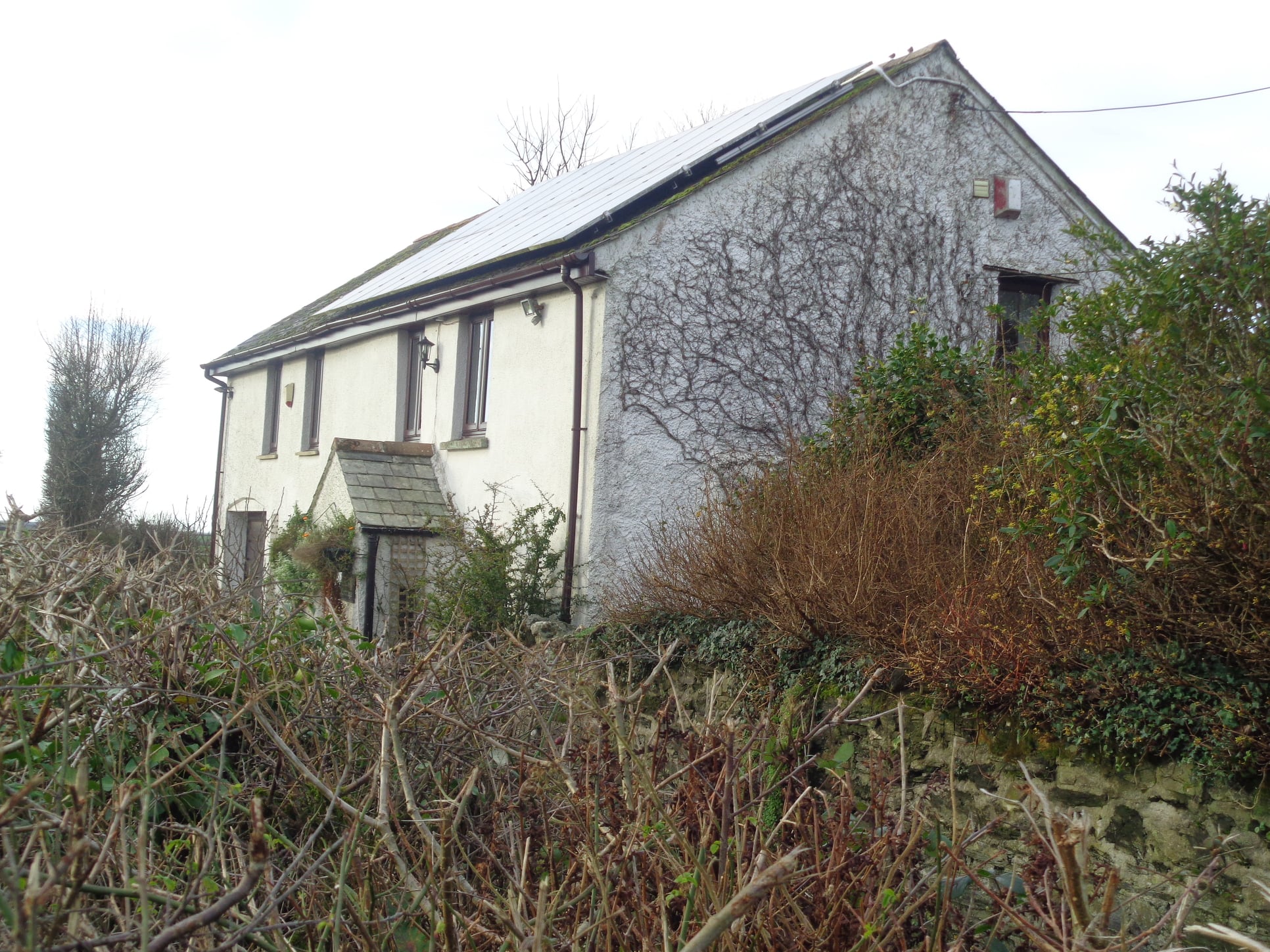
Sarah grew up in Crift Cottages near Pengover Green with her eight siblings. Her father, Seth Dunn, worked in the nearby Menheniot lead mines, as did two of her sisters and three of her brothers, the youngest being James aged only 13. The next census after the court case revealed that Sarah had found employment as a General Servant, but from her meagre wage she had to support the only other resident in the family home, her now widowed 63-year mother Mary, who gave her occupation as a Pauper. Not to condone theft, but I think we can appreciate the circumstances that led to Sarah’s crime.
A change to those circumstances came in 1883 when Sarah met and married Hugh Snell, a Farmer at Tregondale in Menheniot. He employed a Domestic Servant to assist Sarah as she raised their three children, and a young man to help him on the farm. By the 1911 census they had moved to the 5 roomed Samps Barn, still in Menheniot, and Hugh had found regular employment as a Carrier with the District Council. Married for 28 years, Sarah and Hugh now had at least two granddaughters, one of whom was visiting them on the night of the census, 5-year-old Dorothy Myra Cox.


5th December 2021
Elizabeth Healey
At the age of 16, Elizabeth Healey had left her home in Looe to live and work in nearby Barbican Farm as a General Servant. She married Francis Quiller in Liskeard when she was 19 and Francis was 21. Working as a Wool Sorter, Francis’ wage would have been barely enough to make ends meet, and it came with a major risk, ‘Wool Sorters’ Disease’. This occupational hazard was a form of anthrax caused by the inhalation dust from sheep’s fleeces.
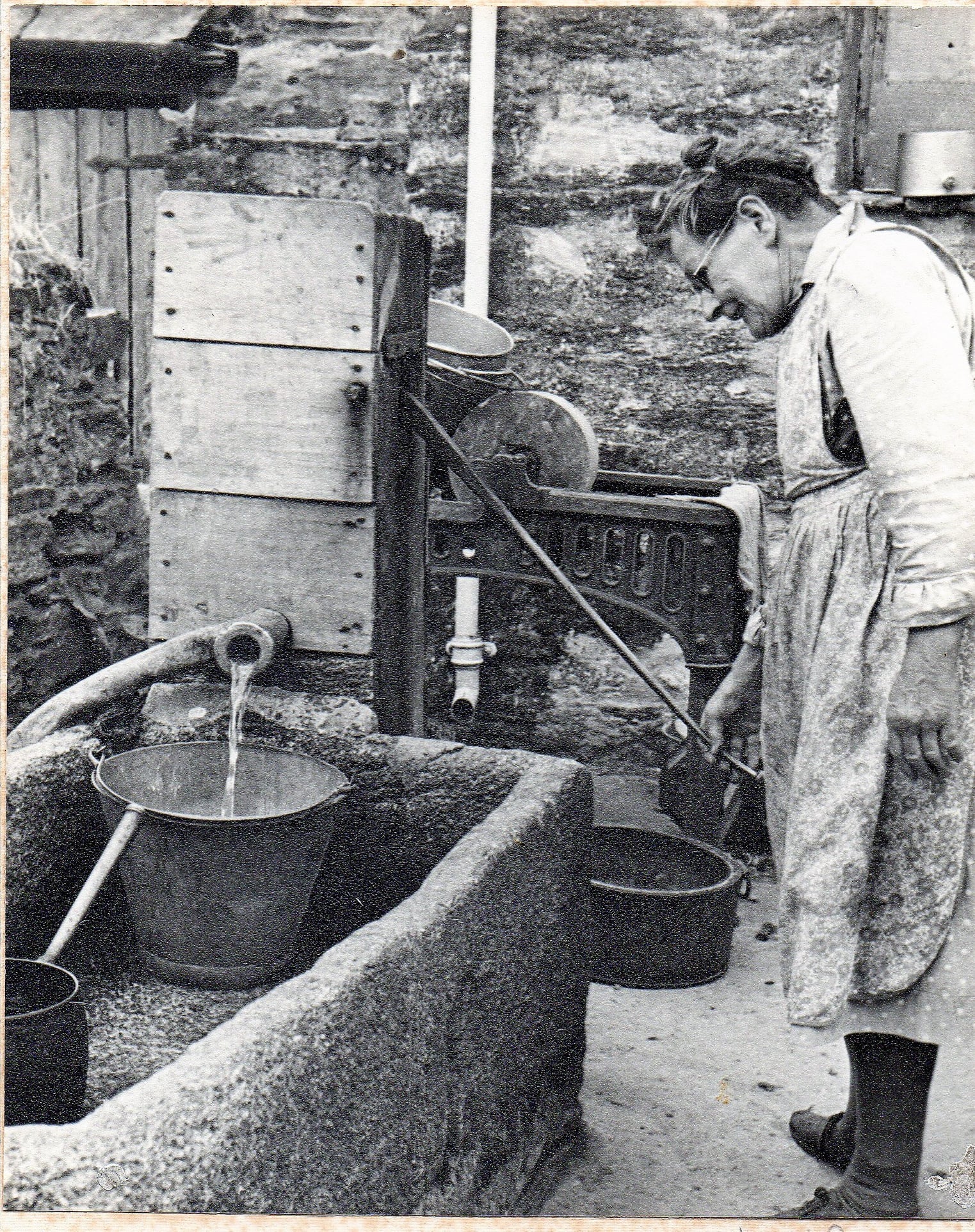
It was Quiller’s Court, off Higher Lux Street where Elizabeth, aged 36, was living in 1871 with her 10 year old son Francis junior and daughter Bessie, aged 5. Courts had no inside water or privy; outside was a shared standpipe and a privy shared by several families, with no drainage, only an open cess-pit, the cause of at least two outbreaks of Cholera in 19th century Liskeard.
Elizabeth was cleaning other people’s houses as a Charwoman and even young Francis was working, as an Errand Boy. A notation in the census after Charwoman is ‘wife of miner in America’. For several years Francis Quiller was in America, searching for the elusive gold nugget, while his family struggled to get by in Liskeard. By 1881 he returned and was back living in the unsanitary Quiller’s Court, and again sorting wool, suggesting that the gold nugget was never found.
After a life of endless struggles, Elizabeth died in January 1891, aged only 56. Francis junior died 18 months later; he was just 31. Francis senior was still working up to his death in March 1910 at 76, he had avoided the dreaded ‘Wool Sorters’ Disease’. Bessie had been Housekeeper to her father for 19 years after her mother’s death, in 1911 she was living alone, still in Quiller’s Court with its outside privy and water tap, and cleaning other people’s houses as a Charwoman, to stay out of the Workhouse, just like her mother 40 years before.


4th November 2021
James Fitze was Mayor of Liskeard
James Fitze was Mayor of Liskeard in 1787, 1793 and 1796. Stored at Kresen Kernow is a 99 year lease dated 17th November 1745 signed by James to rent the ‘tan-house, stable, water pool, lime pools and orchard’ at Pondbridge Hill, Liskeard. His deposit was £31 10s and the yearly rent of 1s was payable to Nicholas Connock Esquire, of Treworgey Manor. 100 years later, in 1841, the Tannery on Pondbridge Hill was still being run by Fitze descendants, Joseph and Mary. Living with them on the premises were their 5 daughters, 3 sons and 2 Domestic Servants. Joseph died in 1849 aged just 48, his father also died very young, at only 41. Mary died in1877 aged 79, coincidentally her mother-in-law was also 79 when she died. Industrial deceases are thought to have been the cause of many premature deaths in early tanneries, caused by inhaling fumes during the cleaning of animal hides, commonly using human urine. The Fitze properties in Liskeard were sold in November 1929 at an Auction in the Kings Arms, Tavern Hill. The site is now occupied by Liskeard & District Museum. Included in the sale was ‘all that Tanyard containing 50 pits, 30 handlers, 12 troughs and 8 vats with the Back Mill, Rolling Machine, Store Rooms, Drying and Back Lofts, conveniently situated in Well Lane’. As well as properties in Pondbridge Hill, New Road and Boveway Lane, there was a ‘large and commodious dwelling house containing 2 parlours, kitchen, pantry, back kitchen and dairy on the ground floor, large dining room and 3 bedrooms on the second floor, and 4 bedrooms on the upper floor, together with a large courtlage, office, stable, drying loft, piggery and a valuable dung pond, situated in Church Street and extending backwards to Well lane’.


3rd July 2021
Dr. Marrack’s Bronchial Mixture
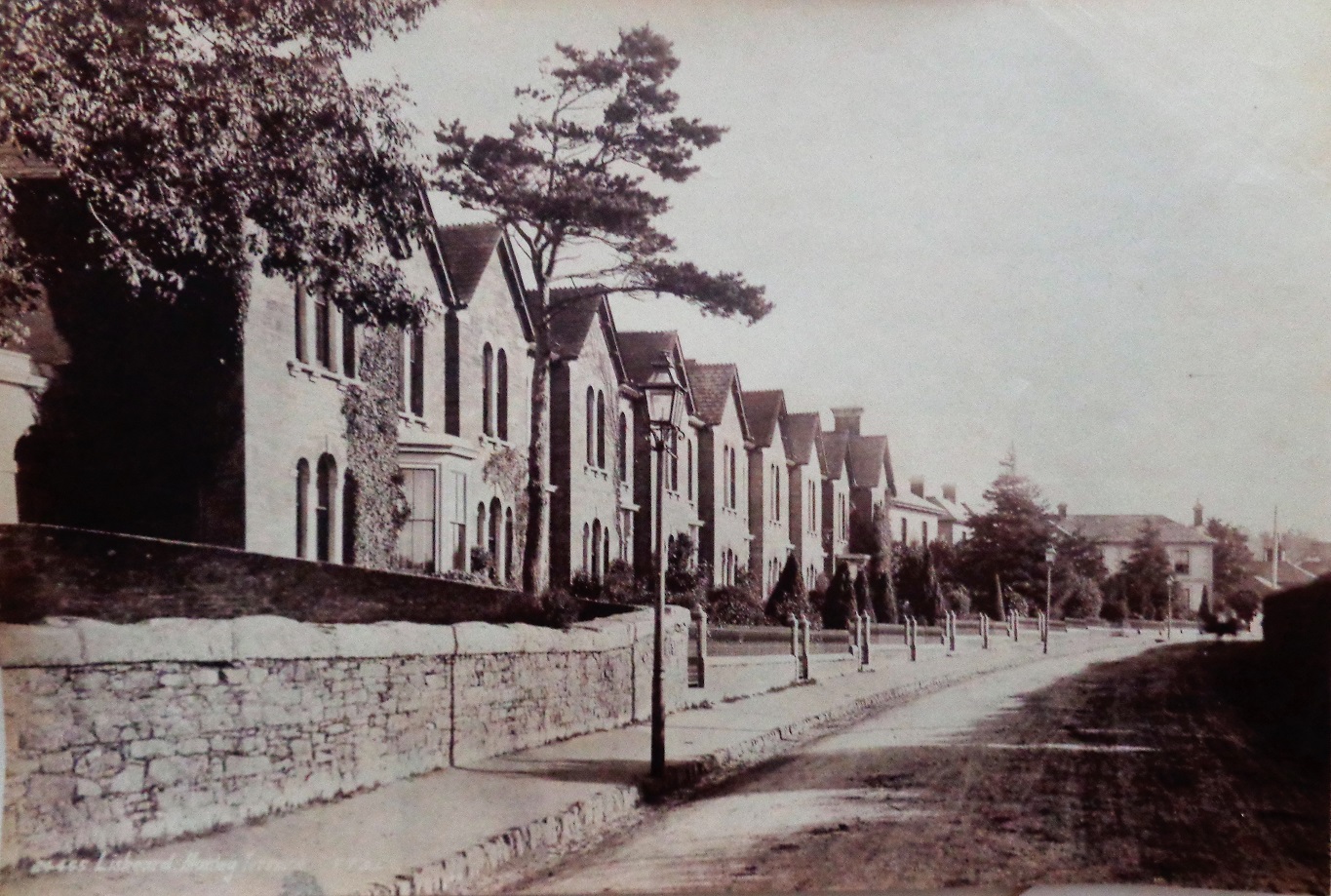
The first census after the building of the prestigious Manley Terrace in Station Road Liskeard was in 1871. The architect was the prolific and highly respected local man Henry Rice.
In residence at no.8 Manley Terrace were 40-year-old practising surgeon William Marrack W.R.C.S., L.S.A, his wife Lydia (32), daughters Mary (7) and Edith (6). Live-in Domestic Servants were Catherine Snell (22, Cook) and Mary Stephens (24, Housemaid). Three sons followed later; John, Richard and George, who became a surgeon like his father.
In the following December, the Cornish Times reported that a “storm broke with great violence over this town and the damage was considerable. At Manley Terrace a chimney 12 feet high of the end house occupied by Mr. Marrack, surgeon, was blown down and fell with great force through the roof of the room below carrying with it the cemented cornice weighing 5 cwt. There was about 3 or 4 tons of debris deposited on the floor of the front bedroom”. Mrs Marrack has just left the bedroom so fortunately there were no injuries.
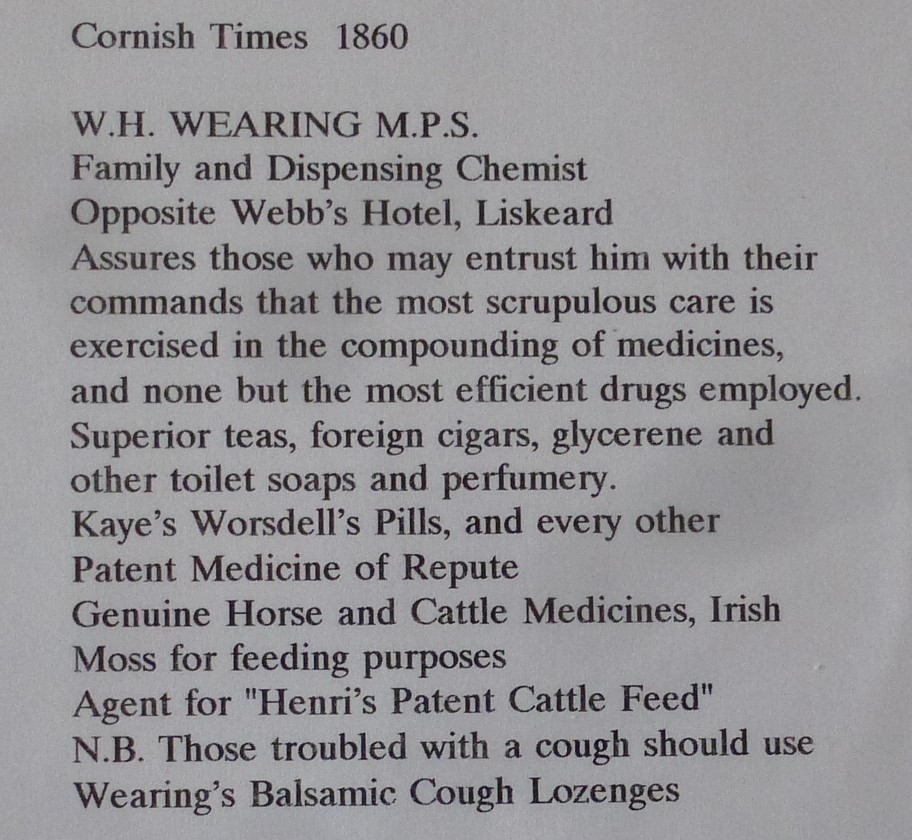
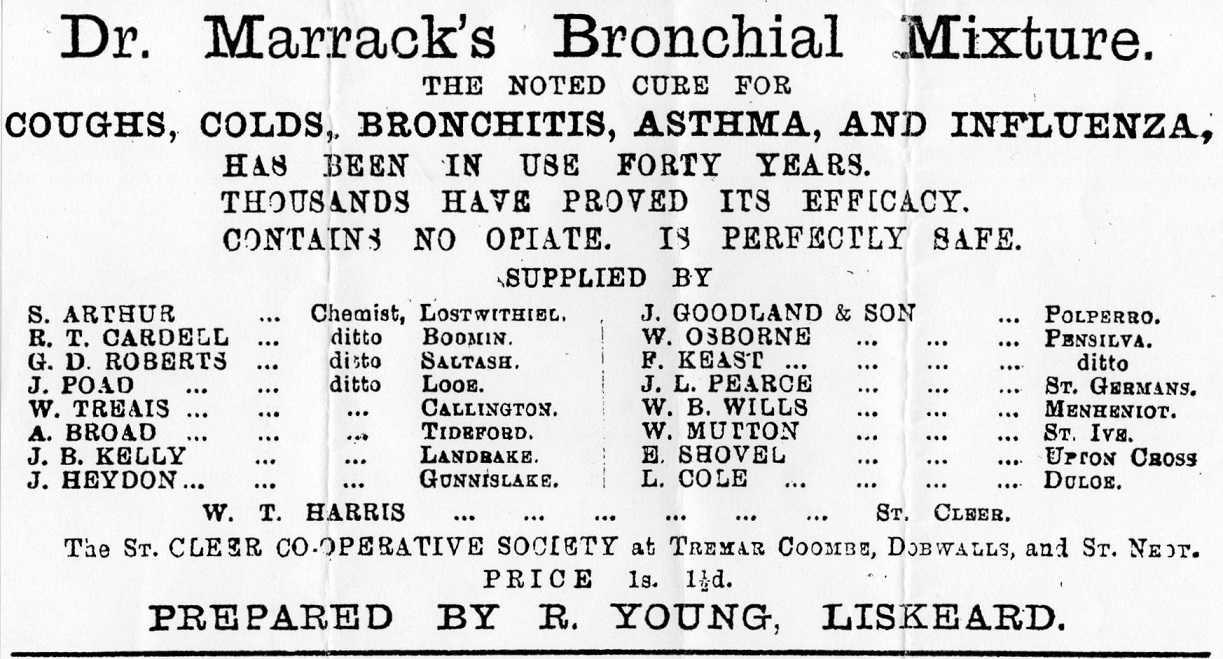
It was about this time that Dr. Marrack’s Bronchial Mixture could be purchased for 1s 1.5d from William H. Wearing’s chemist shop on the Parade. In fact, the shop was another Henry Rice building at no.4 Pike Street, but the Parade sounded more up market! Advertisements claimed the mixture to be “the noted cure for coughs, colds, bronchitis, asthma and influenza”.
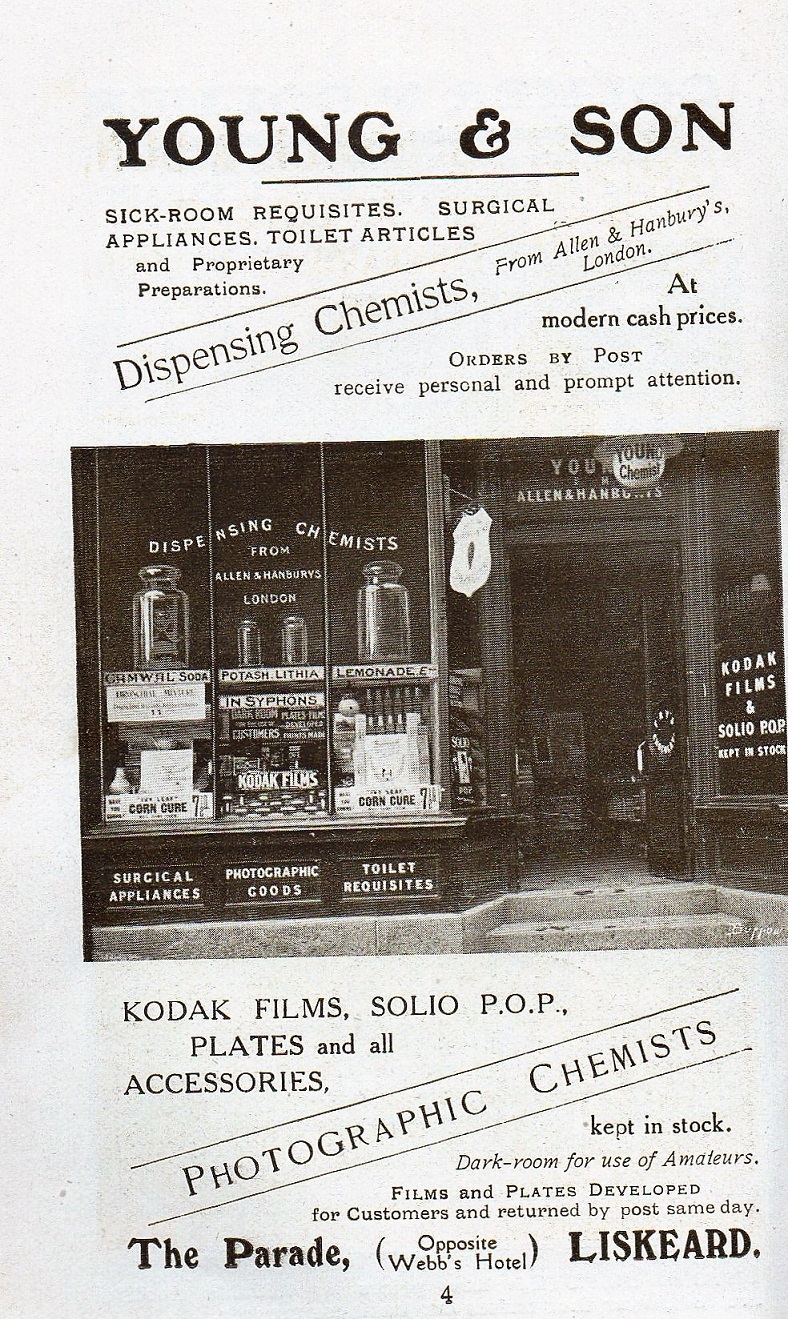
By 1900 Richard Young had taken over the chemist shop and he claimed that the mixture “has been in use for 40 years. Thousands have proved its efficacy. Contains no opiates. Is perfectly safe.” It was manufactured by R. Young & Son but could be purchased from any of 17 agents across Southeast Cornwall from Lostwithiel to Gunnislake. It was also stocked by the Co-operative Society at Tremar Coombe, Dobwalls and St. Neot.
Described by one of his daughters as “an awkward character and very difficult to live with”, Dr. Marrack died in Worthing, Sussex at the age of 68. Another relation told the story of “a man suffering with lockjaw came to see Dr. William Marrack. The doctor took him upstairs and abruptly pushed him over and down the stairs. The patient fell and broke his arm, but his lockjaw was cured”.