27th December 2020
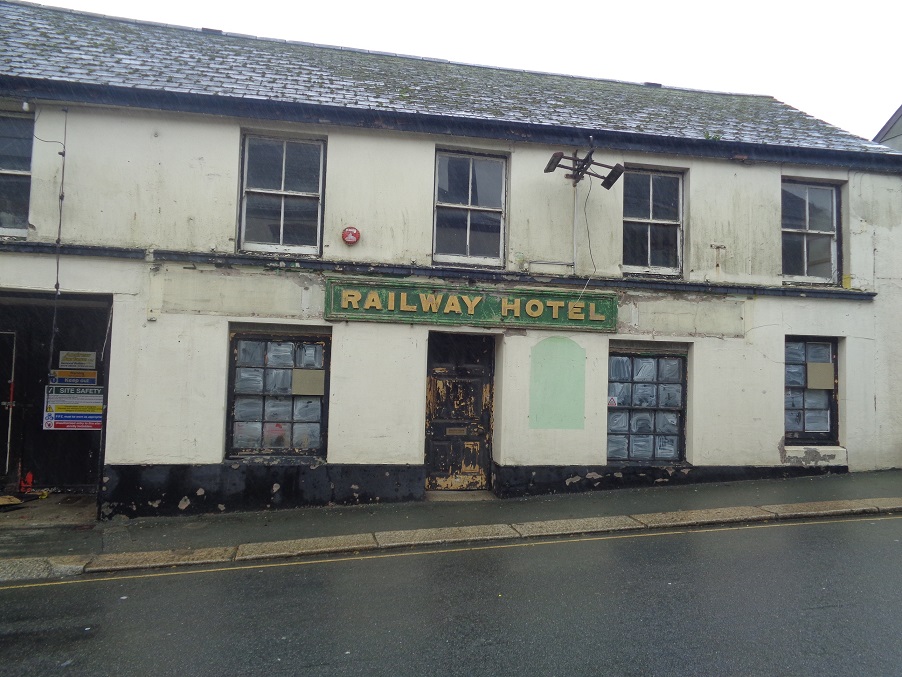
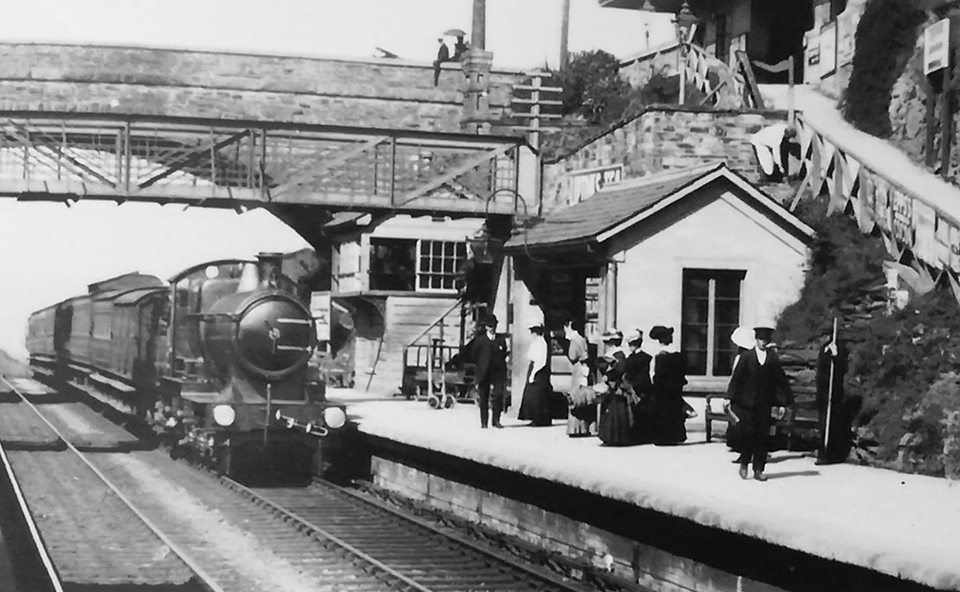
Builders in Barn Street have uncovered the Railway Hotel sign that can just be seen in the1910 photo. It was the Tanners Arms in 1840 and the Farmers Arms in 1841. Long term Innkeeper was William Quiller who changed the name to the Railway Inn when the Plymouth to Penzance main line opened in 1859. In 1851 William was aged 27 and living with him on the premises were his 2 daughters-in-law Mary Jane and Louisa Sowden, aged 8 and 7. Of course, the girls were too young to be married to a son of William and he didn't have a son anyway! It seems this term described a relationship which we now know as step-daughters, which is how Louisa is described 20 years later in 1871. I presume then that the girls were a product of a previous marriage of either William or his wife Mary. When William Quiller died in 1877 aged 56, it wasn't Mary who took over the Railway, she went to live with 2 of her sisters-in-law in nearby Hocken's Court. The new Landlady in 1881 was widow Ann Quiller (48), her son George Beswarrick (20) is Manager and the inn is now the Railway Hotel. In St. Austell in 1861 Ann Beswarrick is aged 20 with a brother George aged 1 month. In 1874 she married William Quiller, when her occupation was Waitress in Webb's Hotel, and 8 years later she's widowed, running the Railway and George is now her son; I draw no conclusions in case they are completely wrong!



20th December 2020
From 1830 to 1844 Richard Clogg is recorded as a Linen and Woollen Draper in No.3 Tavern Hill (now Pike Street), next door to the East Cornwall Savings Bank (now the Museum). Both buildings are by architect Henry Rice and Grade II Listed. Up to 1835 Webb's King's Arms was on the site of the Savings Bank, the latter was established in 1818 under the patronage of William, Earl of St. Germans and in 1856 its Actuary was none other than Richard Clogg! Sure enough the Clogg family are now living in a dwelling house with offices in Barrel (now Barras) Street which Richard had bought for £280 at an auction held in Webb's Hotel on 23rd August 1855; his occupation in the PO directory is "actuary to Savings Bank". More changes came in the 1860s, the family home is now the more up market No.4 Fairley (now Varley) Terrace, also Grade II Listed and by Henry Rice. Another change of career for Richard; he is now Purser (or Treasurer) at South Caradon Wheal Hooper, a small unsuccessful copper mine between Crow's Nest and Pensilva. By 1871 his son William has left home to become Accountant at the more profitable West Chiverton Mine. From Bartlett's excellent "Mines & Mining Men of Menheniot" we learn that R. Clogg was present at a celebratory dinner in the Treweatha Mine Account House, Menheniot on May 23rd1868. But when he rose to provide a selection of mining statistics, such was the effects of a sumptuous meal, numerous toasts and much cigar smoking, "it is doubtful if many listened with much conviction". Richard Clogg, Draper, Actuary and Purser died in 1891 aged 80 after what appears to be a very full life led in and around Liskeard.


13th December 2020
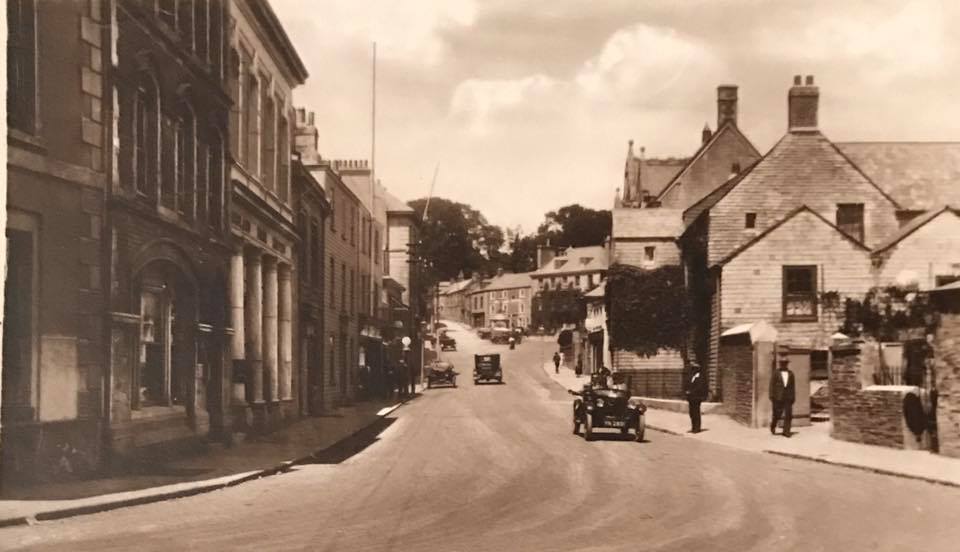
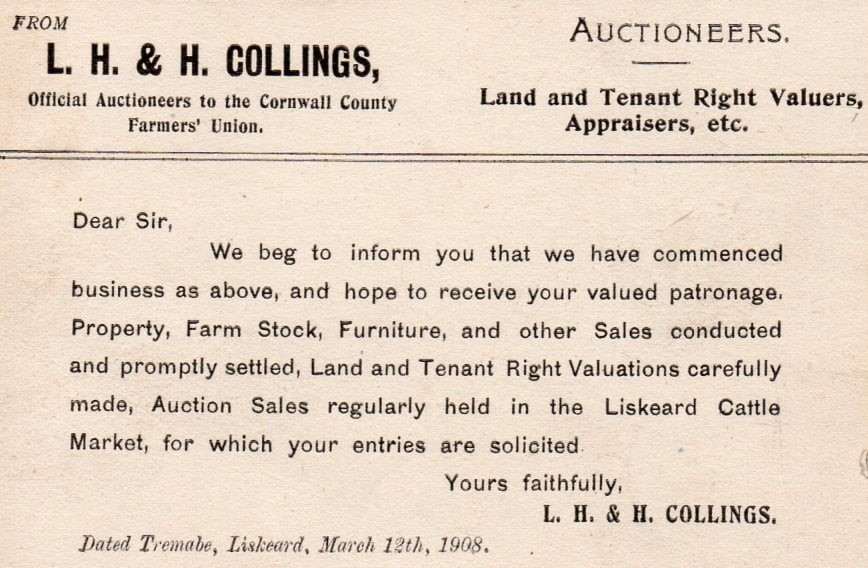
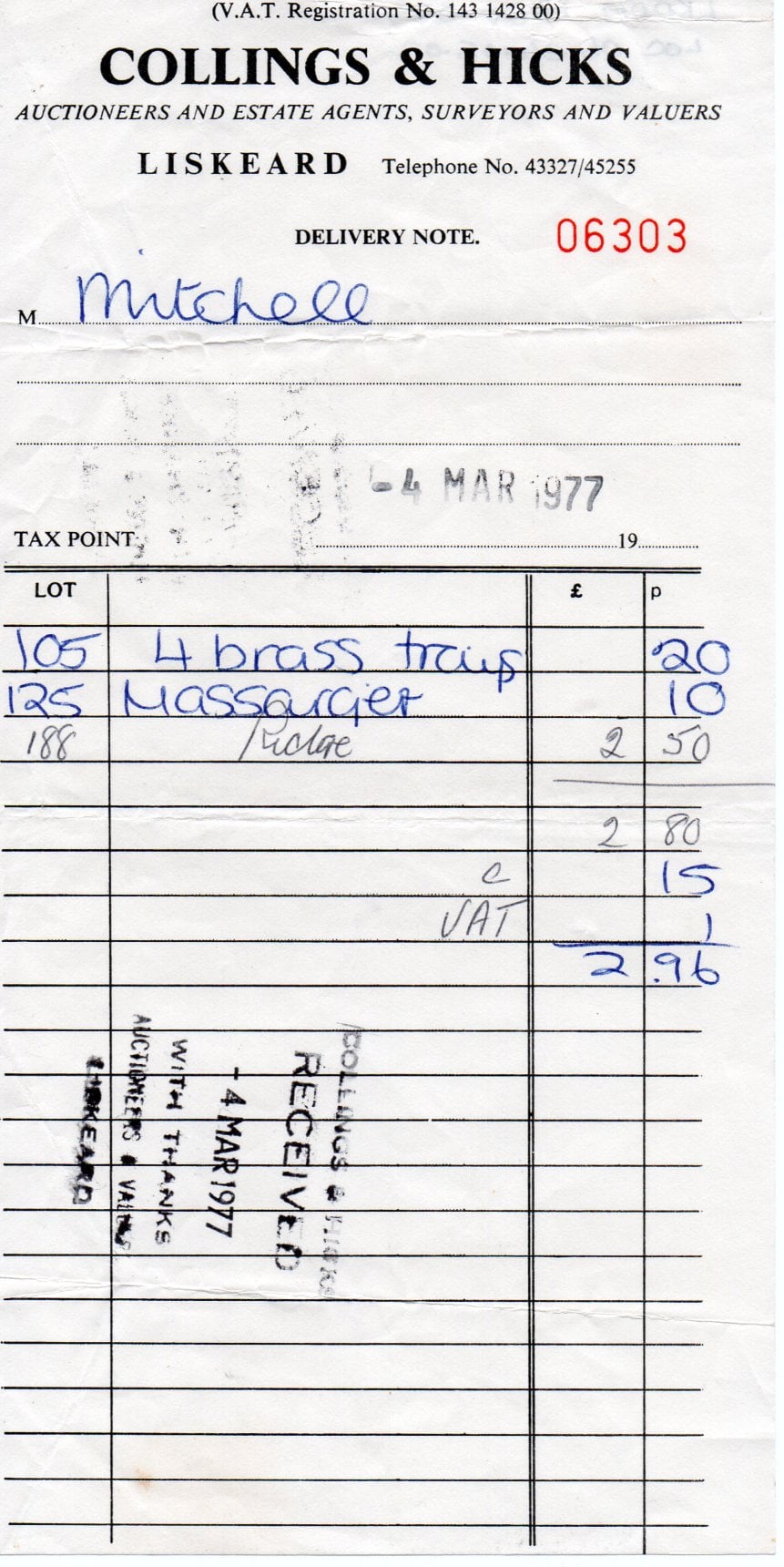
Although Grade II listed, the Commemorative Album describes No.1 Barras Street as "a Rice building by assumption" with "rare use of brickwork". An early long-term occupant was Draper and Grocer Elizabeth Jane Mutton, born in Wadebridge in 1824. Records show her in business at No.1 from 1873 to 1893. Family members living above the shop were daughters Emily and Polly, son Samuel, son-in-law Samuel Sowden and grandchildren Muriel and Frank. As with most shopkeepers and tradesmen at the time Elizabeth employed a live in Domestic Servant. By 1901 Elizabeth was retired and living with her daughters round the corner No.7 Dean Street, where she died in 1910 aged 86. From the photos you'll notice that the 2 arched windows were changed to 1 wider one sometime after 1909. Brothers Hedley and Lewis Collins grew up on Fursdon Farm, near Rosecraddoc, and about 1908 went into business together as auctioneers, valuers, surveyors, insurance agents and coal corn and manure merchants. They initially operated from Lewis' farm at Tremabe, then 4 Dean Place and Cattle Market Gate, eventually Hedley traded solely from No’1 Barras Street with a yard at Greenbank Road. By the 1970s Collings was joined by Hicks. When the property was listed in 1993 Hill House Hammond Ins. Services were there, but for some time it has been home to Early's Estate Agency.


![Liskeard early 1960's - Hedley Collings feed mill [Right]](https://kernowgoth.org/wp-content/uploads/2021/01/Liskeard-early-1960s-Hedley-Collings-feed-mill-Right.jpg "Liskeard early 1960's - Hedley Collings feed mill [Right]")



5th December 2020
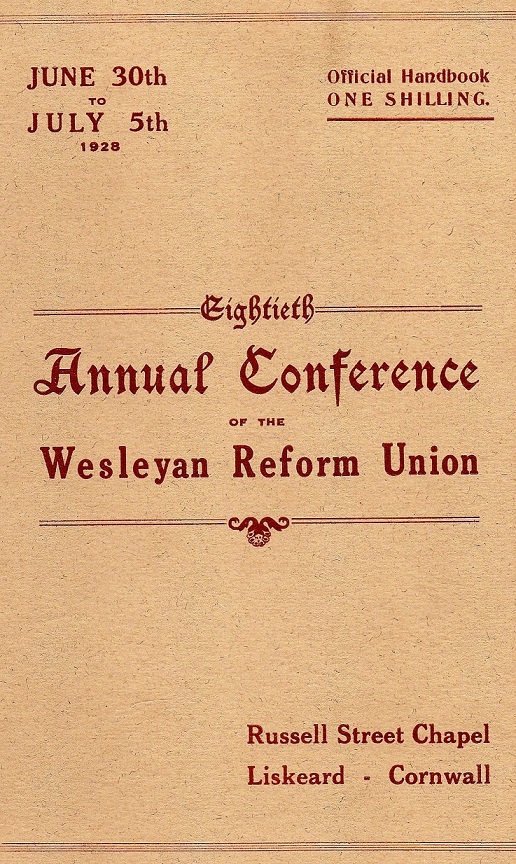
Now that planning has been approved for change of use and refurbishment, another landmark Liskeard building, the former Silver Band Room in Barn Street, should soon be getting a long overdue makeover. Henry Rice designed the building in 1854 for the Methodist offshoot, the Bible Christians. Originally the Bryanites, this movement was formed in 1815 by William O'Bryan, who lived for several years in the now demolished No.10 Lower Lux Street, before leaving to spread the Gospel in North America in 1831. Services were held at No.10 until 1854, but "were for some time subject to occasional disturbance by rude boys and men until, on appealing to the magistrates, the nuisance was suppressed" (John Allen 1856). On Sunday March 30th 1851 there were 15 Bible Christian places of worship in the Liskeard District and 813 persons attended the evening services. A Bodmin Moor couple travelled to the Barn Street Chapel on Oct.12th 1904 to be wed, they were Samuel Hooper of East Siblyback and Bessie Grigg of South Wardbrook (marriage certificate attached). From 1924 to Sept. 1958 the Wesleyan Reform Union occupied what they referred to as the Russell Street Chapel. Their 80th Annual Conference commenced at 6.00pm on Saturday June 30th 1928 in the Guildhall, Liskeard with a Reception and Tea hosted by Mayor Henry Rule, and ended on July 5th with a Garden Party at Pencrebar, Callington the home of Isaac Foot, our MP from 1929 to 1935. The Liskeard Silver Band purchased the building for £300 and held their practise nights there until relocating to Liskeard School and Community College.




22nd November 2020
The recently smartened up former NatWest Grade II Listed building is the subject of a planning application to change its use to 5 flats and 2 holiday lets. Previously on the site was Trehawke House owned by the renown local historian John Allen (1790-1859), his daughters Mary and Louisa hosted many fundraising events in their gardens, which stretched across what is now known as the Cattle Market. Of those occasions, John K Broad wrote "the teas were invariably held on Miss Allen's lawn, a delightful old world place, beautifully kept, winding paths, quaint little latticed arbours, the gardens full of old fashioned flowers-Hollyhocks, moss roses, Jessamine and Honeysuckle. In the centre of the lawn a thatched summer house where they cut us the cake".
One temporary use was HQ for Sir Reginald Pole-Carew's 1910 election campaign, before Liskeard Town Council bought Trehawke House and gardens to house their new Cattle Market. The excess land was sold at Auction in the Guildhall on 7th April 1910. Alfred Jago (£450) outbid John Rapson (£400) for the prominent site on the corner of Dean Street and Windsor Place. Architect John Sansom and contractor Pearce of Taphouse constructed the building we see today and it became motor and cycle dealer Jago & Sons until the NatWest moved in in 1954.


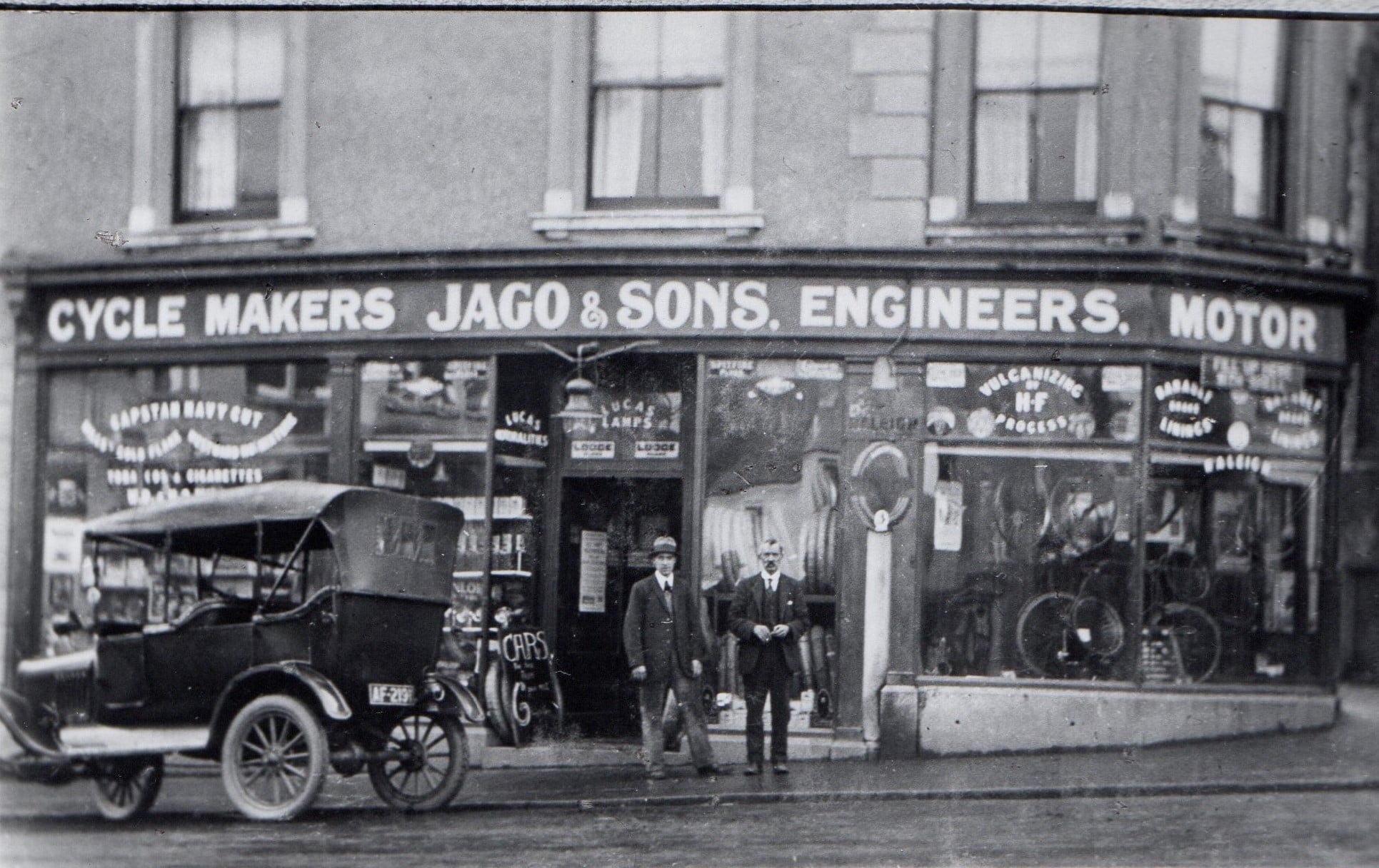


15th November 2020
The Historic England List has been updated with the fine restoration of the Grade II Well Lane warehouse, designed by Henry Rice around 1840. In the C19 it was used by the Quaker grocer and druggist families retailing from No.6 Market Street, now, since 2001 the excellent Fat Frog Cafe. Samuel Eliott took on a 21 year lease in 1848 at £50 a year. In May 1857 he was presented with a silver teapot, value £15, by the Liskeard Teetotal Society in the Temperance Hall in Barn Street. He was about to leave town having been appointed Manager of the Plymouth Soap Co. The 1861 census has Whinfield Robinson employing 8 men and 4 boys, his 1862 advert refers to the Well Lane warehouse. In 1871 he was elected to the Town Council pledging to reduce the closing time of public houses from 1.00am to 11.00pm, an hour earlier on Sundays.
Family life was tragic for the Robinsons; 4 of their children died under the age of 1 year and another at age 6, all are buried in the Halbathick Quaker cemetery at Trevecca. The business was then run for a few years by their relations the Eliotts; their invoices dated 1973 (when a dozen groats cost 2 shillings) and 1876 (2 ounces of tea cost 4 shillings) both refer to the Well Lane warehouse. 8 members of the Eliott family are buried at Halbathick. Unmarried grocer, chemist and mineral water manufacturer Philip Henwood had arrived by the 1881 census; he ended the Temperance connection by becoming an agent for Gilbey's wines & spirits. In 1891 Henwood (aged 42) married his Housekeeper Ellen Biddick (25) successfully raising 3 daughters. The Henwoods were still resident in Market Street in 1911, but a from the 1920s photo we can "Pure Ices" are on sale. In more recent years occupants have included the Home & Colonial store, Mayfair Cleaners, William Hill Bookmakers and Dell'Anno's Cafe. In Well Lane the address is now 1&2 Henry Rice Store, nice touch!
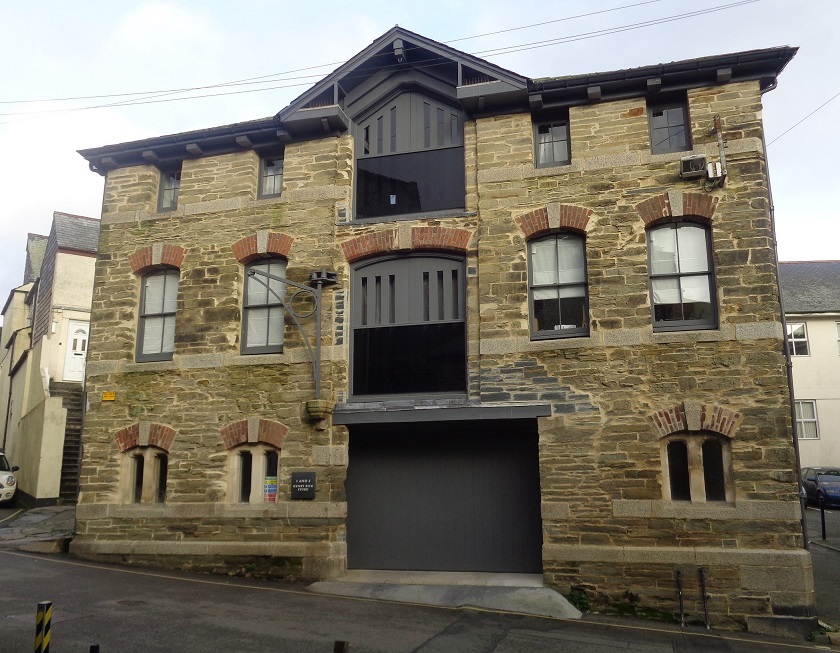


8th November 2020
After presenting the Liskeard OCS wreath this morning, I went to the junction of Well Lane and Fore Street. The first Market House was built there in 1574 and came into Borough ownership through escheat. At a cost of £800 its replacement in 1821/22 was designed by John Foulston, his fee was 15 guineas. On Queen Victoria's coronation 600 men and boys dined on 2 bullocks, 2 hog's heads of cider and 2 of beer in the Market House. Tea and cakes for 1000 women and children followed. Henry Rice designed the extension which is now No.25 Fore Street in 1865. Liskeard watercolourist John K Broad recalled the building in the late 1800s: "The top floor was crowded with Farmers' wives; butter, eggs, ducks and chicken truly a goodly selection. On the Ground Floor a chattering bevy of Saltash Fishwives with a delectable show of shrimps, mussels and cockles. A penny entitled one to a tiny dish together with a pin from the stallholder's matronly bosom.
The Centre Floor, here congregated the fruit and confectionery stalls, fancy goods, toys, stationery and literature. Mr. Pickles's Electric Cinema occupied one of the floors from 1915 to 1934; being silent movies he bought an organ from a Pensilva chapel for 30 shillings. The first showing on July 21st, 1915 was a Navy recruitment film "The Royal Naval Division at Work and Play". When No.4 Market Street was demolished in the 1950s, Boots the Chemist moved into the Market House where they remained until 1993, then moving to Bay Tree Hill. Excess granite steps from further alterations were recycled as a base for the restored Hendra Cross that had been saved from its previous use as two gate posts on the farm in 1991.


![The Market Liskeard c1906 [Colour]](https://kernowgoth.org/wp-content/uploads/2020/11/The-Market-Liskeard-c1906-Colour.jpg "The Market Liskeard c1906 [Colour]")


30th October 2020
The Henry Rice designed Dean Terrace was built between 1838 and 1847. It's Grade II listed and had some interesting residents in 1861. At No.7 was Mining Engineer and twice Mayor of Liskeard Matthew Loam. To the memory of his father Michael, in1871 Matthew employed Rice to design a monument to be erected on The Parade, Liskeard, it a cost £100. Michael had designed the first man-engine, installed at Tresavean Mine in 1842. No.7 was home to Christopher and John Borlase Childs, the father and son had both been Secretaries of the Liskeard & Caradon Railway. As a boy John, from a window of No.7, had seen the locomotive "Liskeard" on its way to Moorswater on a huge trolley. To regulate its pace, two long ropes were attached with 20 men on each rope. Unfortunately it had snowed overnight and occasionally the men lost their footing and went sprawling, much to John's "intense delight". A man of many parts, Silvanus Jenkin live at No.10 with his wife, 5 daughters, 3 Domestic Servants and 2 visitors. In addition to his own private practise, Silvanus was Civil Engineer for the Liskeard & Caradon and Liskeard & Looe Railways, County Surveyor for East Cornwall, Land Agent for the Robartes of Lanhydrock, twice Mayor of Liskeard and a Director of Liskeard's Temperance Hall and Hotel; busy man!


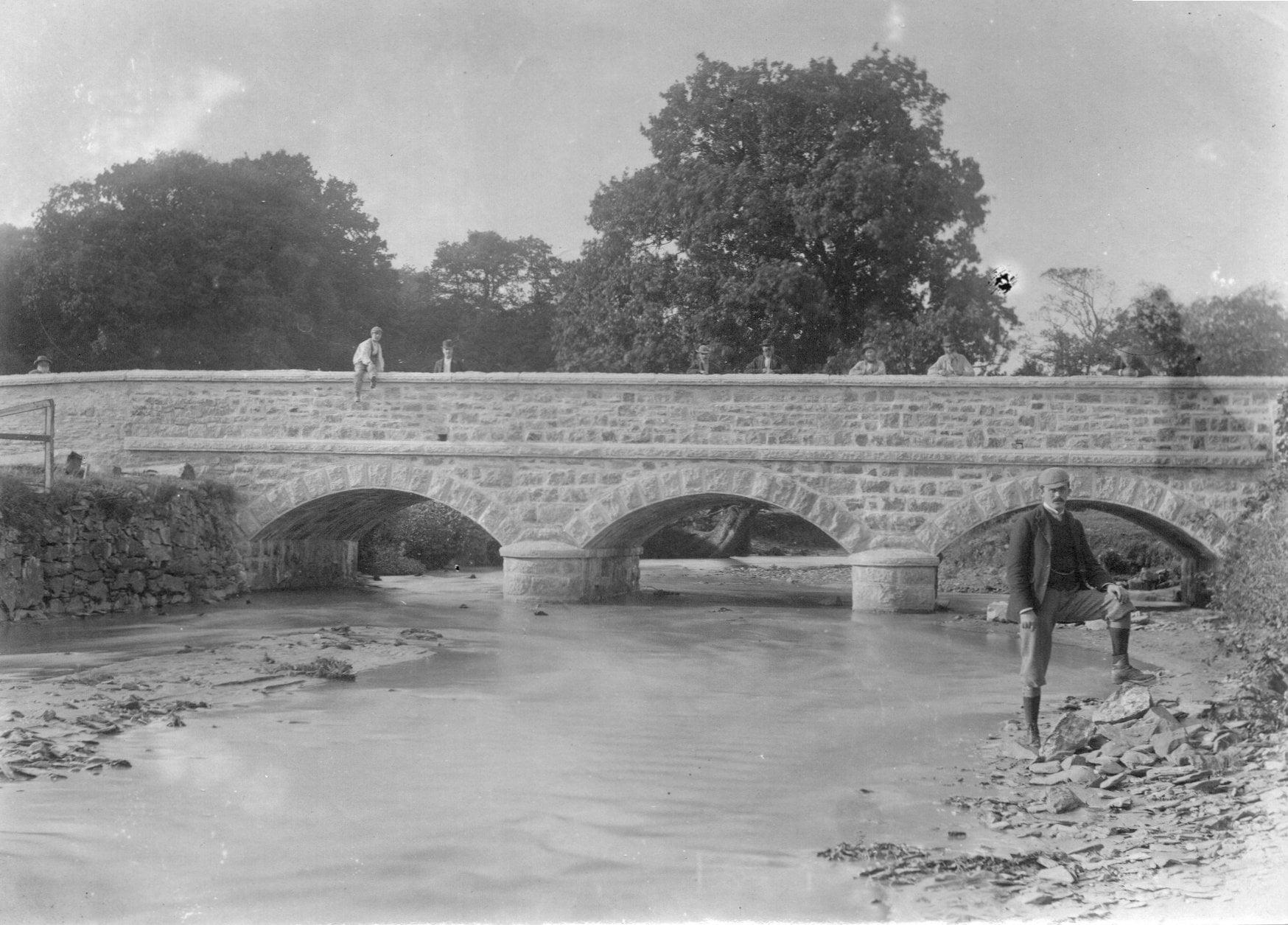


18th October 2020
Surprisingly no photos of these 3 Grade II local mines have been submitted recently to Historic England, until this week that is. Part of the inscription on a headstone in Linkinhorne Church is “to the memory of Richard Craze who was accidently killed in the Engine Shaft at Mark Valley Mine the 29th day of March 1845 aged 38 years”. In the same year his widow Elizabeth gave birth to twin girls one of whom, Mary Ann was deaf & dumb. In 1846 her 2 year old son James was buried alongside his father. By 1851 the family had returned moved Richard’s birth parish of Kenwyn. The Wheal Jenkin engine house is 1 of only 2 that bear a datestone, 1886. In the West Briton on Feb. 25th of that year tenders were invited for the erection of the Engine House, Boiler House and Stack to house a 70″ cylinder pumping engine. At the age of 31 on Dec.15th 1855 Robert Northey died in a mining accident at Craddock Moor Mine. His 27 year old widow Catherine went into Service for a Farmer at Trebant, Altarnun and her children John (4) and Catherine (3) went to live with their maternal Grandparents in St. Cleer. How sad.


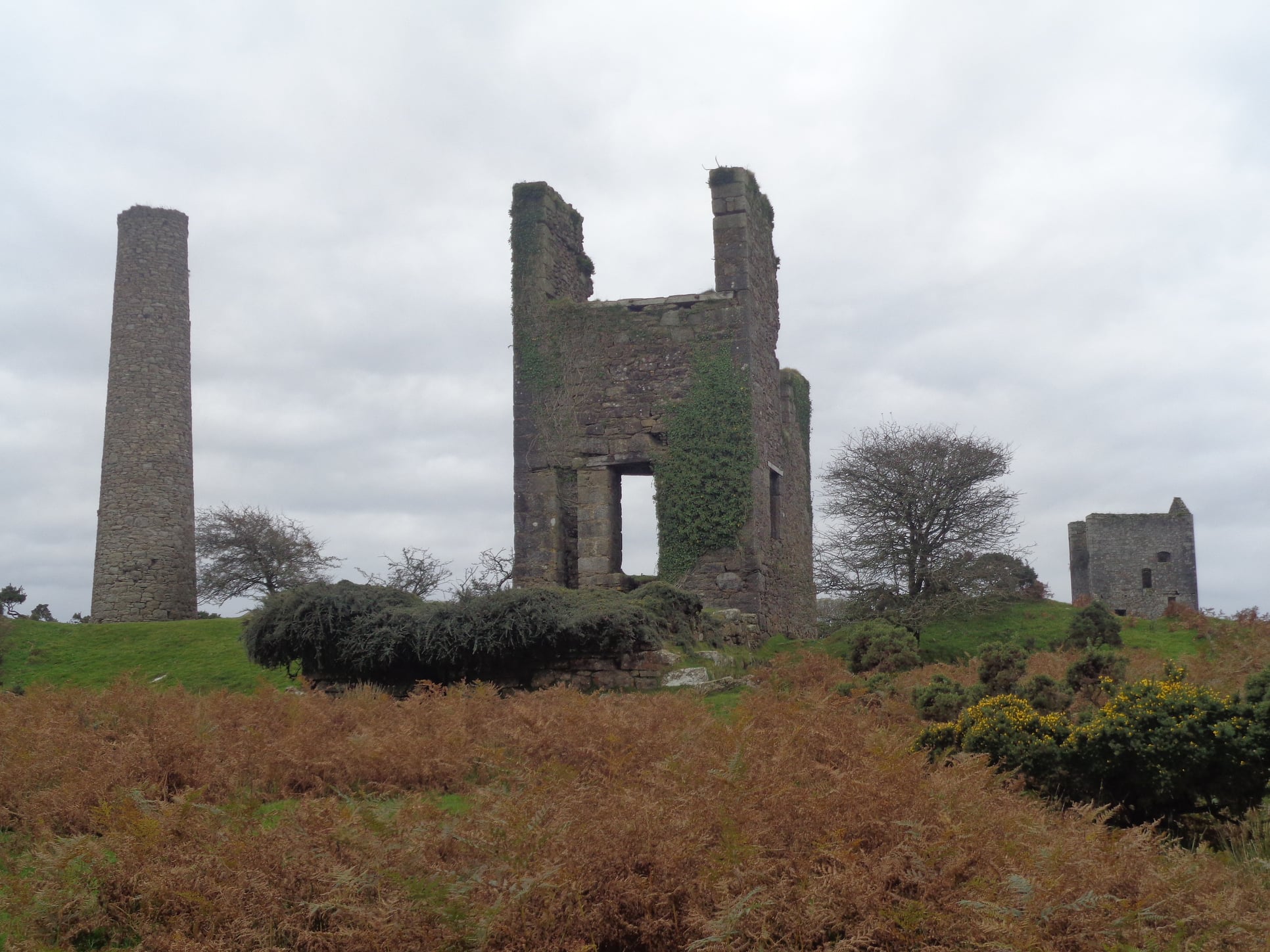


11th October 2020
An enquiry this week took me to Oak Park Terrace to see the single ornamental tile on each of the cottages' front walls, which originally looked South with the rear facing Old Road. The tiles were manufactured at the short lived "Terra Cotta & China Clay Co." in the Draynes Valley in the late 19th century. The tiles contain a mythical creature as does another of the Company's products at Hong Kong Cottages that bears the initials MAH. Both rows of cottages, I am told by a descendant, were built by George Harris (H), the (M) for his wife Mary and the (A) for both his father and a son Ambrose. It is said that the possibly Chinese creatures were influenced by Harris' adventures in the Opium Wars, but this is not proven. The Company also produced the "Liskeard" brick. In contrasting size I was able to help the owner of Grade II Listed Newton Farmhouse to identify the initials IL with the date 1665 above the arched entrance to his front garden. They belong to John Lyne (J having been written as I at that time). John Lyne of Newton is on a list of men in St Cleer parish required to sign allegiance to Charles I and the Protestant religion in 1641. Lyne's will of 1681 exists and contains a complete inventory of his assets with everything from his estate in St Cleer worth £120 down to 14 pewter dishes, 1 flaggon, 2 pairs of tin candlesticks and 1 tin chamber pot, altogether worth £2.


4th October 2020
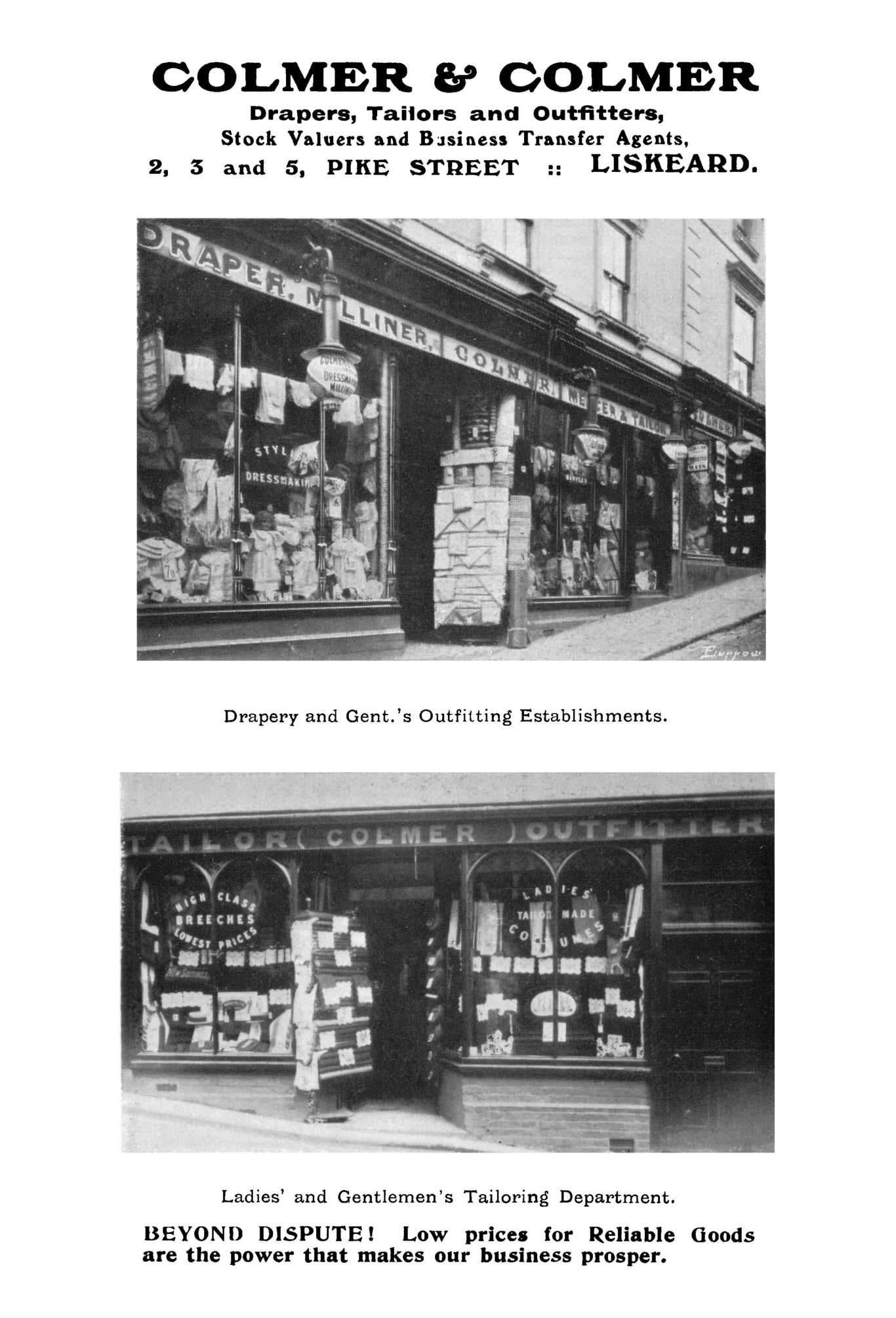
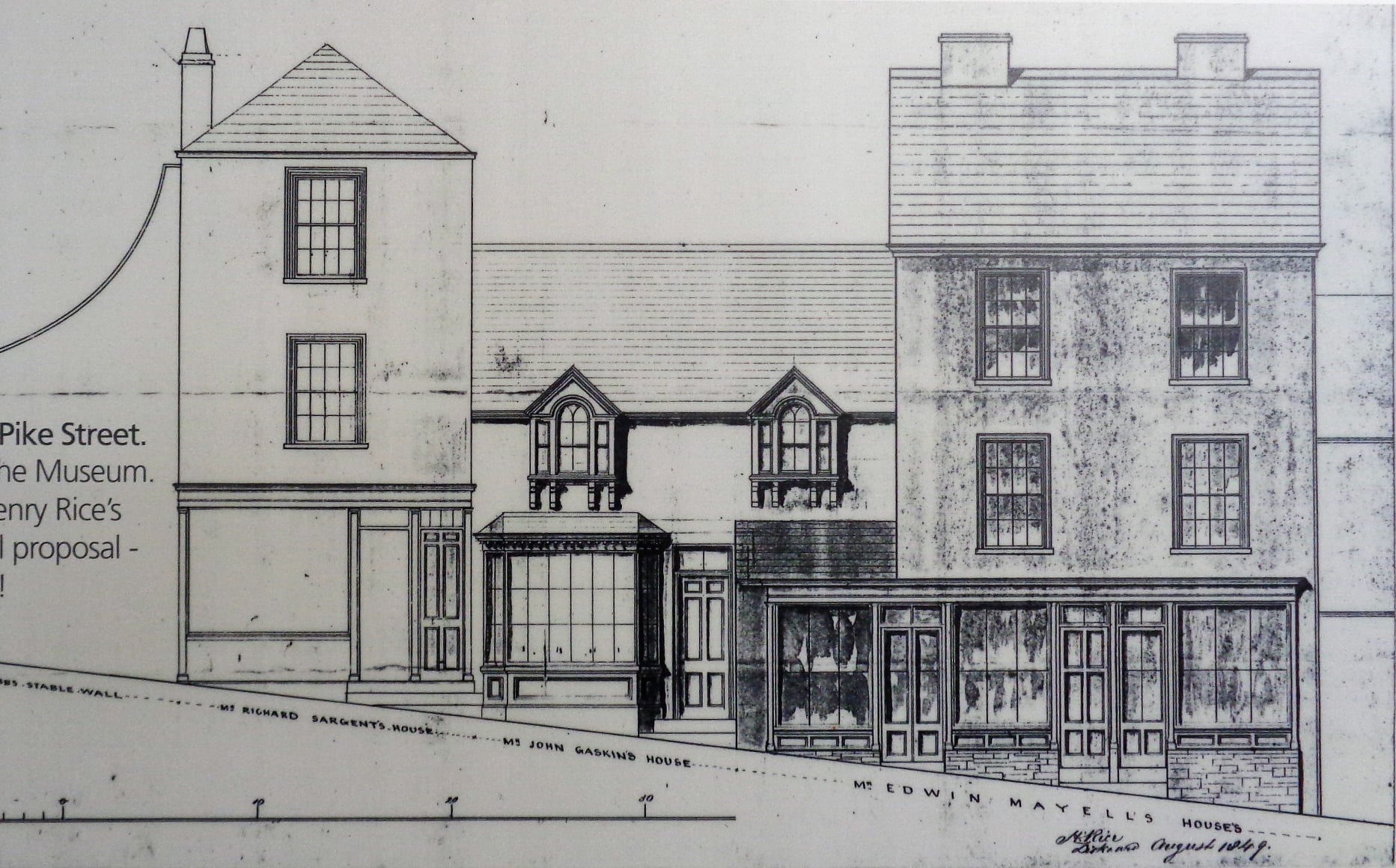
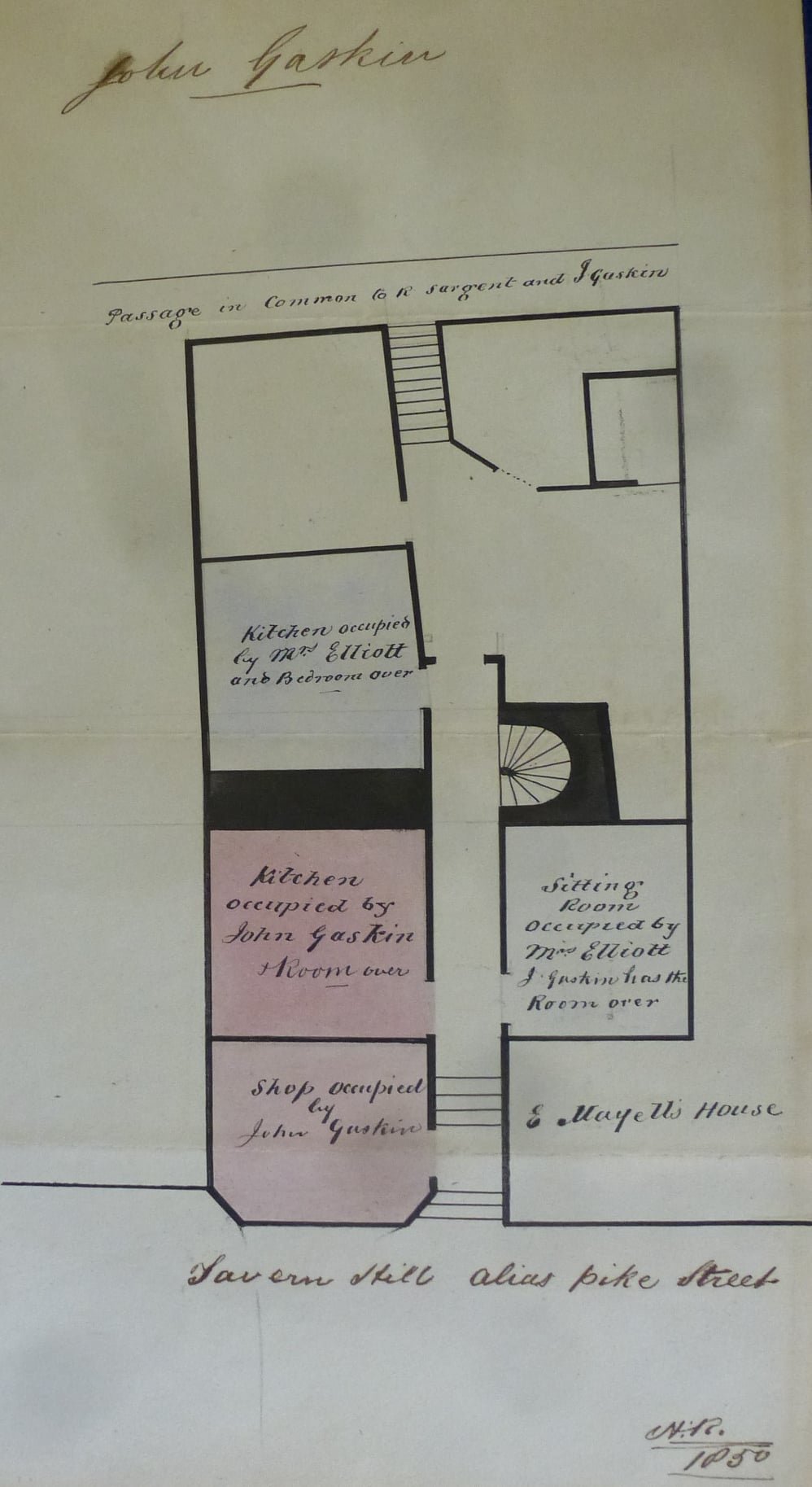
Numbers 6, 8 and 10 Pike Street are all Grade II Listed and all feature in a proposal, not exactly taken forward, by Henry Rice in 1849. The Wool Shop has been at No.6 for many years, but in 1851 it was home to the family of Saddler Richard Sargent, who had a Master Sailor named Sampson Buckthought lodging with him. No.8 in 1851 housed the families of Tailor, John Gaskin, who employed 2 boys, and Temperance Housekeeper, Betty Elliott, who had 2 lodgers. The cramped conditions of these two families are shown in an 1850 plan by Rice. Colmer the Outfitter was at No.8 later as well as in the 3 shops opposite, all later owned by Piper & Sons.The first photography business in Liskeard was set up at No.10 by Edwin Mayell who also appears in the 1850 plan. Edwin was also a Watch & Clock Maker and his daughter Louisa ran her Millinery business from the same premises.




27th September 2020
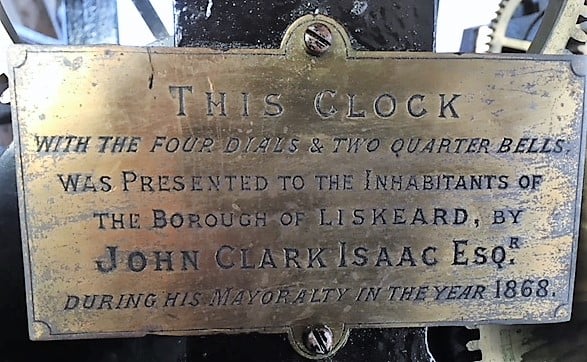
The Historic England List was enriched this week with the three Dean Villas designed by Henry Rice in the 1850s. Firstly, Inversnaid was purchased by John Clark ISAAC, a teetotal Wesleyan Steward and Sunday School Superintendent. His Iron & Coal Merchant Office and Yard were in Pondbridge Hill and in his 2nd term as Mayor of Liskeard in 1868 he gifted the Guildhall clock to the Town. Secondly, Oakdene was occupied by the young solicitor Henry Caunter and his wife Catherine. He established the Solicitors' practise above Lloyds Bank which still bears his name to this day; the family later lived opposite in Middleton House, where the Post Office now stands. Lastly, Dean Meadow in 1939 was owned by Brian Bentley Metcalfe MRCS, physician & surgeon of Metcalfe & Toogood on The Parade. These days the Dean Villas in New Road seem peaceful enough, but in the Royal Cornwall Gazette of December 1865 it was reported that "the conduct and language of young men in New Road was a perfect nuisance on Sunday evenings, and it was almost impossible for a decent female to walk there without being assaulted".




18th Sep 2020
From newspaper articles and censuses some details have been established regarding the remarkable "rags to riches" story of Richard Hawke of Westbourne House. In 1841 at the age of 15 Richard was an apprentice barber in Helston, his mother is "in service" with no mention of his father. By 1851 he has his own Barber Shop in Fore Street, Liskeard employing 1 man and an apprentice, he has married a Liskeard girl named Sarah and his mother is living with them over the shop. Hawke has also been appointed Mine Barber at the hugely successful South Caradon copper mine and before long the owners, Peter and James Clymo have made him their share dealer in London. Branching out on his own as a Miner Share Broker, he has enough money money to buy the grandest house in Liskeard, Westbourne, in 1858 from the executors of Peter Glubb. In 1861 he has the only Butler in Liskeard, 57 years old Thomas Munday, and his mother, formerly a Servant herself, is now in the census as a Gentlewoman. Richard Hawke died in 1887 the wealthiest man in Liskeard, his estate in today's values being £16million. On Sarah's death in 1904 the estate went to William Sargent, grandson of a Liskeard cordwainer who the Hawkes regarded as their adopted son. At this time cremation had only been legal for 4 years and on Hawkes's instruction, Sargent transported his body by train to Woking Crematorium, the nearest licensed establishment to Cornwall. 100 invitations on gilt edged card were sent to the "great and good" of Liskeard to attend the interment of the ashes, which are now beneath the fine Grade II Listed memorial in the gardens of Westbourne. Dr. Andrew Hingston of Dean Street conducted the short ceremony, throughout which it poured with rain.


6th Sept 2020
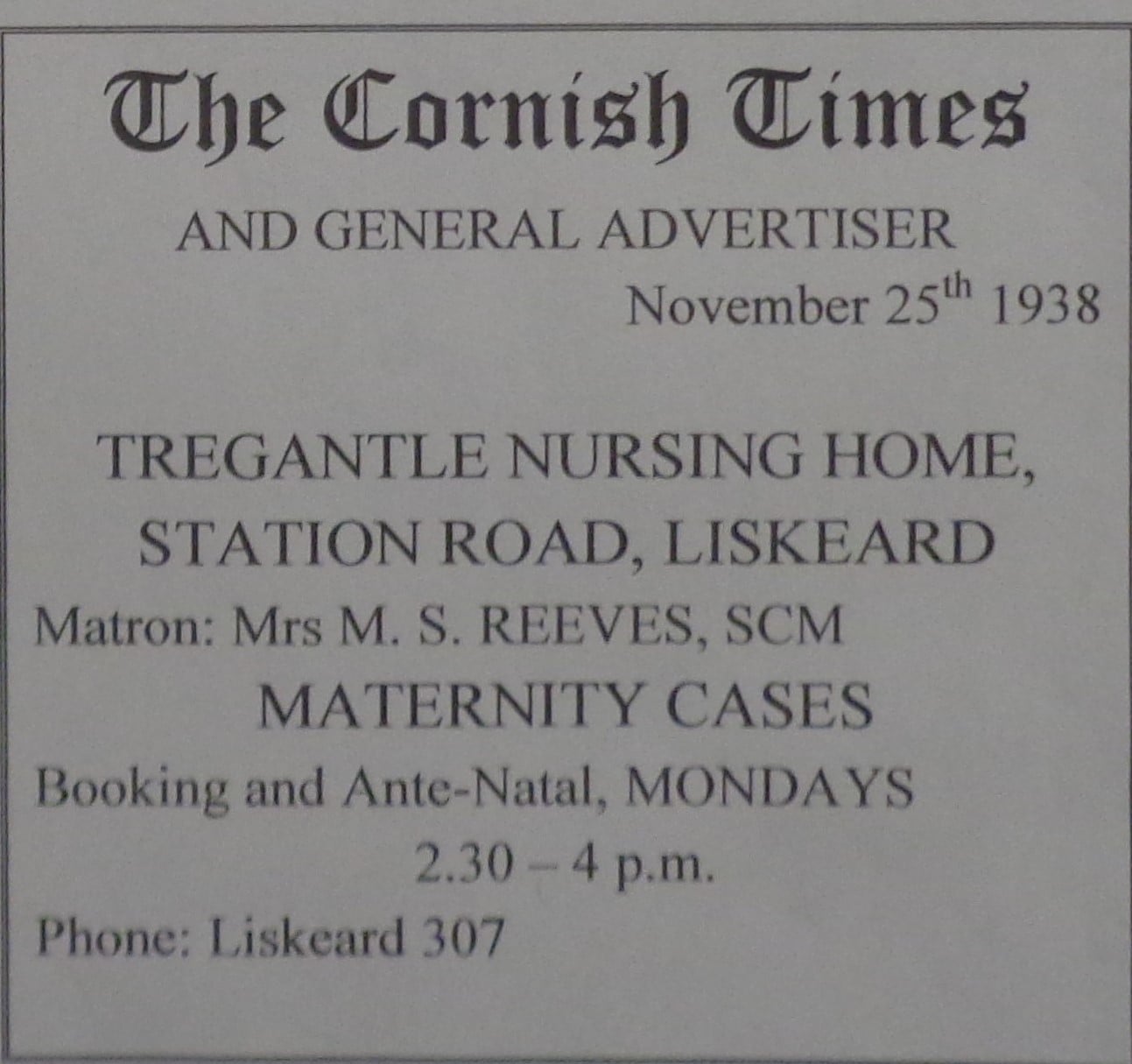
A cluster of Grade II listed buildings in Russell Street includes Tregantle where Mrs Jago and her 3 daughters opened a private school on 20th Jan. 1868. Daughters Mary and Bessie Jago were still running the school in 1911. The owner of Tregantle was Charles Polkinghorne who lived across the street in Windsor Villa (now Hollywood), he sold Tregantle, and land behind, in 1919 to The Pavlova Leather Co. Ltd, so named as their most famous customer, for gloves, was Anna Pavlova, the Russian ballerina. For many years from Dec. 1922, Blamey & Morcom Ltd, agricultural merchants, lime burners and wool combers, owned Tregantle and the industrial site behind. Tregantle itself became a Nursing Home in the 1930s before moving to to Barras Cross. Later industries to the rear include Hosking Farm Machinery and Gibbs & Huxley. It was Mr Marsden Huxley from whom the present owner purchased Tregantle in 1991.




Further to a request for any history of Windsor Villa before Charles Ennor purchased it and it became Hollywood, in the early 1900s. The house was built by Henry Rice in 1869 for Oliver Colmer, whose Draper shops were in Pike Street. He appears in the 1871 census with his wife, 4 daughters, 2 sons, his sister-in-law and 1 Domestic Servant. By 1881 head of the household is William Polkinghorne, a founding partner and Manager of Liskeard & District Bank in Barras Street, Mayor of Liskeard in 1883 and Purser of West Phoenix Mine, where a shaft below the Cheesewring is named after him. Polkinghorne and his wife Julia were both aged 55 in 1881, Julia was a daughter of William West, The Last Great Cornish Engineer, as described in his biography by John Manley. Ten years later, in 1891 Julia has been replaced by William’s second wife, Louisa from Waterford, 11 years his junior