29th August 2020
Grade II listed Dean House was built by Henry Rice in 1855 for Peter and Mary Clymo. In 1861 they employed Amelia Blamey (27) as Cook and Charlotte Bowden as Housemaid. Now called Graylands it houses the Register Office with what is thought to be the last remaining WWII bunker under the lawn. With his brother James, Clymo discovered copper at South Caradon Mine in 1836 which, by 1873 employed 600 people and had the highest output of any mine in Cornwall. He was also Manager and Purser at Wheal Mary Ann lead/silver in Menheniot where over 400 were employed, they presented a fine silver plate tray to him “as a testimonial of their respect and esteem”. All Liskeard’s businesses closed on the day of Peter Clymo’s funeral in July 1870. The cortege of 1,100 was led by 600 miners and a further 1,000 lined the streets. Being childless he was able to provide for his widowed sister Grace Trewren and her son John. They had lived at no.3 Varley Terrace where John inscribed his name and a date on a slate tile; but they soon moved to the much grander Liskerrit House on The Parade.


21st August 2020
This week’s contributions to the Historic England List included the Well of St. Keyne, which was purchased on Nov. 29th 1934 from John Cosmo Stuart Rashleigh for £2.00 by the first President of Liskeard OCS, Albert de Castro Glubb. Albert de Castro Glubb raised by subscription the money needed to rebuild the Well from its ruinous state. On completion ownership was conveyed by a document dated July 4th 1936 to Rev. Canon Frank Rupert Mills, Rector of St. Keyne Parish. The Well is still owned by the Church. In 1945 Albert de Castro Glubb established a Trust Fund with £100 for the Diocese of Truro to invest and use £3.00 of its income for the benefit of the Parish, on condition that the Well was kept in a tidy state. On Nov. 19th 1948 the Cornish Times reported that the then Vicar, former Warwickshire cricketer Jack Parsons, refused to become custodian of the Well and said “as to what has happened to the £3.00 per year in question, I have not the foggiest idea”. In fact the Well had been cleaned voluntarily by members of Liskeard OCS since its rebuild in 1936 and still is today. The matter of the Trust Fund was resolved in 1997 when Liskeard OCS resolved to continue with their cleaning every year going forward. This meant that the Trust could be closed; the balance of money going towards the installation of a new organ in St. Keyne Church.


15th August 2020
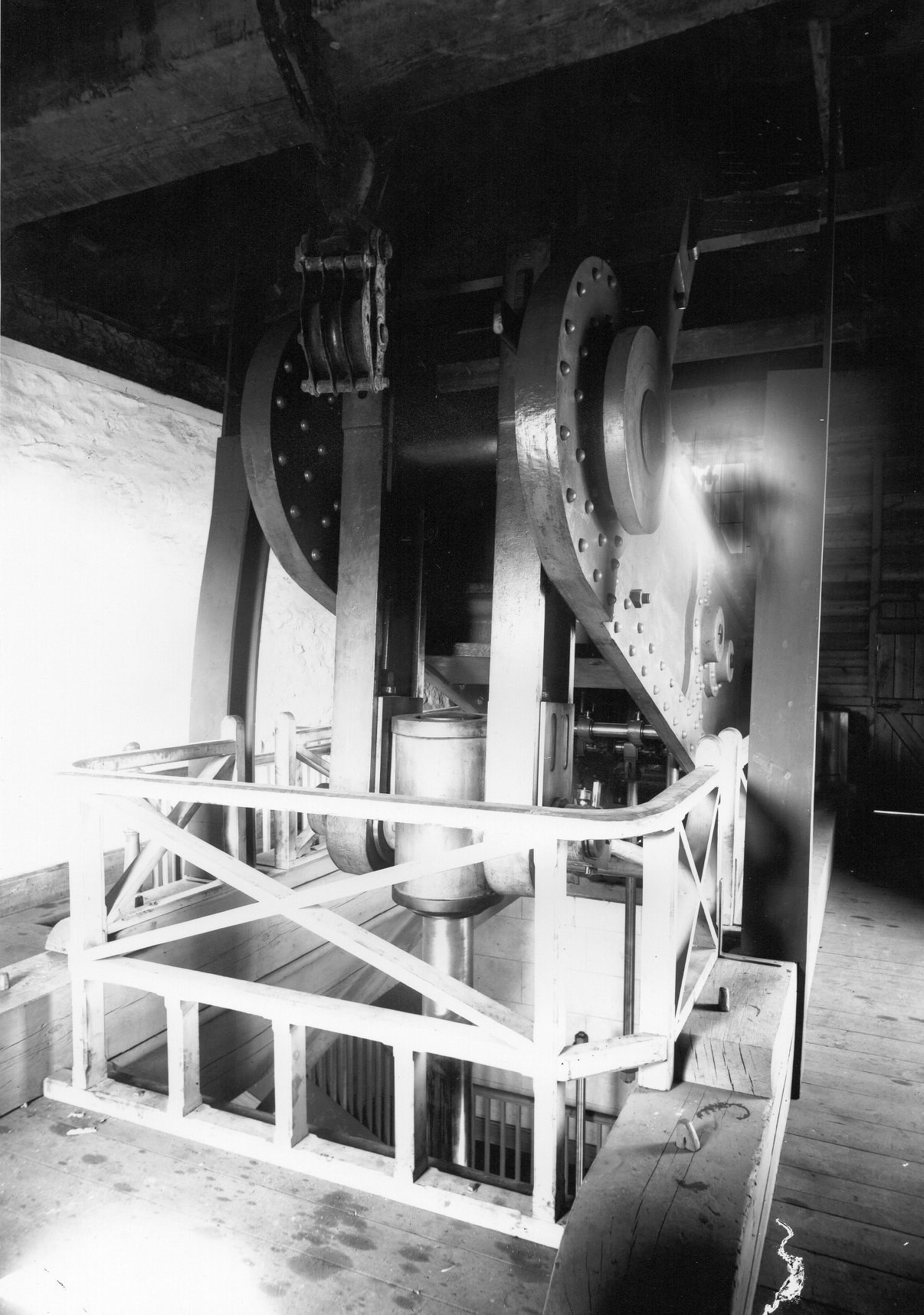
This week’s Enriching the Historic England List included the Prince of Wales Engine House above Minions village. It was opened by the then Prince and Princess of Wales, the present Queen’s grandparents in June 1909. Huge crowds gathered to meet them on Bodmin Moor, and in Liskeard the following day when Mayor Huddy presented them with a Silver Casket containing an elaborate Scroll, outside Webb’s Hotel. The building contractor for the Engine House was Runnals & Son of Victoria Terrace, Liskeard. The one fatality during construction was 23 year old Miner’s Labourer James Julian, who had become trapped between the pump rod and the side of the shaft, then fell to its bottom. It wasn’t established whether he had fallen from a ladder or was riding the pump rod, a dangerous practise banned in all mines. The mine was an “ill conceived and ill executed failure”; in its 5 years of operation a mere 99.7 tons of tin were produced. Closure came in 1914.




7th August 2020
As you walk up Church Street and step over the iron rainwater channels across the pavement, then passed the iron kerb ramps outside the Barley Sheaf yard, did you notice the wording on them; “Williams Liskeard”? More words are on drain covers in Doctor’s Lane; “Williams Liskeard Iron Works”. Not forgetting the manufacturer’s plates on Cornish ranges discovered in recent years in No.1 Barn Street, No.3 Fore Street and Lamellion Farmhouse; “Z T Williams Liskeard”. So who was Zacharias Tregonowen Williams? Zach’ lived in Crow’s Nest in the 1840s and 1850s working as a Blacksmith, possibly at the nearby South Caradon Mine. By 1861 he was living in Church Street, married with 2 years old son Richard, his trade in the 1862 Directory is “Iron Founder of Church Street and Moorswater” The site at Moorswater in 1809 was a “Paper Mill” and in the 1842 a “Corn Mill”. In the Cornish Times of 1st June 1861 it was reported that in “A destructive fire at Mr. Williams’ foundry the whole building and its contents were destroyed”, but in the 4th July 1861 issue “Mr. Z Williams respectfully” announced that he was back in business. After Zach’s death in 1877 his son Richard H Williams successfully expanded the business and in May 1890 he purchased for £40, from the Borough of Liskeard, a “piece of land with the old building thereon commonly known by the name of the Lady Well”. Richard built an impressive showroom here at No.6 Church, it still exists, but much modernised.


31st July 2020
My contributions to the Historic England List this week includes the highly recommended Nebula Guest House, at 27 Higher Lux Street. In 1841 the house was occupied by Land Surveyor Robert Coad (1778-1854), his wife Grace, 9 children and 2 domestic servants. A tenth chid, Richard Coad (1825-1900), was lodging in Pimlico, London awaiting entry to the Royal Academy of Architecture and later to the practise of Sir George Gilbert Scott. Robert was appointed Surveyor to the Liskeard & Looe Union Canal Co. in 1825, to the Liskeard & Caradon Railway in 1843 and the Liskeard Turnpike Trust in 1855. Richard designed and/or oversaw many ecclesiastical buildings in locations from Cornwall to North Wales and Halifax, both as agent for Scott and in his own right. Local projects were repairs at Lanhydrock plus new stables and gardens (1855 to 1864), building of Treverbyn Vean (1858 to 1862), new seating at St. Martin’s Church (1860), new National Board School, Church Place, Liskeard (1865/66), restorations and additions to St. Martin’s Church (1870 to 1879) and in 1881 Richard was engaged by Lord Robartes to refurbish and extend Lanhydrock as “an unpretentious family home” in “the spirit of conservation” (after the fire on 4th April 1881).


24th July 2020
The whole of Varley Terrace is Grade II Listed, as are the railings to prevent pedestrians falling into the road below. For this reason these 19th century railings avoided the same fate as many others in Liskeard during WWII. In 1881 head of the household at No.5 Varley Terrace was John Henry Smythurst, who had arrived in Liskeard from Redruth in 1862 and by 1871 was Station Master at Moorswater, living at Wadeland Terrace alongside other railway employees, including a Guard named Joseph Uren. In 1878, John was promoted to Traffic Manager with a salary of £100 which enabled a move to what was then known as Fairley Terrace. With him at No.5 in 1881 were his wife Clarinda (49), son Thomas (22) and daughter Clara (18). Meanwhile in December 1879, the landlord of the Commercial Inn, Moorswater was killed by falling under a train at Liskeard Station. His widow, Elizabeth Hugo (47), with her son and 3 daughters carried on at the Inn until 1883. This is when the Liskeard & Caradon Railway, who were running the line to Looe, took the lease on the now vacant Commercial Inn to house their valued employee John Henry Smythurst. Sadly, John died suddenly in 1890. A respected member of the community, blinds were drawn and shops were closed along the route of his cortege and one of the coffin bearers was his former neighbour Joseph Uren. In the meantime, John’s son Thomas A Smythurst had married Frances and had a son John in 1886. On 13th July 1889 the Cornish Times announced the death of Frances at only 32 years of age. At No. 5 Varley Terrace in 1901 lived John (42) Widower, Clarinda (71) Widow, Clara (38) unmarried and John (15). Thomas taught organ, piano, singing and harmony in the Billiards Room of the Public Hall and was organist at St. Martin’s Church. Clara was the first soloist to appear in the Public Hall at the opening concert on 16th January 1891, arranged by her brother Thomas.


12th July 2020
Edward Bawden CBE, RA, RDI (1903-1989) When Historian Tony Wood left Liskeard for Devon he gave me his collection of Royal Institution of Cornwall journals. The 1990 issue gave some interesting local connections with the celebrated artist Edward Bawden. In 1930 Prime Minister Stanley Baldwin unveiled 2 murals by Bawden in London’s Morley College; the early planning for these murals took place while holidaying in the cottage of the Foreman at Cheesewring Quarry. The 1946 edition of “Penguin Modern Painters” contains 32 Bawden water colours. A copy is held at Kresen Kernow. As part of the 1951 Festival of Britain he produced a mural for the Lion and Unicorn Pavilion on London’s South Bank. During a 1955 painting holiday in Minions Bawden visited and painted at St Neot, Goldiggings Quarry and many old mine buildings on Bodmin Moor. A series of watercolours painted around De Lank Quarry was shown in the 1960/61 Royal Academy Summer Exhibition. Their exhibitions, and those of the Fine Art Society Gallery, in the 1970s and 1980s featured watercolours by Bawden of the Gardens of Heligan, China Clay country and the Caerhays Castle estate. Bawden’s great, grandfather, also Edward, was a West Cornwall lead miner who arrived in Liskeard’s Higher Lux Street in the 1840s to work in the lead/silver mines of Menheniot. Bawden’s grandfather, another Edward, was a copper miner at one of the Caradon mines; by 1861 he had married and was living at Addington Place. Bawden’s father, yet another Edward, was born in 1871 at Ashpark Villa, Station Road, the new family home where his grandmother Elizabeth ran a Lodging House. Although Bawden’s grandparents saw out their days in Liskeard, Elizabeth as a widow in Windsor Cottage, behind no.7 Russell Street, his father pursued a career in ironmongery in Honiton, Bury St Edmunds and Braintree, Essex, where the artist himself was born in 1903. Bawden never forgot his Cornish roots which featured regularly in his paintings and murals throughout his illustrious career.


11th July 2020
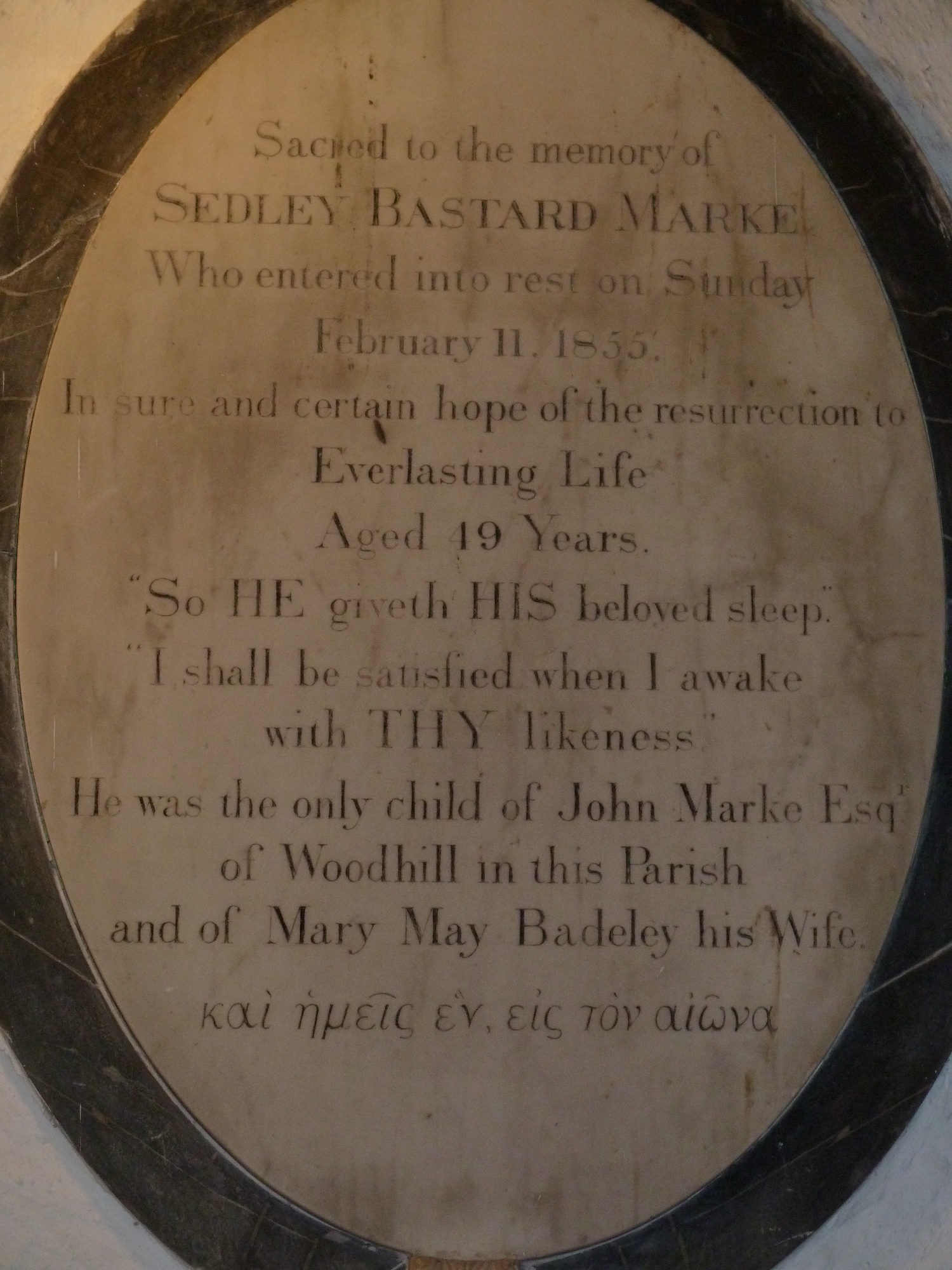
This week the entries on the Historic England List for some beautiful Grade II listed houses to the north of Liskeard were enriched including Woodhill Manor, first recorded in1337 as Wodelond. The Marke family of Woodhill can be traced back to the 16th century. Joseph Marke was Mayor of Liskeard in 1691 and 1710. In the 1841 census a guest at Webb’s Hotel on The Parade was 35 year old Sedley Bastard Marke and his mother Mary. By 1851 he had set up home in Plymouth with his wife Ann, 18 years his junior, and 2 young sons. Sadly Sedley died 4 years later, a memorial plaque exists in St. Martin’s Church. He profited greatly from the Caradon Copper Boom being a landowner at East Caradon and Marke Valley Mines. On the road to Jamaica Inn you can see a bridge with the inscription “The building of this bridge was at the sole expense of S B Marke Esq”.




3rd July 2020
Have enriched local Grade II bridges on the Historic England List this week including the one that opened in 1861 to carry the Liskeard & Caradon Railway over the track to Crow’s Nest. Designer was Sylvanus W. Jenkin, Engineer with LC&R for 60 years from 1842. From 1851 Jenkin was also Land Agent for the Lanhydrock Estate until his death in 1911. Dean Terrace was his home from 1857, with his wife and 5 daughters. Sadly, daughters Charlotte died at age 4 and Caroline at age 10, both are buried in the Halbathick Quaker Cemetery. Mayor of Liskeard in 1877 and 78, Jenkin was an original subscriber to the Public Rooms (1889) and the Temperance Hotel (1892). A very busy man, he was also County Surveyor for East Cornwall from 1856 to 1911. His son William A. Jenkin laid a foundation stone of St. Martin’s Church Tower in 1900 when he also was a Mayor of Liskeard.


28th June 2020
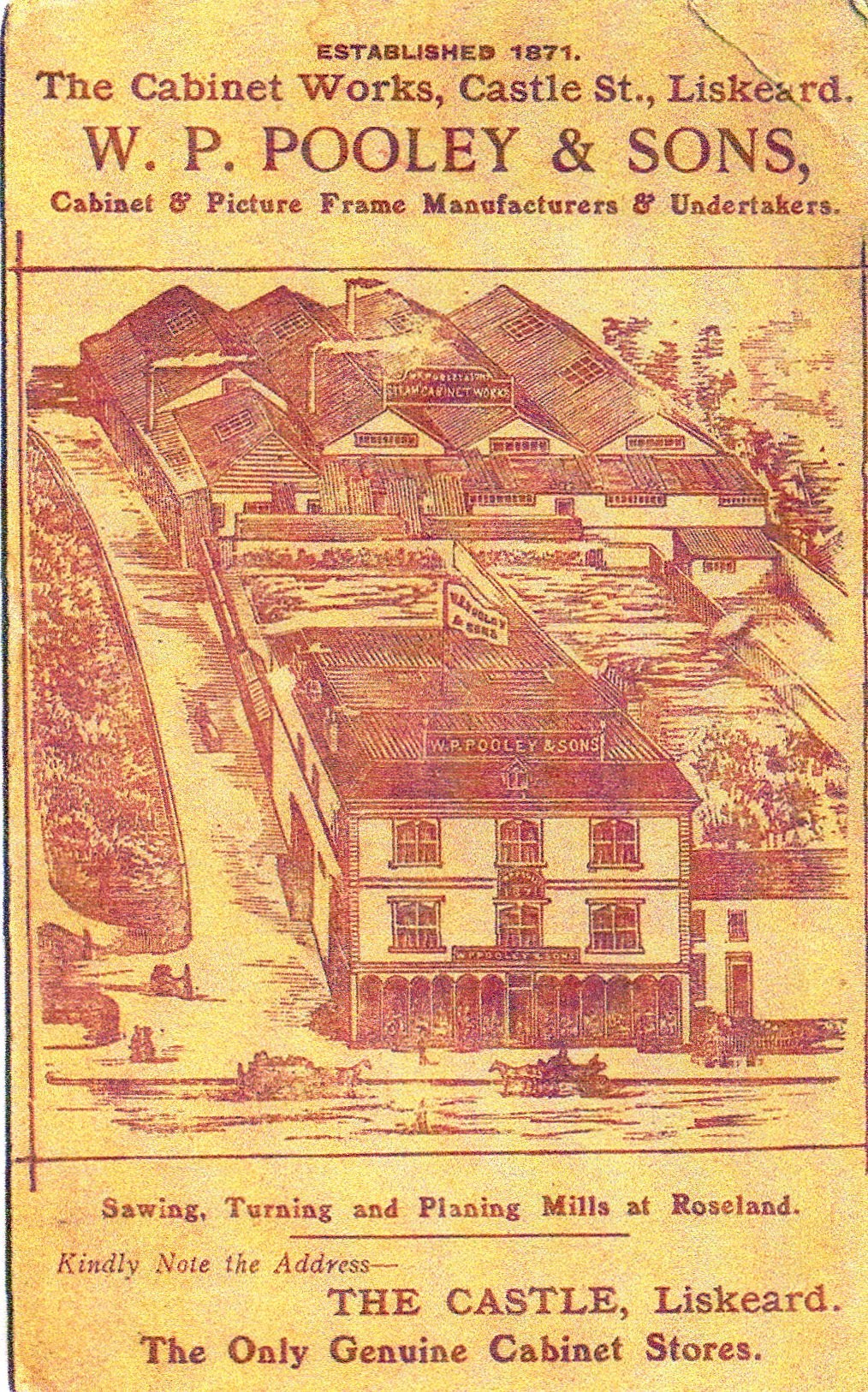
This week’s Enriching the Historic England List included No.4 Castle Street, Liskeard. The initials WPP on the 1886 datestone are for William Peter Pooley. William was born in 1843 and grew up in the impoverished area of Moon’s Court, Dean Street. His father was a Pauper General Labourer and his mother a Washer Woman. Fortunately for William, his father apprenticed him to a Cabinet Maker, and by the 1871 census he was married with 2 sons in Church Street, and established W P Pooley & Sons, Cabinet & Picture Frame Manufacturers & Undertakers. 1881 sees the family living above the new showroom with extensive workshops to the rear. A Pooley display cabinet from 1911 is on display in Liskeard & District Museum. After William’s death in 1918 his son Thomas George carried on the business; in 1938 a T G Pooley & Son funeral cost £12 12s 6d. By the following year Thomas was retired at age 73 and his son, another Thomas, took over the House Furnishers, Cabinet Makers and Undertakers, at No. 4 Castle Street since 1886 (now Himalayan Spice Restaurant).



21st June 2020
In May 1909 William and Emily Lee appeared before Magistrates Huddy, Nettle and Snell, they pleaded guilty to stealing 25 lbs of bones, value 9d, from William Crago of Trevecca Farm, Liskeard. Both were jailed for 1 week. Crago had scattered bones around his fields for manure, which he had obtained from the town refuse, and they were frequently stolen. The Lees were found by Crago gathering the bones; they had 1 full sack and several heaps. They absconded, but were apprehended at Tremar Coombe by Sergeant Johns and identified by Crago. Superintendent Gard gave evidence that the Lees had been in Liskeard for about a week staying at the common lodging house and selling post-cards, for which Emily had a licence for so doing. William Crago (38), his wife Jessie (37), daughter Mary (2 months) and Horseman on Farm Horace Johns (18) are in the 1911 census living at nearby Halbathick.


17th June 2020
The house and barn at Haye Barton near St Ive are Grade II listed. In 1665 the Duke of York’s Treasurer Thomas Povey stayed overnight in Haye Barton after his coach and horses met with an accident; “The axell cracks the spokes cry squeak, The harnesse beam and spring tree break.” His host was the cavalier Thomas Dodson (1642-72), Povey was on is way from Plymouth to Lanhydrock House to visit John, Lord Robartes, who unfortunately was not at home. His description of Lanhydrock wasn’t very complimentary. In 1664 Haye was described as a modest cross-passaged, rubble-stone farmhouse with seven hearths.


13th June 2020
Reports were submitted to Historic England and Historic Environment Record this week on the 5 Grade II Listed chest tombs in St Martin’s Churchyard. Local Attorney William Rawle successfully defended, free of charge, a Liskeard resident accused of not taking his corn to the town mill at Bodgara, resulting in that law being rescinded. Benjamin Hart Lyne was described by William Makepeace Thackeray as “a shrewd snob of a fellow” after breakfasting with him in 1832 in Wadham House; Lyne became Mayor of Liskeard in 1835. The will of Joseph Fitze, tanner of Liskeard is held at Kresen Kernow; his son, also Joseph, carried on the tannery business in Pondbridge Hill, where he lived in 1841 with his wife May, 8 children and 2 domestic servants.


5th June 2020
Reports submitted to Historic England and Historic Environment Record this week involved a cluster of Grade II Listed structures in Moorswater. During WWII Moorswater Lodge was a Red Cross Reception Centre and then a Military Hospital for American Officers. It was originally built for the Lyne family who also owned the Lime Kilns on the East side of the River/Canal/Railway complex. In 1851 they were operated by Richard Symons (53) and his sons Jeremiah (32), William (19) and Charles (14). Together with their mother and 3 siblings at school, they all lived in the tied cottage next to the kilns.


29th May 2020
To discover why these two Liskeard buildings are Grade II listed, go to the Historic England website and search the List. In 1902, 23 Church St. was occupied by James Harvey, agent for Singer sewing machines and Perth dyes. Then Williams the watch repairer, later the Work Box and now the Chinese take-away. At 15 Lower Lux St. in 1850, Hawker of Wares, Colman Cohen occupied the shop, a kitchen and a small bedroom. Plain Work Sewing, Eliza Buller, her 4 sisters and 2 lodgers occupied 3 rooms. They all shared 1 outside privy, together with the 22 occupants of the shop next door. Evidenced by the 1851 census and the 1850 plan by architect Henry Rice. In the 1940s it was William Gill’s shoe shop, later Mr. Yeo’s watch repairs, then a music shop.


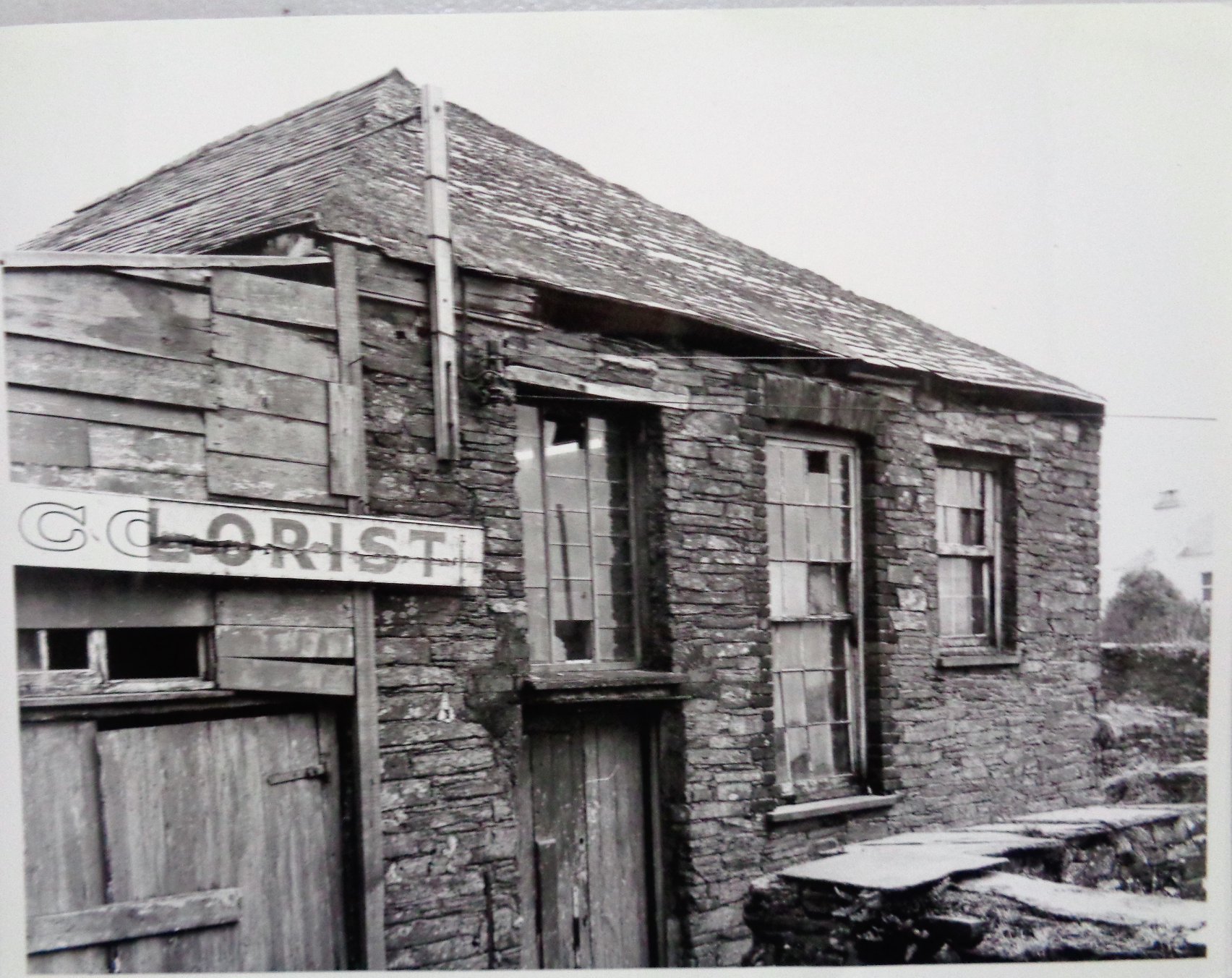
There’s was a further request for more old photos of Castle Street, so there’s a few added. Liskeard Old Cornwall Society have more in our archive in Stuart House.




22nd May 2020
This week’s reports to the Historic England List and the Historic Environment Record on Liskeard’s Grade II Listed buildings are 17 Lower Lux Street and Pound House, Pound Street. The former was Miss Rundle’s Sweet Shop for many years (see 2nd photo) then A Certain Style (see 1995 advert). A school was opened in the 1860s at Pound House by Mrs Mary Matheson after she became a Widow at age 49; her husband had died in Bodmin Lunatic Asylum. Her son became an a Bank Accountant and moved to 1 Tremeddan Terrace, Station Road (see photo). The two boys in the photo are Mary’s grandsons, the smaller is Frank Matheson who became Treasurer then President of Liskeard Old Cornwall Society.


15th May 2020
This week’s submissions to Historic England and the Historic Environment Record are Castle House where, in the 1840s, John Triggs opened the Boot Inn, so named as he was also a Cordwainer. In 1851 he shared the Inn with his wife, 4 daughters, 5 sons, 1 servant and 5 lodgers (4 were Hawkers and 1 a Landscape Artist). In the 1940s Edwin Rowe had a Grocery shop in Castle House. The other Grade II Listed building this week is 21 Lower Lux Street, where Charles Coath ran an extremely successful House Painting business, note his name on the side of his house. Between 1857 and 1882 his wife Elizabeth gave birth to 10 children; strangely the first 6 were all boys and the following 4 all girls.


10th May 2020
There has been little activity to report on our Page in recent weeks, but one thing I’ve discovered during Lockdown that compliments the ethos of the Old Cornwall movement is Enriching the Historic England List. Anyone can register to become a Contributor and submit photographs and condition reports on a vast array of buildings, monuments and other sites. These are some of my “enrichments”.The theme for reports submitted to Historic England this week, photographed during daily exercising from home, was Liskeard’s Grade II Listed Public Houses.


